
Stieg Larsson Books: A Literary Guide to Stockholm
The phenomenon of stieg larsson books has transformed how millions of readers worldwide perceive Stockholm and Swedish culture. When journalist Stieg Larsson delivered three completed manuscripts to his publisher shortly before his unexpected death in 2004, few could have predicted the global cultural shift that would follow. The Millennium trilogy, featuring hacker Lisbeth Salander and journalist Mikael Blomkvist, has sold over 100 million copies worldwide, reshaping the landscape of crime fiction and creating an entirely new tourism category in Sweden's capital city.
The Millennium Trilogy: Core Works and Reading Order
Understanding stieg larsson books begins with the original trilogy that established his legacy. The publication sequence matters significantly for readers who want to appreciate the character development and evolving mysteries throughout the series.
The Girl with the Dragon Tattoo (originally Män som hatar kvinnor, "Men Who Hate Women") introduces Lisbeth Salander and Mikael Blomkvist as they investigate a decades-old disappearance on a remote island. The English-language adaptation of the Millennium trilogy involved significant editorial decisions that shaped how international audiences experienced Larsson's work.
The Girl Who Played with Fire deepens the conspiracy elements as Lisbeth becomes the primary suspect in a triple murder investigation, forcing her to navigate both criminal underworlds and corrupt state institutions while Mikael races to prove her innocence.

The Girl Who Kicked the Hornet's Nest concludes the original trilogy as Lisbeth fights for survival in a hospital bed while facing murder charges, with revelations about Swedish security services and state corruption reaching their climax.
Publication History and International Editions
The journey of stieg larsson books from Swedish phenomenon to global bestseller involves fascinating translation and marketing decisions. The official publisher series page details the various editions and formats available across markets.
| Original Swedish Title | English Title | Publication Year | Key Changes |
|---|---|---|---|
| Män som hatar kvinnor | The Girl with the Dragon Tattoo | 2005 (Swedish), 2008 (English) | Title completely reframed for market appeal |
| Flickan som lekte med elden | The Girl Who Played with Fire | 2006 (Swedish), 2009 (English) | Maintained parallel structure |
| Luftslottet som sprängdes | The Girl Who Kicked the Hornet's Nest | 2007 (Swedish), 2010 (English) | Metaphorical Swedish title made literal |
The decision to rename the first book fundamentally altered the series' international identity, shifting focus from the thematic violence against women to the enigmatic protagonist herself.
Literary Themes and Stockholm Settings
Stieg larsson books function as both gripping thrillers and detailed social commentaries on Swedish society. Academic analysis of structural violations within the trilogy reveals how Larsson systematically exposes institutional failures across multiple sectors.
The Stockholm that emerges from these pages is multifaceted:
- Södermalm: The bohemian district where Lisbeth maintains her apartment and Mikael works at Millennium magazine
- Gamla Stan: The medieval Old Town featuring in key investigative scenes
- Kvarnen: The real bar where characters meet and plot their next moves
- Bellmansgatan: Mikael's apartment street with sweeping views across the city
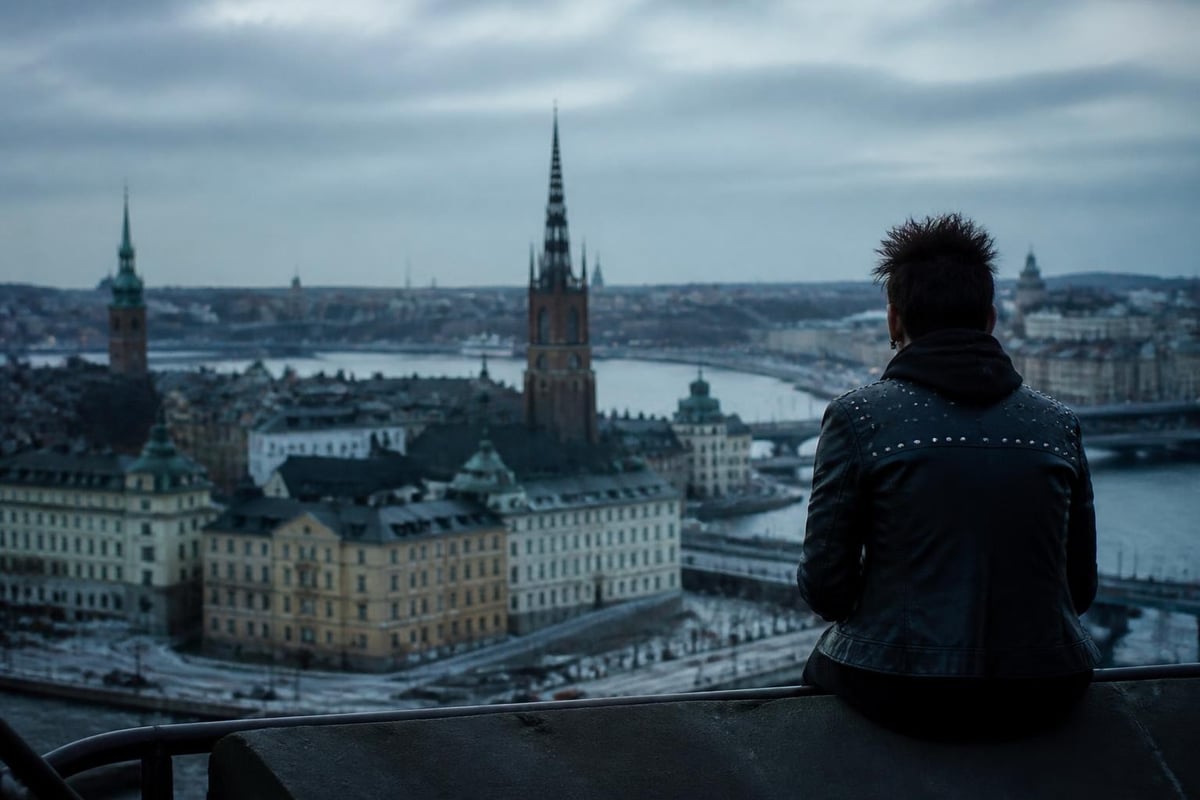
When visitors explore these locations through Stockholm walking tours, they discover how Larsson's fictional narrative layers onto actual geography, creating a hybrid experience of literary tourism and urban exploration.
Social Justice and Feminist Perspectives
The subtitle of the first Swedish edition, "Men Who Hate Women," signals Larsson's central concern with violence against women in Swedish society. Feminist scholarly examinations of the trilogy reveal how Larsson uses genre fiction to expose systematic abuse, institutional complicity, and the resilience of survivors.
Key thematic elements include:
- Documentation of sexual violence and its aftermath
- Critique of state institutions that fail vulnerable citizens
- Exploration of digital privacy and surveillance culture
- Examination of journalistic ethics and corporate malfeasance
- Representation of neurodivergent and trauma-affected characters
This thematic depth distinguishes stieg larsson books from conventional crime fiction, offering readers both entertainment and uncomfortable social critique.
The Cultural Impact of Nordic Noir
The success of stieg larsson books fundamentally reshaped international perceptions of Scandinavian crime fiction. The Guardian’s cultural analysis examines how Larsson's posthumous success created new market opportunities for Nordic authors and transformed publishing industry expectations.
Before the Millennium trilogy, Swedish crime fiction had limited international reach. Henning Mankell's Wallander series and Maj Sjöwall and Per Wahlöö's Martin Beck novels enjoyed critical respect but modest commercial success beyond Scandinavia. Larsson's books changed the equation entirely, demonstrating that Swedish settings and social concerns could captivate global audiences.
Translation and Market Adaptation
The international journey of stieg larsson books involves complex translation choices that balance fidelity to the original with accessibility for new audiences. English-language versions shortened certain passages, adjusted cultural references, and modified chapter structures to align with genre expectations in English-speaking markets.
Translation considerations included:
- Swedish bureaucratic procedures requiring explanation for international readers
- Cultural references to Swedish politics and social movements
- Idiomatic expressions that don't translate directly
- Technical terminology related to journalism and hacking
- Stockholm geography and neighborhood characteristics
Professional guides who lead private tours in Stockholm often discuss these translation nuances, explaining how certain locations and cultural contexts work differently when experienced in person versus through translated text.
Literary Tourism in Modern Stockholm
Stieg larsson books have created an enduring tourism category in Stockholm, with thousands of visitors annually seeking locations described in the novels. This literary pilgrimage phenomenon extends beyond simple sightseeing to encompass deeper engagement with Swedish culture and social issues.
The typical literary tour includes:
- Bellmansgatan 1: Mikael Blomkvist's fictional address with actual city views
- Götgatan: The main thoroughfare through Södermalm mentioned throughout the series
- Millennium Magazine Office: Based on Larsson's own workplace at Expo magazine
- Kvarnen: The historic restaurant and bar featured in multiple scenes
- Gamla Stan: The Old Town walking routes that characters navigate during investigations
Combining Literary and Historical Exploration
Sophisticated visitors recognize that stieg larsson books provide entry points into deeper Stockholm exploration. A comprehensive Stockholm city tour contextualizes literary locations within broader historical, architectural, and cultural frameworks.
| Tour Focus | Literary Elements | Historical Context | Duration |
|---|---|---|---|
| Södermalm Literary Walk | Lisbeth's apartment, Mikael's haunts | Working-class history, gentrification | 2-3 hours |
| Gamla Stan Investigation | Murder mystery locations | Medieval Stockholm, Royal Palace | 2-3 hours |
| Journalist's Stockholm | Millennium office, meeting spots | Press freedom history, media landscape | 3-4 hours |
The most rewarding experiences combine knowledge of stieg larsson books with appreciation for the actual neighborhoods, their histories, and contemporary transformations.
Beyond the Original Trilogy: Continuation Works
Following Larsson's death, his longtime partner Eva Gabrielsson revealed that he had outlined plots for additional books in the series. However, legal control of the estate passed to Larsson's father and brother, who authorized continuation of the series with new authors.
Post-Larsson Millennium novels include:
- The Girl in the Spider's Web by David Lagercrantz (2015)
- The Girl Who Takes an Eye for an Eye by David Lagercrantz (2017)
- The Girl Who Lived Twice by David Lagercrantz (2019)
- The Girl in the Eagle's Talons by Karin Smirnoff (2023)
Reception of these continuation works has been mixed. Some readers appreciate the opportunity to spend more time with beloved characters, while others argue that the thematic depth and social critique that characterized original stieg larsson books has diminished in subsequent installments.
Authenticity Debates and Literary Estate Conflicts
The decision to continue the series without Larsson's input sparked significant controversy in literary circles. Eva Gabrielsson publicly opposed the continuation, arguing that new authors couldn't capture Larsson's political vision and feminist commitments.

These debates raise important questions about literary estates, author intention, and commercial interests in publishing. For readers approaching stieg larsson books for the first time, understanding this context helps frame expectations about the series' different phases.
Adaptations Across Media Formats
The success of stieg larsson books has generated numerous adaptations, each interpreting the source material through different cultural and creative lenses.
Film and Television Versions
Swedish Film Trilogy (2009): Directed by Niels Arden Oplev and Daniel Alfredson, these adaptations starred Noomi Rapace as Lisbeth Salander and Michael Nyqvist as Mikael Blomkvist. Shot extensively in Stockholm, these films maintain strong fidelity to the novels' Swedish settings and social critique.
American Film Adaptation (2011): David Fincher directed an English-language version of The Girl with the Dragon Tattoo starring Rooney Mara and Daniel Craig. This adaptation relocated some scenes and adjusted pacing for American audiences while maintaining core plot elements.
Television Series (2026): Current streaming adaptations continue exploring the Millennium universe, incorporating both original stieg larsson books and continuation novels into serialized formats that allow deeper character development.
Visitors who experience English-speaking guided tours often discuss how different adaptations have shaped international perceptions of Stockholm and Swedish culture.
Reading Stieg Larsson Books in Contemporary Context
Nearly two decades after their initial publication, stieg larsson books remain relevant for several reasons. The trilogy's concerns with digital privacy, institutional corruption, and violence against women have only intensified in the social media era.
Contemporary relevance includes:
- Data privacy concerns that predate but anticipate current debates
- Examination of how institutions protect abusers
- Representation of trauma survivors reclaiming agency
- Critique of corporate and political corruption
- Exploration of alternative family structures and chosen communities
These themes resonate with readers in 2026 differently than they did in 2005, as many of Larsson's speculative concerns about digital surveillance and institutional failures have materialized.
Recommended Reading Approaches
For newcomers to stieg larsson books, several reading strategies optimize the experience:
- Read in publication order: The trilogy builds character knowledge and mystery layers sequentially
- Research Swedish context: Understanding welfare state politics and social movements enriches interpretation
- Use maps while reading: Following Stockholm geography adds immersive detail
- Consider thematic reading guides: Academic and literary criticism illuminates deeper patterns
- Visit Stockholm if possible: Physical experience of locations transforms textual understanding
Many readers combine their literary journey with plans to join cultural tours of Stockholm, creating multimedia engagement with the source material and its real-world settings.
The Legacy of Stieg Larsson's Literary Achievement
The lasting impact of stieg larsson books extends far beyond sales figures and adaptation deals. Larsson's trilogy fundamentally altered expectations for crime fiction, demonstrating that genre works could engage serious social issues while maintaining narrative tension and entertainment value.
Measurable impacts include:
- Increased international sales of Nordic crime fiction by over 300% between 2008 and 2015
- Creation of dedicated literary tourism infrastructure in Stockholm
- Influence on subsequent crime writers addressing institutional failures
- Mainstream acceptance of morally complex, traumatized protagonists
- Expanded market for translated fiction in English-speaking countries
The trilogy's success also sparked important conversations about posthumous publication ethics, author control, and commercial interests in literary properties. These debates continue to shape publishing industry practices regarding deceased authors' works.
Stockholm as Literary Character
Perhaps the most enduring contribution of stieg larsson books is the transformation of Stockholm itself into a literary destination. The city functions as more than mere setting in the trilogy; it becomes a character whose neighborhoods, institutions, and social structures actively shape the narrative.
When contemporary visitors explore Stockholm through customized tours, they encounter layers of meaning: the actual medieval architecture of Gamla Stan, the historical working-class identity of Södermalm, and the fictional overlay of Larsson's narrative geography. This palimpsest effect creates rich experiential possibilities for literary tourists.
The intersection of history, contemporary urban life, and fictional narrative offers unique insights into how stories shape our perception of places. Stieg larsson books have permanently altered Stockholm's international identity, adding literary significance to its existing cultural, political, and architectural importance.
Stieg Larsson's Millennium trilogy has created lasting connections between literature and place, transforming how readers worldwide engage with Stockholm. Whether you've read all the stieg larsson books or are just discovering them, experiencing the actual locations brings new depth to the narrative. Adding:tours offers personalized literary adventures through Stockholm, following in the footsteps of Lisbeth Salander and Mikael Blomkvist with expert English-speaking guides who share both the fictional stories and the real history of these remarkable locations.