

The Dragon Tattoo Series: A Stockholm Literary Journey
The dragon tattoo series represents one of the most influential crime fiction phenomena of the 21st century, transforming how readers worldwide perceive Nordic noir and Stockholm's urban landscape. Written by Swedish journalist Stieg Larsson, this trilogy introduced readers to the unforgettable hacker Lisbeth Salander and journalist Mikael Blomkvist, weaving together corporate corruption, family secrets, and social justice themes against Sweden's contemporary backdrop. For visitors to Stockholm today, the series offers more than just gripping entertainment; it provides a unique lens through which to explore the city's neighborhoods, architecture, and cultural identity.
Origins and Literary Foundation of the Dragon Tattoo Series
Stieg Larsson began writing the dragon tattoo series in the early 2000s, drawing heavily from his decades of experience as an investigative journalist specializing in right-wing extremism and political corruption. His professional background investigating anti-democratic movements in Sweden directly informed the trilogy's themes of institutional failure, violence against women, and the abuse of power. Larsson completed all three manuscripts before his sudden death in 2004, never knowing the global phenomenon his work would become.
The first novel, The Girl with the Dragon Tattoo, was published posthumously in Sweden in 2005 under the original title Män som hatar kvinnor (Men Who Hate Women). The publisher’s guide reveals how Larsson's deliberate title choice emphasized the series' central concern with misogyny and systemic violence. This focus resonated powerfully with readers, establishing the dragon tattoo series as both thrilling entertainment and social commentary.
Translation and Global Reception
The English translation of the dragon tattoo series presented unique challenges that significantly impacted its international reception. Translator Reg Keeland (Steven T. Murray) made numerous decisions that altered character names, softened certain cultural references, and modified dialogue patterns to suit English-speaking audiences. Academic analysis of the translation process demonstrates how these changes fundamentally shaped how non-Swedish readers experienced the narrative.
Key translation considerations included:
- Character name modifications (Lisbeth's surname changed from Salander to remain consistent)
- Swedish corporate and political references adapted for international context
- Cultural idioms and expressions localized for clarity
- Technical terminology related to journalism and technology standardized
The series achieved remarkable commercial success across markets, with over 100 million copies sold worldwide by 2026. This extraordinary reach transformed Stockholm into a literary pilgrimage destination, where fans seek out locations mentioned in the dragon tattoo series alongside traditional tourist attractions.

Film and Television Adaptations
The dragon tattoo series has been adapted multiple times across different mediums and national contexts, each interpretation bringing distinct artistic choices to Larsson's source material. The Swedish film trilogy, released between 2009 and 2011, featured Noomi Rapace as Lisbeth Salander and Michael Nyqvist as Mikael Blomkvist. These adaptations prioritized authenticity to Stockholm's actual locations and Swedish cultural context.
According to the Swedish Film Institute’s production documentation, the 2009 Swedish adaptation deliberately showcased Stockholm's architecture and urban environments, using the city as more than mere backdrop. Director Niels Arden Oplev filmed extensively in Södermalm, Gamla Stan, and other districts central to the narrative, creating a visual record that now serves as a guide for literary tourists.
The American Adaptation and Distribution Challenges
David Fincher's 2011 American adaptation starred Rooney Mara and Daniel Craig, reimagining the dragon tattoo series for Hollywood audiences. This version emphasized atmospheric cinematography and psychological intensity while maintaining Stockholm settings for authenticity. The British Film Institute’s research on subtitling versus dubbing highlights how distribution choices affected audience reception, with some markets preferring dubbed versions while others demanded subtitled authenticity.
| Adaptation | Year | Lead Actress | Primary Market | Notable Approach |
|---|---|---|---|---|
| Swedish Films | 2009-2011 | Noomi Rapace | European/Global | Location authenticity, cultural specificity |
| American Film | 2011 | Rooney Mara | North American/Global | Atmospheric reimagining, star power |
| Swedish TV Series | Planned 2026 | TBA | Streaming/Global | Extended narrative format |
For visitors exploring Stockholm through guided literary tours, these various adaptations provide multiple entry points into understanding how the dragon tattoo series transformed real locations into fictional landmarks.
Stockholm as Character in the Dragon Tattoo Series
The dragon tattoo series positions Stockholm not merely as setting but as active participant in the narrative. Larsson's detailed descriptions of neighborhoods, street layouts, and architectural features create a precisely mapped fictional world that corresponds remarkably well to Stockholm's actual geography. This specificity allows readers and visitors to retrace character movements through the city with unusual accuracy.
Södermalm serves as Lisbeth Salander's primary territory throughout the dragon tattoo series. The district's bohemian character, working-class history, and artistic communities align perfectly with Salander's outsider status and independent lifestyle. Larsson describes specific cafes, apartment buildings, and street corners that remain identifiable today, creating opportunities for immersive literary exploration.
Key Stockholm locations in the series:
- Bellmansgatan 1 – Mikael Blomkvist's apartment with views across the water
- Lundagatan – Lisbeth Salander's apartment in Södermalm
- Millennium magazine offices in Götgatan area
- Gamla Stan's medieval streets and government buildings
- Hedestad (fictional town representing northern Sweden's industrial communities)
Walking Through Literary Stockholm
Exploring these locations offers insights into how Larsson constructed his narrative geography. The Old Town Stockholm walking experience demonstrates how medieval architecture and narrow alleys create the claustrophobic atmosphere Larsson evokes when describing institutional corruption and hidden family secrets. The physical environment reinforces thematic elements throughout the dragon tattoo series.
Visitors often discover that Stockholm's real geography slightly differs from Larsson's descriptions. These discrepancies result from both artistic license and practical narrative considerations. However, the essential character of each neighborhood remains faithfully represented, allowing literary tourists to experience the atmospheric qualities that define the dragon tattoo series.

Character Development and Social Commentary
The dragon tattoo series distinguishes itself through Larsson's commitment to addressing Sweden's social issues through thriller narrative. Lisbeth Salander embodies resistance against institutional failure, particularly systems that fail vulnerable women and children. Her character arc across the trilogy exposes corruption within psychiatric care, legal guardianship, intelligence services, and corporate structures.
The Guardian’s extensive coverage of Larsson's background reveals how his journalism directly informed these critiques. His decades investigating right-wing extremism, corporate malfeasance, and violence against women provided both factual foundation and moral urgency. The dragon tattoo series thus functions simultaneously as entertainment and exposé, challenging readers to recognize systemic failures within seemingly progressive societies.
Lisbeth Salander as Literary Icon
Salander's character transcends the dragon tattoo series to become a cultural touchstone representing resistance, intelligence, and survival. Her photographic memory, hacking expertise, and refusal to conform to social expectations create a protagonist unlike traditional crime fiction heroines. Those interested in exploring Lisbeth Salander’s complete journey find a character who evolves substantially across the original trilogy and subsequent continuation novels.
Salander's defining characteristics include:
- Exceptional technical and analytical abilities
- History of institutional abuse and trauma
- Fierce independence and moral code
- Visual identity (punk aesthetic, dragon tattoo)
- Complex relationship with authority and society
The character's impact extends beyond literature into broader discussions about representation, trauma, justice, and empowerment. Academic analysis, including scholarly work on Nordic noir traditions, positions Salander within larger patterns of Gothic crime fiction while acknowledging her unique contribution to the genre.
The Continuation Series and Franchise Evolution
Following Larsson's death, the dragon tattoo series faced questions about continuation and authorial intent. Larsson's longtime partner Eva Gabrielsson possessed knowledge of his plans for subsequent books but lacked legal rights to the intellectual property. The Larsson estate eventually commissioned continuation novels from Swedish crime writers, beginning with David Lagercrantz in 2015.
Lagercrantz wrote three continuation novels between 2015 and 2019, exploring Salander's backstory and introducing contemporary issues like artificial intelligence and genetic engineering. PBS NewsHour’s coverage of the continuation examines how new authors approached Larsson's established characters while developing original narratives that honor the series' thematic concerns.
Recent Developments and Critical Reception
In 2024, Karin Smirnoff became the latest author commissioned to continue the dragon tattoo series. Her novel The Girl in the Eagle's Talons received professional critical assessment that evaluated how successfully she maintained series continuity while introducing fresh perspectives. Smirnoff's background as a Sami writer brought new cultural dimensions to the franchise, particularly regarding indigenous rights and environmental justice in northern Sweden.
| Author | Books | Years | Thematic Focus |
|---|---|---|---|
| Stieg Larsson | Original trilogy | 2005-2007 (Swedish) | Corporate corruption, violence against women, journalism ethics |
| David Lagercrantz | Three novels | 2015-2019 | Technology, intelligence agencies, Salander's origins |
| Karin Smirnoff | Ongoing | 2024-present | Indigenous rights, environmental justice, northern Sweden |
For readers planning to explore the complete Millennium series, understanding these authorial transitions provides context for evolving narrative directions while maintaining core character dynamics established in the dragon tattoo series.
Literary Tourism and Cultural Impact
The dragon tattoo series fundamentally transformed Stockholm's tourism landscape, creating demand for literary-themed experiences that complement traditional historical and architectural tours. Visitors increasingly seek authentic connections to fictional narratives, walking the same streets as beloved characters and understanding how real locations inspired literary imagination.
This phenomenon reflects broader trends in cultural tourism where literature, film, and place intersect to create immersive experiences. The dragon tattoo series benefits from Larsson's precise geographical descriptions, allowing tour operators to design routes that authentically reflect the narrative while showcasing Stockholm's genuine character and history.
Designing Literary Experiences
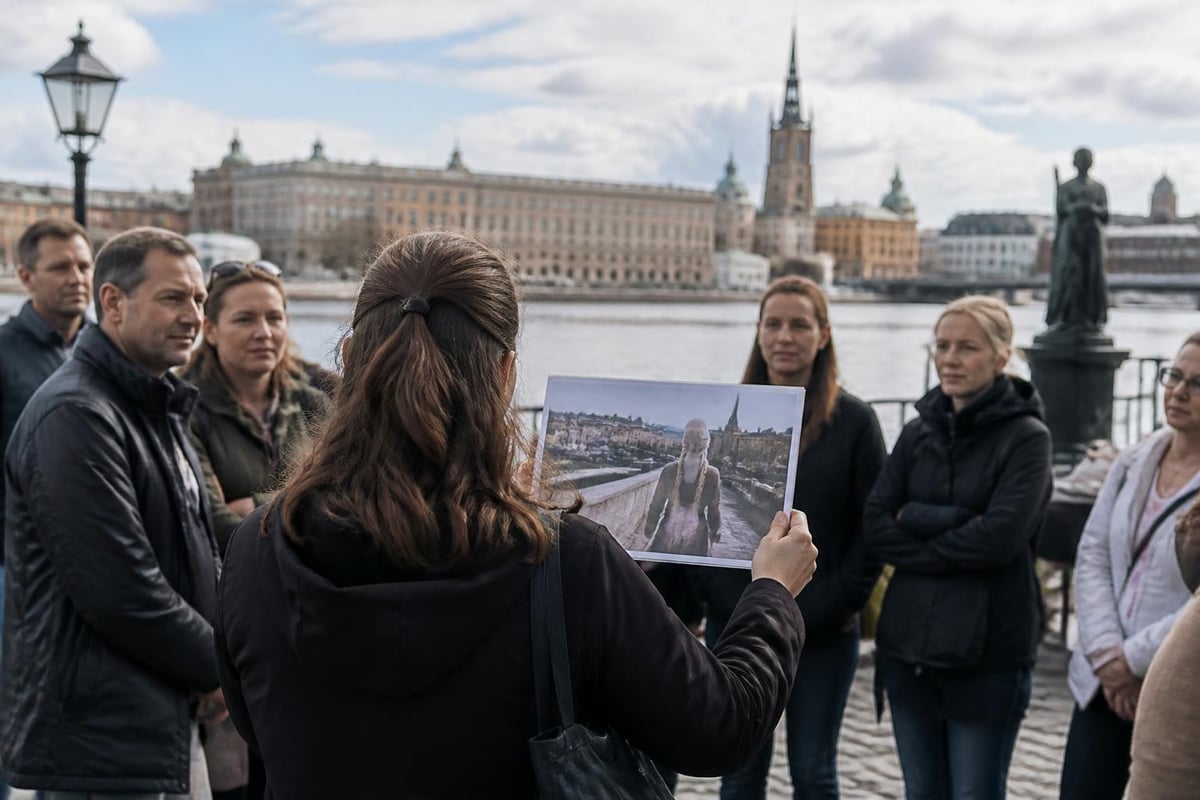
Professional tour operators have developed sophisticated approaches to literary tourism that balance fictional narrative with historical accuracy and local culture. Guided walking tours through Stockholm often incorporate dragon tattoo series locations within broader explorations of Södermalm's development, Swedish publishing industry, or contemporary Stockholm life. This integration prevents tours from becoming mere location-checking exercises while deepening visitor understanding of context.
Elements of successful literary tours include:
- Historical background on neighborhoods featured in the series
- Distinction between fictional elements and real locations
- Author biography and creative process information
- Contemporary Stockholm culture beyond fictional representation
- Connections to broader Swedish literary and film traditions
The most engaging experiences help visitors understand how Larsson transformed real Stockholm into fictional space while appreciating the city's independent identity. For those interested in exploring additional Stockholm attractions, combining literary sites with other cultural destinations creates comprehensive understanding of Sweden's capital. For a broader look at how the author’s home city honors his work, our guide to Stieg Larsson legacy in Stockholm covers the key sites.
Genre Innovation and Nordic Noir
The dragon tattoo series occupies a crucial position within Nordic noir development, representing both culmination of earlier traditions and catalyst for subsequent evolution. Larsson built upon foundations established by Maj Sjöwall and Per Wahlöö's Martin Beck series while introducing elements that would define 21st-century Scandinavian crime fiction.
Nordic noir's characteristic features include social criticism, bleak atmosphere, flawed protagonists, and institutional critique. The dragon tattoo series exemplifies these elements while adding distinctive contributions: extreme violence used as social commentary, hacker culture and technology, investigative journalism as heroic profession, and explicit feminism addressing violence against women.
International Influence and Adaptation
The series' global success opened international markets to Scandinavian crime fiction, creating opportunities for writers like Jo Nesbø, Camilla Läckberg, and Jussi Adler-Olsen. Publishers invested heavily in translation and marketing, recognizing audience appetite for Nordic settings, complex plotting, and social engagement characteristic of the genre.
This expansion influenced crime fiction production worldwide, with writers from various countries adopting Nordic noir elements while maintaining their cultural specificity. The dragon tattoo series demonstrated that regional crime fiction could achieve global reach without sacrificing local authenticity or thematic seriousness.
Practical Considerations for Literary Visitors
Planning a Stockholm visit centered on the dragon tattoo series requires balancing literary interests with practical tourism considerations. The city offers extensive public transportation, walkable neighborhoods, and English-language accessibility that facilitate independent exploration. However, guided experiences provide context and insider knowledge that significantly enriches understanding.
Recommended approach for literary tourists:
- Read at least the first novel before visiting to recognize locations and understand context
- Research actual Stockholm geography to distinguish fictional elements from real places
- Consider guided tours for expert interpretation and access to insider perspectives
- Combine literary sites with broader Stockholm cultural attractions
- Explore Södermalm's contemporary character beyond fictional representations
Visitors should recognize that Stockholm has evolved considerably since Larsson wrote the dragon tattoo series in the early 2000s. Some locations have changed, businesses have closed or relocated, and neighborhoods have developed new characteristics. This evolution adds interesting temporal dimension to literary tourism, allowing comparison between fictional representation and contemporary reality.
Seasonal Considerations and Planning
Stockholm's dramatic seasonal variations significantly affect the literary tourism experience. The dragon tattoo series often features winter settings with darkness, cold, and isolation emphasizing narrative atmosphere. Visiting during these months provides atmospheric authenticity but requires preparation for limited daylight and challenging weather conditions.
Summer visits offer extended daylight, pleasant temperatures, and easier navigation but create different atmospheric qualities than Larsson's frequently darker, winter-focused descriptions. Both seasons provide valuable perspectives on Stockholm's character and how environment shapes narrative mood throughout the dragon tattoo series.
For comprehensive Stockholm exploration combining literary interests with other attractions, small group tour options provide structured itineraries while maintaining personalized attention and flexibility for specific interests.
Publishing Industry and Commercial Success
The dragon tattoo series represents extraordinary commercial achievement within publishing industry, with sales figures, translation reach, and cultural penetration rarely achieved by crime fiction. Understanding this success provides insights into contemporary publishing dynamics, translation markets, and global reader preferences.
Larsson's posthumous publication created unique marketing circumstances. The tragedy of his early death combined with his compelling biography as crusading journalist generated significant media attention. Publishers emphasized both thriller qualities and social justice themes, positioning the dragon tattoo series for broad appeal across demographic groups.
The trilogy's structure allowed sustained reader engagement across three substantial volumes, building character investment and narrative complexity impossible in standalone novels. This approach influenced subsequent crime fiction publishing strategies, with publishers increasingly seeking series potential in debut manuscripts.
Commercial success factors:
| Element | Impact | Example |
|---|---|---|
| Author biography | Media interest, authenticity | Investigative journalism background |
| Social themes | Critical acclaim, book club adoption | Violence against women focus |
| Character appeal | Reader investment, continuation demand | Lisbeth Salander popularity |
| Swedish setting | Exotic appeal, tourism connection | Stockholm specificity |
| Translation quality | International accessibility | Professional translation analysis |
The franchise continues generating substantial revenue through new continuation novels, film and television adaptations, merchandise, and tourism. This commercial longevity demonstrates how the dragon tattoo series transcended initial publication to become sustained cultural property.
Educational and Academic Engagement
The dragon tattoo series has attracted substantial academic attention across multiple disciplines, including literary studies, translation theory, gender studies, film analysis, and criminology. This scholarly engagement reflects the trilogy's complexity and cultural significance beyond commercial entertainment.
Universities worldwide incorporate the dragon tattoo series into courses examining contemporary crime fiction, Scandinavian literature, feminist literature, and adaptation studies. The texts provide rich material for analyzing narrative structure, character development, social criticism, and cultural representation within accessible, engaging frameworks.
Research examining the series contributes to broader understanding of how popular fiction addresses social issues, influences cultural perceptions, and translates across linguistic and cultural boundaries. Scholars particularly focus on Larsson's treatment of violence against women, institutional critique, and journalist ethics as entry points for discussing contemporary Swedish society.
For visitors interested in deeper engagement beyond tourism, many Stockholm institutions offer lectures, exhibitions, and discussions related to the dragon tattoo series and Nordic noir traditions. These educational opportunities complement location-based tourism with intellectual context and critical perspective.
The dragon tattoo series offers readers and visitors an exceptional opportunity to explore Stockholm through compelling narrative while engaging with serious social themes. Whether experiencing Larsson's original trilogy, the film adaptations, or continuation novels by subsequent authors, the franchise provides enduring entry points into Swedish culture, Nordic noir traditions, and contemporary crime fiction. Adding:tours specializes in personalized literary experiences that bring the dragon tattoo series to life, combining expert local knowledge with tailored itineraries that honor your specific interests while revealing Stockholm's authentic character beyond the fiction.
{“@context”:”https://schema.org”,”@type”:”Article”,”headline”:”The Dragon Tattoo Series: A Stockholm Literary Journey”,”description”:”Explore the dragon tattoo series origins, adaptations, and Stockholm locations. Discover how Stieg Larsson’s thriller transformed global crime fiction.”,”image”:[“https://xqvnmkjynbkcujcrtubi.supabase.co/storage/v1/object/public/article-images/fae83573-30c8-4817-a313-1e779df93b74/featured-1793845474137.jpg”],”datePublished”:”2026-11-05T02:41:03.614Z”,”dateModified”:”2026-11-11T13:25:46.921Z”,”author”:{“@type”:”Organization”,”name”:”Adding:tours”,”url”:”https://addingtours.se/”},”publisher”:{“@type”:”Organization”,”name”:”Adding:tours”,”url”:”https://addingtours.se/”},”mainEntityOfPage”:{“@type”:”WebPage”,”@id”:”https://addingtours.se/the-dragon-tattoo-series/”}}