Everglades Kayak Tour Guide: What to Expect and Book
An Everglades kayak tour is a guided paddle through mangrove tunnels, freshwater sloughs and open bays in southern Florida, usually lasting two to four hours and led by a naturalist who handles navigation, wildlife spotting and safety. Most visitors book a half-day trip from Everglades City, Chokoloskee, Flamingo or Miami, with the dry season from December through April offering the most comfortable conditions. This guide explains what the experience involves, how to choose a route and season, what to bring, and how to plan the trip around a larger itinerary.
If you usually travel with guides, the same logic applies in Florida as in any destination: a knowledgeable local turns an unfamiliar landscape into a story. The Everglades rewards that kind of attention.
What Does an Everglades Kayak Tour Actually Involve?
A typical guided paddle covers several miles at an unhurried pace, with frequent stops to watch birds, point out mangrove species and discuss the water systems that define the park. Guides provide the kayak, paddle, life jacket and a briefing on technique before launch.
Most tours follow this rhythm:
- Briefing at the launch point. Guides explain strokes, steering and what to do if the group meets an alligator or manatee.
- Open-water crossing. Many routes begin in a bay or river channel where wind and current matter most.
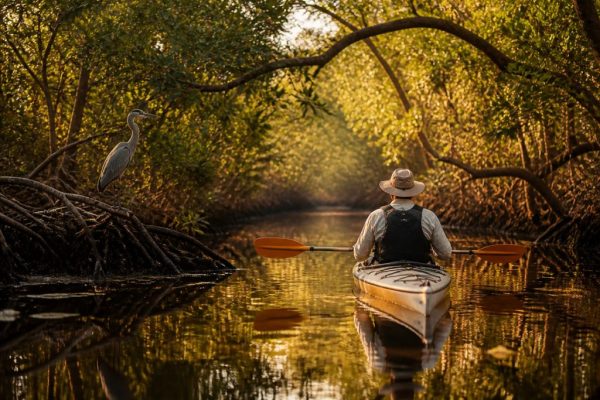
- Mangrove tunnels. The narrow, shaded passages are the signature of the trip, often only a few feet wide.
- Wildlife pauses. Expect herons, egrets, ospreys, roseate spoonbills and, in the right season, dolphins and manatees near the coast.
- Return paddle. Tides and wind often shape this leg, so guides plan the timing around them.
The pace is gentle, but you are doing real work with a paddle. Moderate fitness and comfort sitting upright for a few hours are enough for most guided routes.
Which Everglades Paddling Routes Are Worth Knowing?
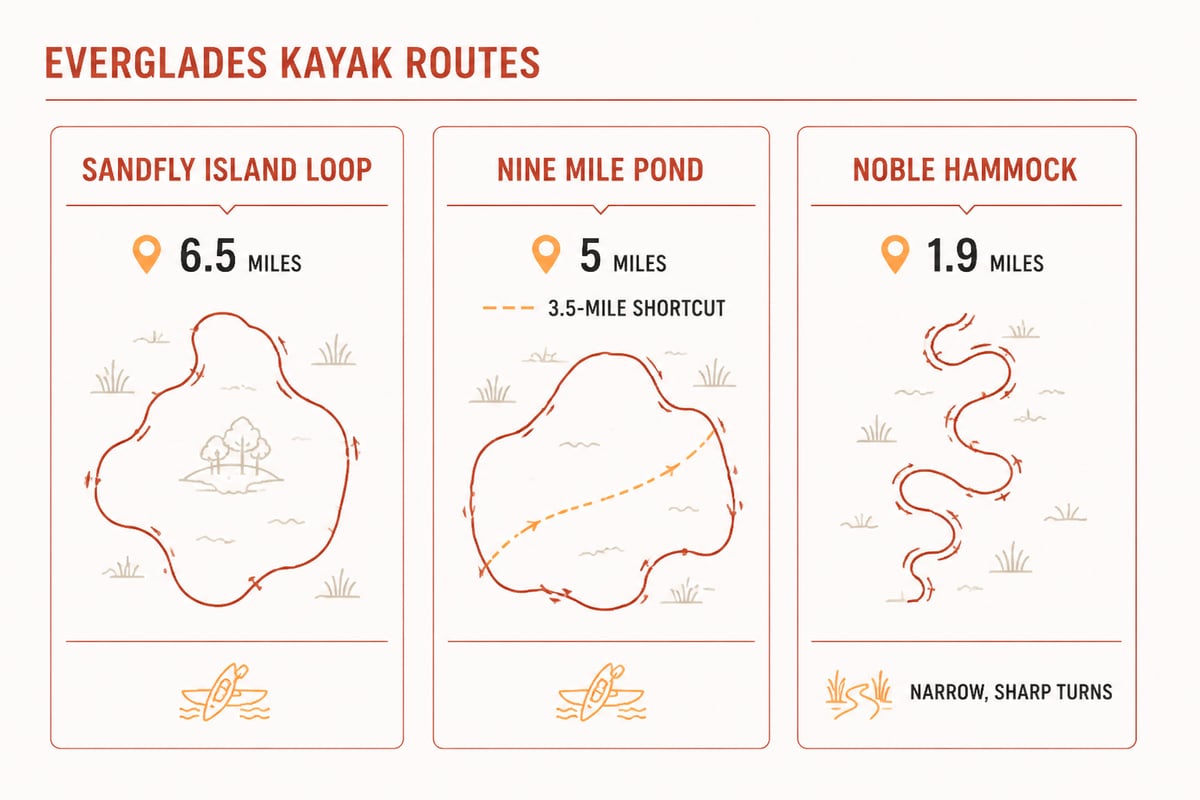
The park offers several marked canoe and kayak trails, each with a different character. The National Park Service lists the main options, and the differences matter when you compare tour itineraries.
| Route | Distance | What to know |
|---|---|---|
| Sandfly Island Loop | 6.5 miles | Reached from Everglades City and Chokoloskee; wind and tides can change trip duration |
| Nine Mile Pond | 5-mile loop, 3.5-mile shortcut | Low water can make the end of the trail impassable late in the dry season |
| Noble Hammock | 1.9 miles | Narrow passages and sharp turns call for good maneuvering skills |
Sandfly Island suits groups that want a half-day outing with open water and shoreline variety. Nine Mile Pond is a freshwater marl prairie route, which feels different from the saltwater mangrove coast. Noble Hammock is short but demanding, with narrow passages and sharp turns, so it is better for confident paddlers than for first-timers.
Longer expeditions exist as well. The Everglades Paddling Trail runs 120 miles, and the National Park Service notes that about 30 miles of its segments carry boating-use restrictions during the busy winter-spring season. Those are multi-day wilderness trips and a separate undertaking from a guided half day.
When Is the Best Time to Book an Everglades Kayak Tour?
The best months for an Everglades kayak tour are December through April, when temperatures are milder, humidity drops and mosquito pressure eases. The National Park Service's wilderness trip planner advises that summer, from June through October, is generally not the best season for wilderness trips because of heat, severe storms and mosquitoes.
The dry season has trade-offs. Water levels fall, which concentrates wildlife near remaining pools and makes animals easier to spot, but shallow freshwater routes such as Nine Mile Pond can become impassable by late spring. Winter also brings the largest crowds, so launches and tour calendars fill early.
Practical timing advice:
- Book morning departures. Winds are usually lighter and wading birds are active.
- Check the tide chart. Coastal routes are far easier when the tide is moving with you.
- Reserve ahead in peak months. Small-group guided trips have limited places.
- Have a backup day. Afternoon thunderstorms and strong wind can cancel a launch.
Choosing Between Guided, Self-Guided and Boat-Assisted Options
A guided trip is the right choice for most first-time visitors, because the Everglades has few landmarks, tides that shift quickly and mangrove channels that look alike. A guide reads the water for you and spots animals you would paddle past.
Self-guided paddling suits experienced kayakers with charts, a GPS and good judgment about weather. The National Park Service says experienced paddlers typically plan to cover 8 to 12 miles per day in the wilderness, and that adverse conditions can slow progress considerably. That gap between plan and reality is why newcomers benefit from local direction.
Some operators offer boat-assisted tours, where a motorboat carries the group to a distant launch point so the paddling time is spent in the most scenic water rather than on transit. This works well for groups with limited time or mixed ability.
When comparing operators, look for:
- Small group sizes, which reduce noise and improve wildlife viewing
- Naturalist or certified guides rather than simple trip leaders
- Clear information on difficulty, distance and expected duration
- Published safety procedures and equipment standards
- Recent, specific reviews that mention the guide by name
Group size shapes the whole experience. A party of six or eight moves quietly and hears the guide easily, while a group of twenty spreads across the channel and scares off birds before the back of the line arrives.
What Wildlife Will You See, and How Close Is Safe?
You can expect wading birds, ospreys, turtles and mullet on almost every trip, with alligators, dolphins and manatees as less certain highlights. The Everglades is a vast subtropical wilderness, and the sheer density of birdlife is what many paddlers remember most.
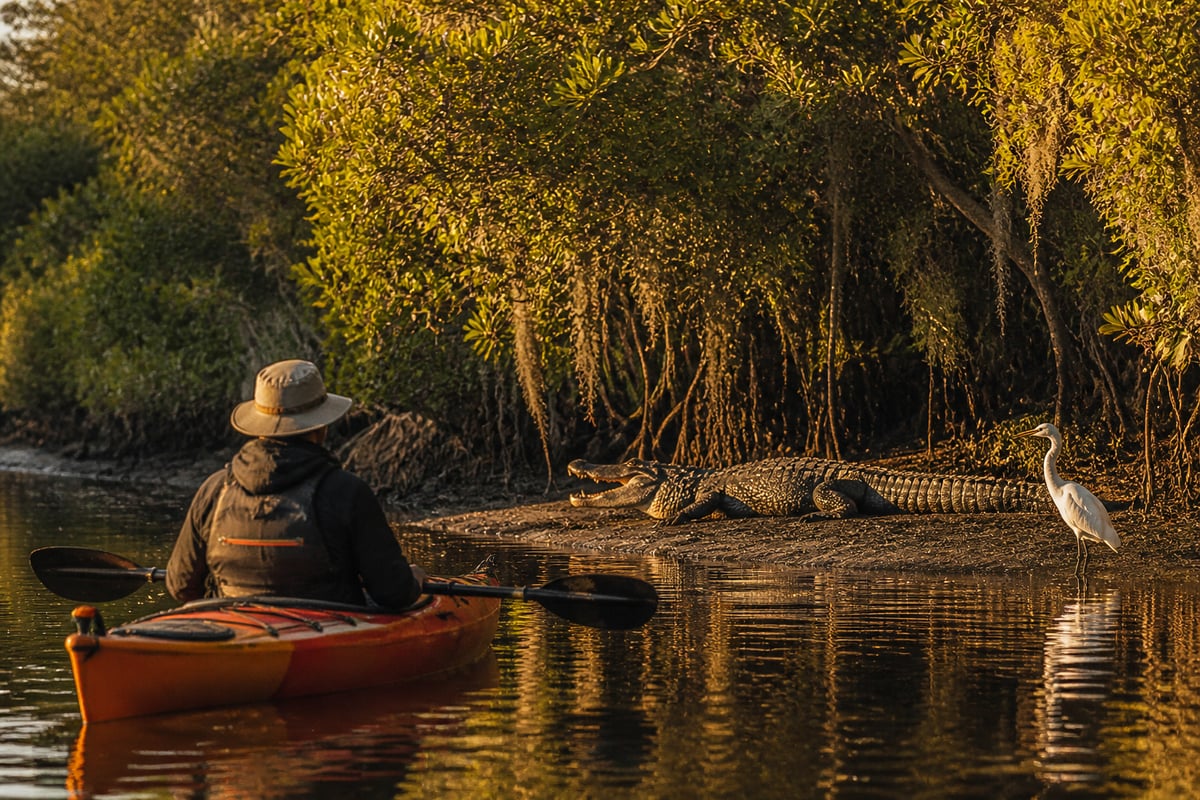
Safety distance is straightforward. The National Park Service says visitors should stay at least 15 feet (4.6 meters) from alligators and crocodiles. Guides enforce this, and they know which channels hold animals at which times of day.
Good wildlife habits for kayakers:
- Paddle quietly and avoid sudden movements near perched birds
- Never feed any animal, and never drop food in the water
- Keep hands and paddles inside the kayak around reptiles
- Follow the guide's lead when approaching manatees, which should always be left room to move away
Alligators are generally wary of boats. Most encounters involve a distant shape on a bank, and an experienced guide will keep the group comfortable while still giving everyone a clear view.
What Should You Bring on a Kayak Tour in the Everglades?
Pack light, protect yourself from sun and insects, and keep everything that must stay dry in a sealed bag. Guides usually supply the kayak, paddle and life jacket, so your own list is about comfort.
Essentials:
- Sun protection: wide-brim hat, polarized sunglasses with a strap, and reef-safe sunscreen
- Insect protection: repellent and a lightweight long-sleeve shirt, especially in the shoulder seasons
- Footwear: secure water shoes or sandals that will not slip off in mud
- Water: at least a liter per person for a half day, more in warm months
- Dry bag: for phone, keys and a camera
- Quick-dry clothing: cotton stays wet and chills you
Leave jewelry and valuables behind, and bring a small snack for the paddle. A camera with a wrist strap is far more practical than a phone held in your hand over open water.
How Does an Everglades Kayak Tour Fit Into a Longer Trip?
A kayak outing works best as one anchor activity in a broader itinerary rather than the entire plan. Visitors who base themselves in Miami, Naples or the Florida Keys can reach the park's main entrances by car, so a morning paddle leaves room for lunch and a second stop. The Everglades Foundation visitor guide gives a useful overview of park access and general kayaking and canoeing locations when you are deciding where to base yourself.
Many travelers pair a paddle with a boardwalk walk, a visit to a ranger station and a late seafood lunch in a fishing town. Mixing a quiet, self-powered activity with something short and easy keeps the day balanced for couples and families who prefer not to overschedule.
Planning a Group Outing: Lessons From Guided Travel
Whether you are organizing a family reunion, a friends' trip or a corporate team day, the planning principles that make a guided experience succeed are consistent across destinations. We apply them to private sightseeing in Stockholm, and they translate directly to a paddle in Florida.
- Match the activity to the weakest participant. Choose a route and distance that everyone can finish comfortably, not just the fittest member.
- Keep the group small. Our own tours are kept to small groups because conversation, questions and wildlife viewing all improve when the group is intimate.
- Tailor the day to interests. A birdwatcher, a photographer and a history lover will each want something different, and a good guide adapts. This is the same personalization we build into every private guide experience.
- Plan for weather. Our tours run in all weather, and the same mindset helps in Florida: pack layers, carry rain protection and agree on a backup plan in advance.
- Arrange logistics early. Meeting points, transport and timing are easiest to confirm days ahead rather than on the morning of the trip.
For companies and event planners, a half-day paddle suits a team outing because it removes the usual hierarchy: everyone is learning the same stroke at the same time. Brief the group in advance on fitness expectations and confirm any health considerations with the operator before booking.
If you are building a wider trip that includes Scandinavia, our small-group adventure tours show how a limited group size changes the pace of a day, and the guest reviews give a sense of what travelers value in a local guide.
FAQ
What is the main attraction of the Everglades?
The main attraction is its wildlife and water landscape: a vast mosaic of mangroves, sawgrass prairies and tropical hardwood hammocks that supports alligators, wading birds, manatees and many other species. Paddling is one of the best ways to experience it up close and quietly.
Where is the best place to go kayaking in the Everglades?
For most visitors, the Everglades City and Chokoloskee area is the strongest choice, with access to the Ten Thousand Islands, mangrove tunnels and routes like the Sandfly Island Loop. Flamingo on the southern tip suits those who want a more remote feel.
Is there such a thing as a 3-person kayak?
Three-person kayaks are uncommon, and most Everglades operators rent singles and tandems. A family of three typically books one tandem and one single, which also gives everyone more control over pace.
Before booking any paddle, confirm the route length, group size and fitness requirements in writing so that everyone in your party knows what to expect. If your travels also take you to Stockholm, Adding:tours designs private, small-group sightseeing for families, friends and colleagues, led by native English-speaking guides who tailor each day to your interests, and you can start by choosing a tour and book your tour today.
{“@context”:”https://schema.org”,”@type”:”Article”,”headline”:”Everglades Kayak Tour Guide: What to Expect and Book”,”description”:”Plan an Everglades kayak tour with clear advice on routes, seasons, wildlife safety, what to pack and how to choose a guided trip that suits your group.”,”image”:[“https://xqvnmkjynbkcujcrtubi.supabase.co/storage/v1/object/public/article-images/d3f538b8-71c3-4fda-a072-1b79d9c1f54d/featured-1794661321733.jpg”],”datePublished”:”2026-10-29T16:55:40.948Z”,”dateModified”:”2026-11-15T13:01:03.817Z”,”author”:{“@type”:”Organization”,”name”:”Adding:tours”,”url”:”https://addingtours.se/”},”publisher”:{“@type”:”Organization”,”name”:”Adding:tours”,”url”:”https://addingtours.se/”},”mainEntityOfPage”:{“@type”:”WebPage”,”@id”:”https://addingtours.se/everglades-kayak-tour”}}