
Author Stieg Larsson Books: A Guide to the Millennium Trilogy
The work of Swedish journalist and crime novelist Stieg Larsson has captivated millions of readers worldwide, transforming the landscape of contemporary crime fiction. Author Stieg Larsson books, particularly his renowned Millennium trilogy, have sold over 100 million copies globally and introduced international audiences to the dark, compelling world of Nordic noir. Though Larsson passed away in 2004 before seeing his novels published, his literary legacy continues to influence readers, filmmakers, and even travelers who journey to Stockholm to walk in the footsteps of his unforgettable characters. Understanding the scope and impact of his work provides valuable context for anyone interested in Swedish culture, crime fiction, or the vibrant literary landscape that defines modern Stockholm.
The Millennium Trilogy: Core Works by Stieg Larsson
The heart of author Stieg Larsson books lies in the Millennium trilogy, three interconnected novels featuring investigative journalist Mikael Blomkvist and hacker Lisbeth Salander. These groundbreaking works established Larsson as one of the most significant crime writers of the twenty-first century.
The Girl with the Dragon Tattoo (originally published in Swedish as Män som hatar kvinnor in 2005) introduces readers to the complex partnership between Blomkvist and Salander as they investigate a decades-old disappearance on a remote Swedish island. The Girl with the Dragon Tattoo sparked extensive critical analysis when adapted for both Swedish and American cinema, demonstrating the story's universal appeal.
Complete Trilogy Overview
| Title | Swedish Publication | English Publication | Central Theme |
|---|---|---|---|
| The Girl with the Dragon Tattoo | 2005 | 2008 | Family secrets and corporate corruption |
| The Girl Who Played with Fire | 2006 | 2009 | Sex trafficking and conspiracy |
| The Girl Who Kicked the Hornet's Nest | 2007 | 2010 | State corruption and justice |
The Girl Who Played with Fire deepens the mythology surrounding Lisbeth Salander while expanding the scope of Larsson's critique of Swedish institutions. The narrative explores human trafficking, organized crime, and systemic failures within law enforcement.
The Girl Who Kicked the Hornet's Nest concludes the original trilogy with a courtroom drama that brings together all the threads established in the previous novels. This final installment examines governmental abuse of power and the resilience of marginalized individuals fighting for justice.

Literary Themes and Social Commentary
Author Stieg Larsson books stand apart from conventional crime fiction through their sustained focus on social justice issues. Larsson, who worked as a journalist investigating right-wing extremism and violence against women, embedded his investigative expertise throughout his fiction.
The Swedish title of the first novel translates to "Men Who Hate Women," signaling Larsson's explicit intention to examine misogyny and violence. Each book in the trilogy opens with statistics about violence against women in Sweden, grounding the fictional narrative in real-world concerns.
Key Thematic Elements
- Investigative journalism as accountability: Blomkvist's work at Millennium magazine mirrors Larsson's own career
- Institutional corruption: Swedish government agencies, corporations, and law enforcement face scrutiny
- Gender-based violence: Central to plot development and character motivation
- Technology and privacy: Salander's hacking abilities explore digital surveillance themes
- Class and power dynamics: Economic inequality shapes character relationships and plot outcomes
Academic analysis of the Millennium trilogy has examined how Larsson's work functions both as entertainment and social critique. Researchers have explored translation choices, narrative structure, and the books' role in popularizing Scandinavian crime fiction worldwide.
The political dimensions of author Stieg Larsson books reflect his lifelong activism. Before becoming a novelist, Larsson spent decades documenting neo-Nazi movements and far-right political organizations. This background informs the trilogy's villains, many of whom represent institutional power protecting criminal enterprises.
Stockholm as Character: Literary Geography
The physical landscape of Stockholm plays a crucial role throughout author Stieg Larsson books. Larsson's detailed descriptions of neighborhoods, streets, and landmarks create an immersive sense of place that has inspired countless readers to explore the Swedish capital.
Södermalm, the southern island district, serves as Lisbeth Salander's home territory. Her apartment on Lundagatan and frequent visits to nearby cafes ground her character in a specific Stockholm neighborhood known for its bohemian culture and creative communities.
Gamla Stan, Stockholm's medieval Old Town, appears in multiple scenes throughout the trilogy. The narrow cobblestone streets, historic buildings, and atmospheric squares provide backdrop for key plot developments. Visitors can explore these historic alleys on walking tours that bring the literary landscape to life.
| Location | Role in Trilogy | Real-World Significance |
|---|---|---|
| Millennium Magazine Office | Blomkvist's workplace | Represents independent journalism |
| Salander's Apartment | Character's private sanctuary | Södermalm neighborhood authenticity |
| Café connections | Meeting and surveillance points | Stockholm's vibrant café culture |
| Hedestad (fictional) | Setting for Dragon Tattoo mystery | Composite of Swedish small towns |
The Götgatan shopping street and surrounding areas feature prominently as Salander moves through her daily routines. These authentic Stockholm locations allow readers to mentally map the action and create a tangible connection to the story.
For literary enthusiasts visiting Stockholm, customized tours can highlight these significant locations while providing historical context about the city's development and cultural heritage.
Publication History and Global Impact
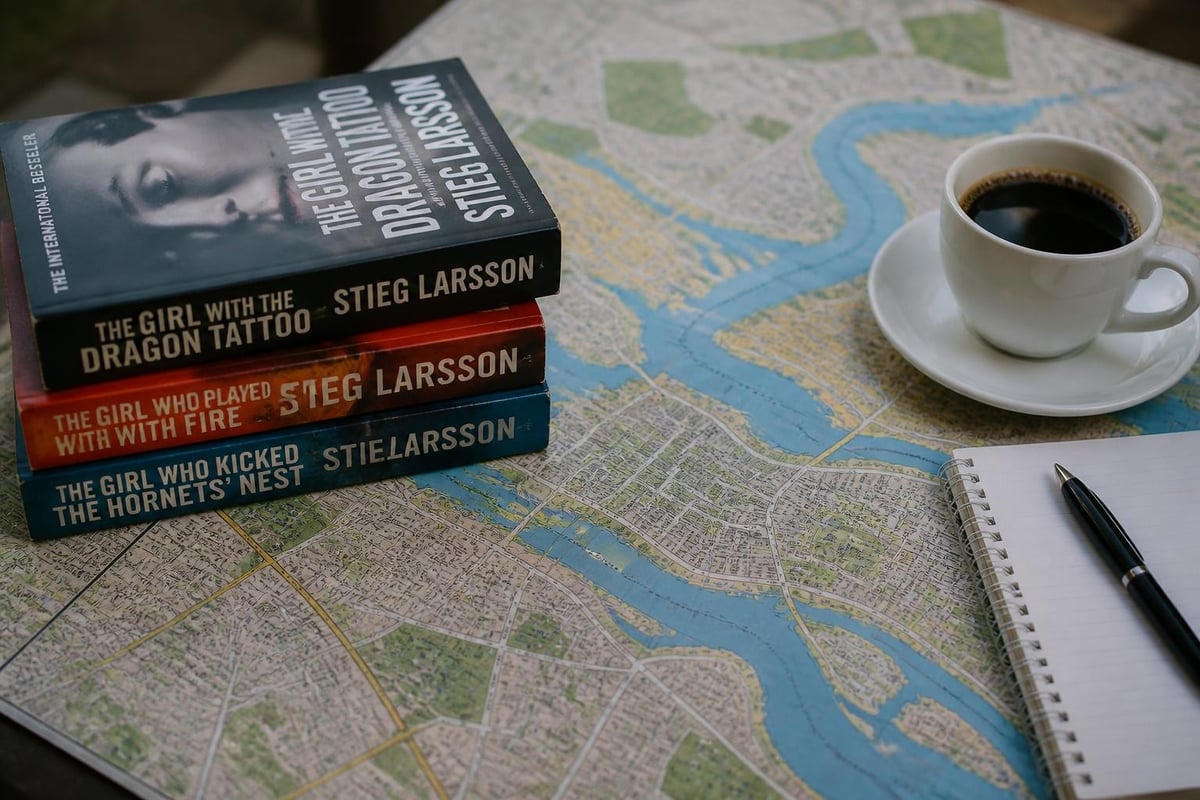
The publishing journey of author Stieg Larsson books represents one of modern literature's most remarkable success stories. Larsson delivered the completed manuscripts for all three novels to Norstedts, his Swedish publisher, shortly before his sudden death from a heart attack in November 2004.
The first Swedish edition of Män som hatar kvinnor appeared in August 2005, with the subsequent volumes following in 2006 and 2007. Initial sales were modest, but word-of-mouth recommendations drove increasing demand. By the time Penguin Random House acquired English-language rights, the books had already become phenomenons in Scandinavia.
International Publishing Milestones
The English translation of The Girl with the Dragon Tattoo by Reg Keeland (Steven T. Murray) launched in 2008, introducing Larsson to anglophone markets. The timing proved fortuitous, as readers were hungry for sophisticated crime fiction with complex female protagonists.
Within three years of English publication, author Stieg Larsson books had achieved extraordinary commercial success:
- Over 27 million copies sold in the United States alone by 2010
- Translations into more than 50 languages
- Consistent placement on bestseller lists worldwide
- Cultural impact recognized by major publications including Time magazine
The posthumous nature of Larsson's success has generated ongoing discussion about intellectual property, author's rights, and the continuation of his literary universe. Larsson's longtime partner Eva Gabrielsson has advocated for recognition of her role in his creative process, while his family controls the estate and publishing decisions.
Film and Television Adaptations
The visual adaptation of author Stieg Larsson books began with Swedish-language films released in 2009, followed by American productions and television developments. These adaptations significantly expanded the trilogy's global audience and cultural influence.
Swedish Film Trilogy (2009): Director Niels Arden Oplev helmed the first film, with Noomi Rapace's portrayal of Lisbeth Salander earning critical acclaim. The three Swedish films were produced in rapid succession for theatrical and television release.
American Adaptation (2011): David Fincher directed the Hollywood version starring Rooney Mara and Daniel Craig. This remake generated extensive critical discussion about adaptation choices, cultural translation, and the challenges of reimagining established material.
Television Development: Recent announcements about television series based on the Millennium world indicate ongoing interest in expanding Larsson's universe across different media formats.
These adaptations have transformed author Stieg Larsson books from literary properties into multimedia franchises. The visual interpretations introduced the stories to audiences who might not typically read crime fiction, while also driving renewed interest in the original novels.
For visitors to Stockholm, the film locations provide another layer of literary tourism. Guided experiences can incorporate both book settings and filming locations, offering comprehensive perspectives on how Larsson's vision has been translated across different media.
The Extended Millennium Series
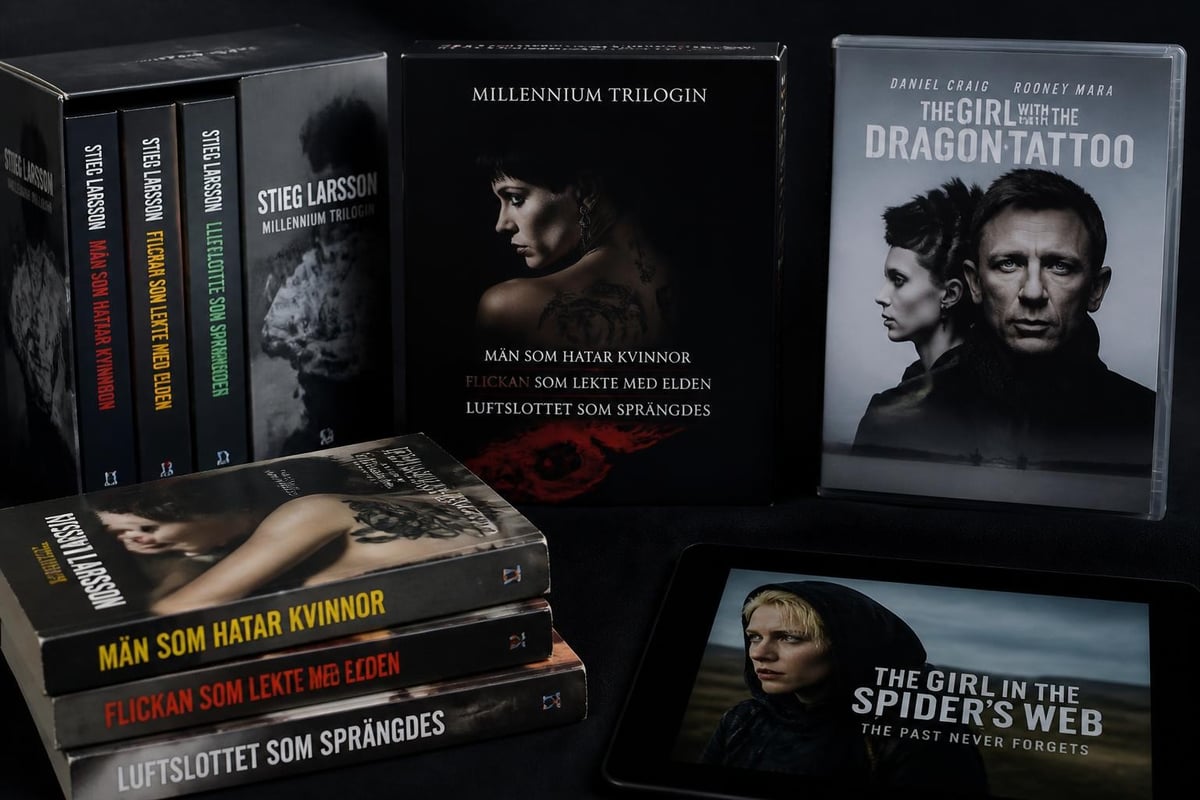
Following the completion of Larsson's original trilogy, his estate commissioned Swedish author and crime journalist David Lagercrantz to continue the Millennium series. This decision proved controversial among purists but extended the reach of author Stieg Larsson books to new readers.
Lagercrantz has published three continuation novels:
- The Girl in the Spider's Web (2015)
- The Girl Who Takes an Eye for an Eye (2017)
- The Girl Who Lived Twice (2019)
These books maintain the core characters while introducing new threats and expanding the mythology surrounding Lisbeth Salander's background. Critical reception has been mixed, with some readers appreciating the opportunity to spend more time with beloved characters, while others feel the continuation lacks Larsson's distinctive voice and social commentary.
Publishing industry coverage has tracked the Swedish reception of these continuation volumes, noting both commercial success and ongoing debates about authorship and legacy.
Continuation vs. Original Trilogy
| Aspect | Larsson's Trilogy | Lagercrantz Continuation |
|---|---|---|
| Social critique | Central to narrative | Present but less prominent |
| Character development | Foundational establishment | Expansion and evolution |
| Plot complexity | Dense, interconnected | More streamlined narratives |
| Reader reception | Universal acclaim | Divided opinion |
The existence of continuation novels raises philosophical questions about authorship, creative ownership, and the boundaries of literary estates. For many readers, author Stieg Larsson books specifically refer to the original trilogy, while others embrace the expanded series as legitimate extensions of his vision.
Academic and Critical Reception
The scholarly examination of author Stieg Larsson books has produced substantial critical literature exploring their literary merit, social significance, and cultural impact. Academic collections have assembled interdisciplinary perspectives on the trilogy, examining everything from feminist theory to translation studies.
Universities worldwide have incorporated the Millennium trilogy into courses on contemporary literature, Scandinavian studies, gender studies, and media adaptation. Research resources provide students and scholars with comprehensive bibliographic information and thematic analysis.
Critical Perspectives
Academic analysis has addressed multiple dimensions of Larsson's work:
- Feminist readings: Examining Salander as a response to traditional female victim narratives
- Genre studies: Positioning the trilogy within Nordic noir traditions and innovations
- Translation theory: Analyzing how Swedish cultural specificity translates across languages
- Political economy: Investigating the books' critique of neoliberal capitalism
- Adaptation studies: Comparing textual and visual storytelling approaches
The accessibility of author Stieg Larsson books through programs like the U.S. Library of Congress National Library Service ensures that readers with visual impairments can experience the trilogy through audio formats and Braille editions.
Critics have particularly praised Larsson's ability to balance commercial thriller conventions with serious social commentary. The books function simultaneously as page-turning entertainment and thoughtful examinations of contemporary Swedish society.
Literary Tourism and Reader Engagement
The global popularity of author Stieg Larsson books has generated significant literary tourism to Stockholm. Readers travel from around the world specifically to visit locations featured in the trilogy, transforming the city into a living monument to Larsson's creative vision.
Literary walking tours allow fans to trace character movements through actual Stockholm neighborhoods. These experiences combine textual analysis with architectural history, creating rich interpretive frameworks for understanding both the novels and the city.
Café culture plays an important role in the trilogy, with characters frequently meeting in Stockholm's numerous coffee shops. Visitors can enjoy authentic Swedish fika while discussing plot developments and character motivations.
Enhancing Your Stockholm Experience
Readers planning visits to Stockholm can maximize their literary experience through several approaches:
- Pre-trip reading: Completing the trilogy before arrival deepens location recognition
- Guided expertise: Professional tour guides provide insider knowledge about filming locations and historical context
- Neighborhood exploration: Spending time in Södermalm offers authentic atmosphere from the books
- Museum visits: Stockholm's cultural institutions provide background on Swedish history and society
- Combined experiences: Pairing literary tours with cultural experiences creates comprehensive understanding
The intersection of literature and place creates powerful experiences for engaged readers. Walking streets that Lisbeth Salander walked, seeing buildings that Mikael Blomkvist might have entered, and experiencing Stockholm's unique atmosphere brings author Stieg Larsson books vividly to life.
Legacy and Continuing Influence
Nearly two decades after their initial publication, author Stieg Larsson books continue to influence crime fiction writers, engage new readers, and inspire creative works across multiple media. The trilogy's impact extends beyond literature into discussions about journalism ethics, institutional accountability, and representations of complex female characters.
Nordic Noir Movement: Larsson's success helped catalyze international interest in Scandinavian crime fiction. Authors like Jo Nesbø, Henning Mankell, and Camilla Läckberg found expanded audiences partly due to the pathway Larsson created.
Character Archetypes: Lisbeth Salander has influenced how writers approach female protagonists in crime fiction. Her combination of vulnerability and capability, trauma and resilience, has inspired countless subsequent characters.
Social Commentary in Genre Fiction: The trilogy demonstrated that commercial thrillers could address serious social issues without sacrificing entertainment value. This balance has influenced expectations for contemporary crime writing.
The physical experience of exploring Stockholm enhances appreciation for author Stieg Larsson books by providing tangible connection to the fictional world. English-speaking guides can facilitate these connections while ensuring visitors understand both literary and historical contexts.
Author Stieg Larsson books have transformed how millions of readers understand Swedish culture, crime fiction, and the power of socially engaged storytelling. For visitors to Stockholm, experiencing the locations that inspired these groundbreaking novels adds profound dimension to literary appreciation. Whether you're interested in following Lisbeth Salander's footsteps through Södermalm or exploring the historic streets where Mikael Blomkvist pursued his investigations, Adding:tours creates personalized experiences that bring the Millennium trilogy to life, combining insider knowledge with tailored itineraries for your private group.