Pompeii Tours: Complete Guide to Visiting the Ancient City
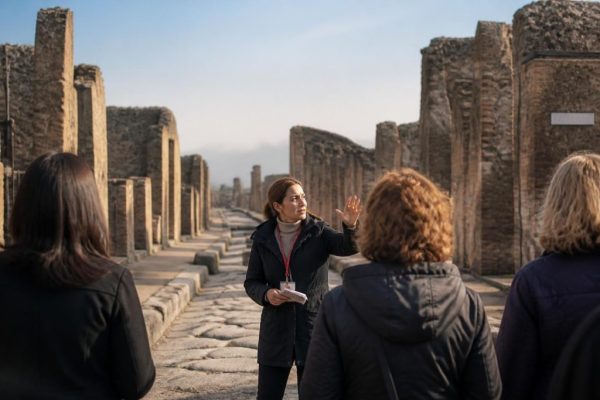
Visiting the ancient city of Pompeii offers travelers an unparalleled glimpse into Roman life frozen in time. Choosing the right guided experience transforms a simple sightseeing trip into an immersive journey through history. Whether you're planning your first visit or returning to explore newly excavated areas, understanding your options for pompeii tours ensures you maximize both your time and investment in this remarkable archaeological treasure.
Understanding Pompeii Tours Options
The variety of pompeii tours available today caters to different travel styles, group sizes, and interests. Private tours provide personalized attention and flexible scheduling, while small group experiences balance affordability with quality interpretation. The key distinction lies in how guides structure the narrative and which sections of the vast archaeological park you'll explore.
Private Versus Group Tour Experiences
Private pompeii tours deliver customized itineraries that adapt to your pace and curiosity. Your guide focuses exclusively on your party, answering questions in depth and adjusting routes based on specific interests like architecture, daily life, or volcanic geology. This approach mirrors the personalized philosophy of professional tour guides who tailor content to individual preferences.
Small group tours typically accommodate eight to fifteen participants. They offer professional commentary at a more accessible price point while maintaining quality standards. The Archaeological Park of Pompeii works with licensed guides who must demonstrate extensive historical knowledge and communication skills.
| Tour Type | Group Size | Flexibility | Price Range | Best For |
|---|---|---|---|---|
| Private | 1-8 people | High | €€€€ | Families, couples, specific interests |
| Small Group | 8-15 people | Medium | €€ | Solo travelers, budget-conscious visitors |
| Large Group | 15-30 people | Low | € | Price-sensitive travelers |
| Specialized | Varies | High | €€€€€ | Archaeologists, photographers, researchers |
Planning Your Visit to Pompeii
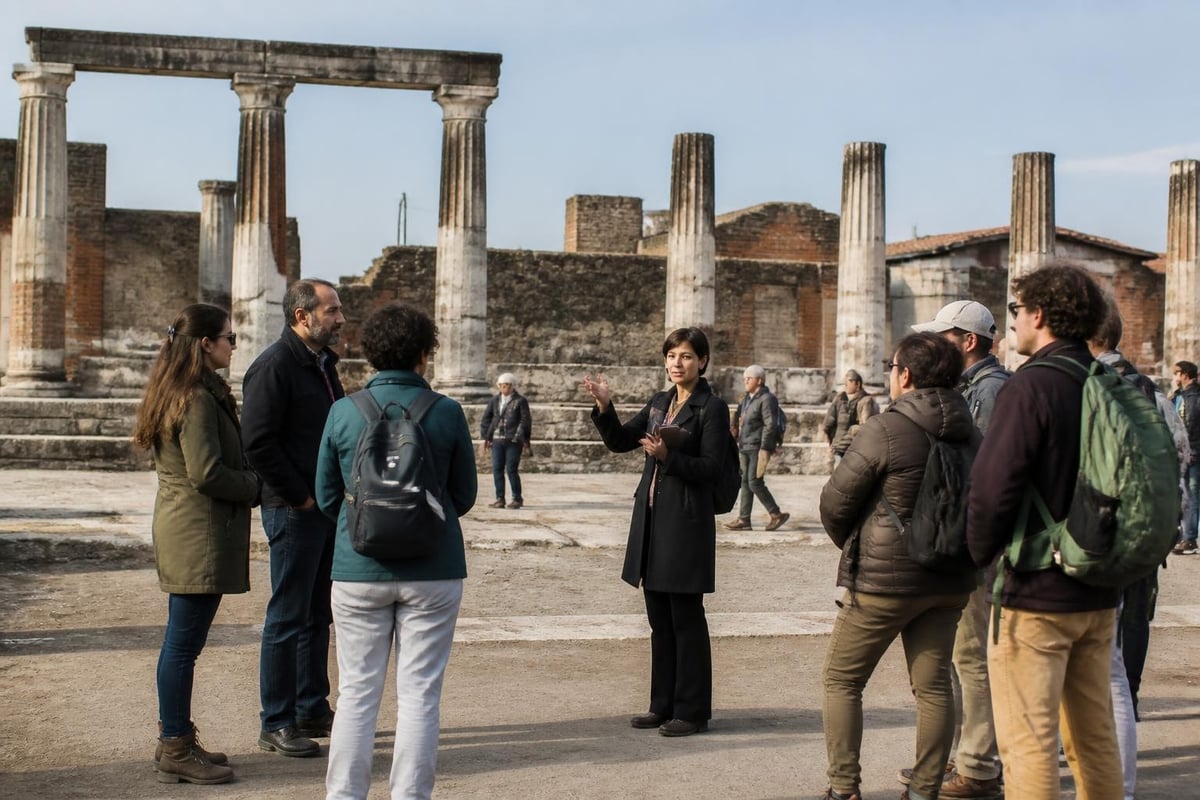
Successful pompeii tours require strategic planning around seasonal factors, time allocation, and physical preparation. The archaeological park spans 170 acres with uneven ancient paving stones and limited shade. Most comprehensive tours last between two and four hours, though serious enthusiasts may prefer half-day or full-day experiences.
Best Times to Visit
Spring months (March through May) and early fall (September through October) provide optimal weather conditions for pompeii tours. Summer temperatures regularly exceed 90°F with minimal shade across the ruins. Winter offers fewer crowds but occasional rain can make ancient streets slippery.
Morning departures starting at 8:30 AM allow you to explore before peak crowds arrive. The official visitor information confirms that entry queues grow substantially after 10:00 AM, particularly during high season months of June through August.
Consider these timing factors:
- Cruise ship schedules: Port days in Naples bring surges of visitors
- Italian holidays: National celebrations create domestic tourist peaks
- Archaeological announcements: New discoveries attract temporary visitor increases
- Weather forecasts: Rain gear essential during November through February
Physical Requirements and Accessibility
Ancient Roman streets were not designed for modern accessibility standards. Pompeii tours involve extensive walking on uneven cobblestones, with some areas featuring significant slopes. The park has made improvements, but visitors with mobility challenges should communicate needs when booking.
Most tour operators provide detailed accessibility information upfront. This transparency reflects the tailored tour approach where matching visitor capabilities to experience design prevents disappointment and ensures safety.
What to Expect During Pompeii Tours
Quality pompeii tours balance historical context with engaging storytelling. Exceptional guides transform archaeological remains into vivid narratives about daily Roman life, the catastrophic eruption, and ongoing preservation efforts. Your experience should include both iconic landmarks and lesser-known discoveries that reveal intimate details about ancient inhabitants.
Essential Sites and Hidden Gems
Major Landmarks:
- Forum: Political and commercial heart of ancient Pompeii
- House of the Faun: Elaborate residence with famous Alexander mosaic
- Amphitheater: One of Rome's oldest surviving stone arenas
- Lupanar: Remarkably preserved brothel with explicit frescoes
- Garden of the Fugitives: Haunting plaster casts of eruption victims
Recent archaeological work continues revealing new insights. BBC News coverage of major discoveries highlights how ongoing excavations reshape our understanding of Roman society. Professional guides incorporate these findings into pompeii tours, ensuring content remains current and research-backed.
Tour Narrative and Educational Value
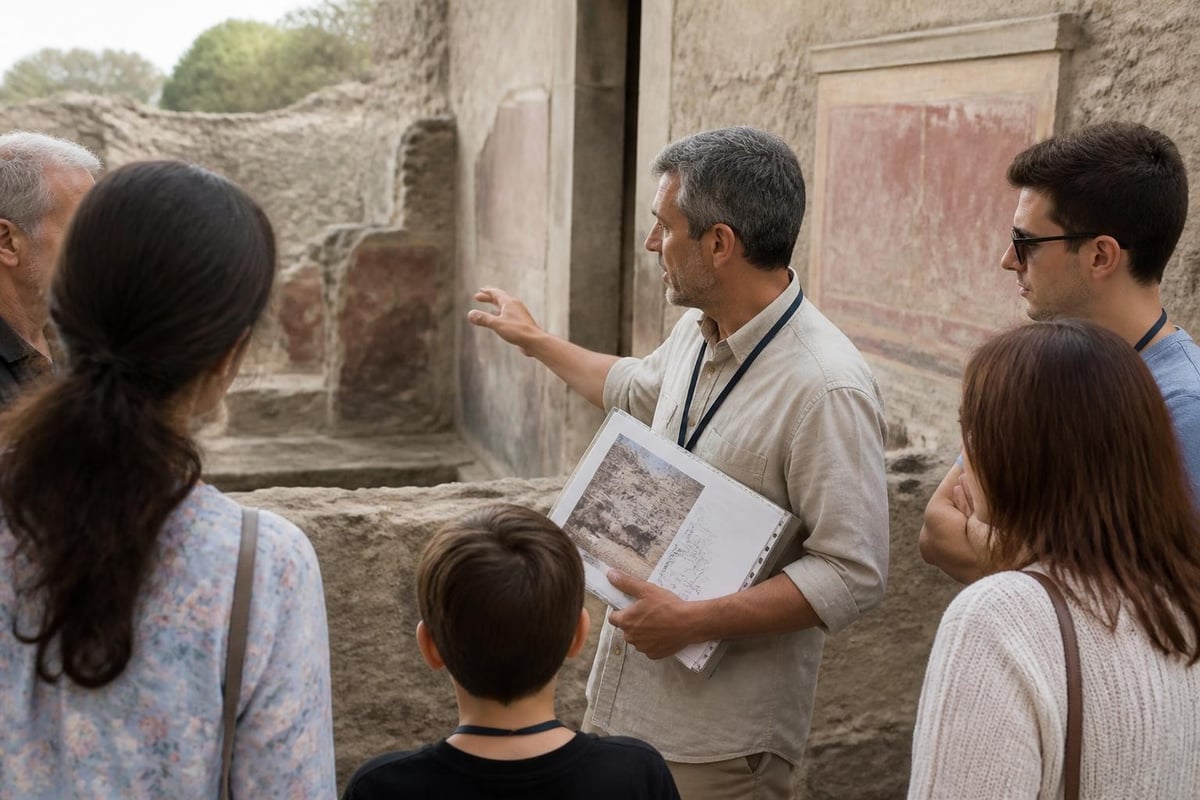
The educational depth of pompeii tours varies significantly based on guide expertise. Licensed archaeologists provide academic rigor, while experienced cultural interpreters excel at making history accessible to general audiences. Both approaches have merit depending on your background and interests.
Superior guides contextualize Pompeii within broader Roman history while connecting ancient experiences to modern life. They explain construction techniques, social hierarchies, religious practices, and economic systems through physical evidence visible in the ruins.
Specialized Pompeii Tour Themes
Beyond standard historical overviews, specialized pompeii tours focus on specific aspects of ancient life or archaeological methodology. These niche experiences appeal to repeat visitors, academic groups, or travelers with particular interests.
Archaeological and Academic Tours
Research-focused pompeii tours examine excavation techniques, conservation challenges, and interpretation debates. Participants learn how archaeologists distinguish between primary eruption damage, subsequent looting, and modern restoration work. The management plan PDF details current preservation strategies and visitor management priorities through 2029.
These tours often include:
- Stratigraphic analysis: Understanding layered deposits and timeline reconstruction
- Artifact interpretation: Examining pottery, tools, and personal items
- Conservation ethics: Balancing public access with preservation needs
- Research methodology: How conclusions are drawn from limited evidence
- Ongoing debates: Controversial interpretations and evolving theories
Photography and Art-Focused Experiences
Visual artists and photographers benefit from pompeii tours designed around compositional opportunities and artistic interpretation. Morning light enhances frescoes and mosaics, while afternoon shadows create dramatic architectural contrasts. Guides familiar with optimal vantage points help participants capture both iconic images and unique perspectives.
Museum developments complement site visits. Euronews reporting on the major new Pompeii museum describes exhibition infrastructure changes that will enhance visitor experiences beginning in 2026.
Combining Pompeii Tours with Regional Exploration
Many visitors integrate pompeii tours into broader Campania region itineraries. The archaeological park sits within easy reach of Naples, Herculaneum, Mount Vesuvius, and the Amalfi Coast. Strategic planning maximizes diverse experiences while minimizing transit time and logistical complexity.
Multi-Site Archaeological Itineraries
Day One: Pompeii Foundation
- Morning pompeii tours (3 hours)
- Afternoon Herculaneum visit (smaller, better preserved)
- Evening Naples archaeological museum
Day Two: Volcanic Context
- Morning Vesuvius crater hike
- Afternoon Oplontis villa exploration
- Evening Sorrento relaxation
Day Three: Cultural Integration
- Morning return to Pompeii for specific sites
- Afternoon coastal town exploration
- Evening regional cuisine experience
This structure mirrors how cultural tours integrate multiple dimensions of regional understanding through carefully sequenced experiences.
Selecting Quality Tour Operators
Evaluating pompeii tours requires examining guide credentials, group policies, cancellation terms, and customer feedback. Reputable operators employ licensed guides, maintain small group sizes, and provide transparent pricing without hidden fees.
Essential Selection Criteria
| Criterion | What to Look For | Red Flags |
|---|---|---|
| Guide Credentials | Licensed by Italian authorities | Unlicensed or vague qualifications |
| Group Size | Maximum 12-15 participants | Unlimited or unclear limits |
| Duration | Realistic for coverage promised | Rushed schedules or vague timing |
| Pricing | Clear breakdown with inclusions | Hidden fees or unclear final costs |
| Reviews | Detailed, recent, verified feedback | Generic praise or old reviews only |
| Flexibility | Weather and accessibility accommodations | Rigid policies with no exceptions |
The best small group tour companies share common characteristics: transparent communication, expert guides, and customer-focused policies that prioritize experience quality over volume.
Practical Logistics for Pompeii Tours
Successful visits depend on managing transportation, entry procedures, facilities, and environmental factors. Pompeii tours originating from Naples, Sorrento, or Amalfi Coast towns each involve different logistics that affect timing and convenience.
Transportation and Access Points
Most visitors reach Pompeii via Circumvesuviana train from Naples (40 minutes) or Sorrento (30 minutes). The Pompei Scavi-Villa dei Misteri station sits directly adjacent to the main entrance. Private car services offer door-to-door convenience but cost significantly more than rail options.
Entry Points:
- Porta Marina: Main entrance, most pompeii tours start here
- Piazza Anfiteatro: Eastern entrance, less crowded
- Piazza Esedra: Northern entrance, useful for specific itineraries
Pre-purchased tickets expedite entry, though guided tour rates typically include admission. The archaeological park recommends arriving 15 minutes before scheduled tour times to complete entry procedures without rushing.
Essential Items and Comfort Considerations
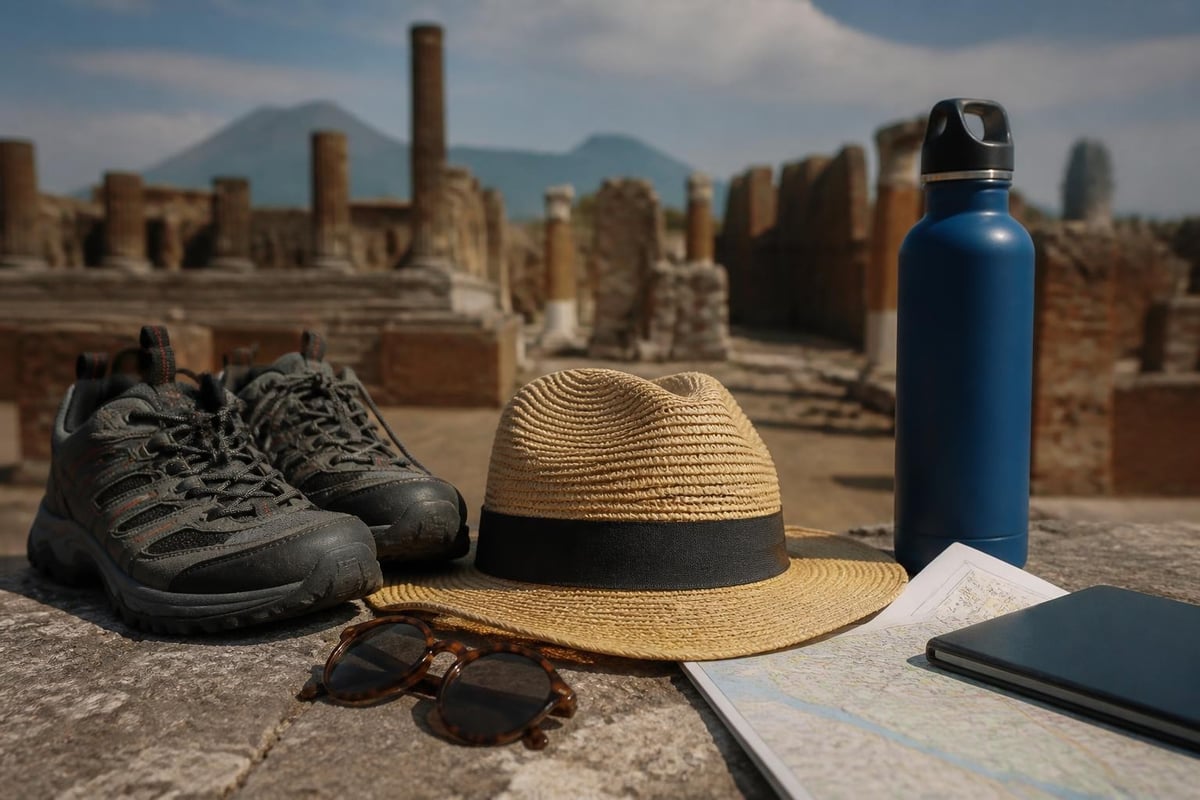
Mediterranean sun and exposed terrain demand proper preparation. Comfortable walking shoes with good traction prove essential on uneven ancient paving. Wide-brimmed hats, sunscreen, and refillable water bottles prevent heat exhaustion during summer pompeii tours.
Pack these essentials:
- Sun protection: Hat, sunglasses, SPF 50+ sunscreen
- Hydration: Reusable bottle (fountains available on-site)
- Footwear: Closed-toe shoes with ankle support
- Documentation: Tickets, identification, tour confirmation
- Technology: Charged phone/camera, portable battery
- Comfort: Light layers, small backpack, rain jacket (seasonal)
Enhancing Understanding Through Context
The most memorable pompeii tours connect archaeological evidence to broader historical narratives. Understanding Roman social structures, religious practices, economic systems, and daily routines transforms ruins into vibrant communities where real people lived complex lives.
Daily Life in Ancient Pompeii
Pompeii housed approximately 11,000 residents when Vesuvius erupted in 79 AD. The city featured sophisticated infrastructure including running water, public baths, commercial districts, and entertainment venues. Social stratification shaped residential patterns, with wealthy families occupying elaborate homes near the forum while working-class residents lived in smaller quarters.
Exceptional pompeii tours reveal:
- Commercial activity: Bakeries, taverns, workshops, and markets
- Domestic spaces: Cooking areas, sleeping quarters, garden atriums
- Public infrastructure: Water distribution, waste management, road systems
- Religious practices: Household shrines, temple complexes, ritual objects
- Entertainment culture: Theater programming, gladiatorial events, public baths
This comprehensive approach parallels how guided vacations contextualize destinations within broader cultural frameworks rather than presenting isolated facts.
Extending Your Pompeii Experience
Single visits rarely exhaust Pompeii's educational and experiential potential. Return visits allow deeper exploration of specific themes, newly opened areas, or seasonal variations in site ambiance. Some travelers develop ongoing relationships with particular guides who customize successive pompeii tours around evolving interests.
Advanced Exploration Strategies
Thematic Return Visits:
- First visit: Overview of major landmarks and historical context
- Second visit: Focus on domestic architecture and daily life
- Third visit: Commercial districts and economic systems
- Fourth visit: Religious practices and public spaces
- Fifth visit: Recent excavations and ongoing discoveries
This progressive deepening mirrors how experienced travelers approach cultural exploration, building knowledge through repeated engagement rather than attempting comprehensive understanding in a single visit.
Educational Resources and Continued Learning
Quality pompeii tours inspire continued learning beyond the visit itself. Reputable operators provide reading lists, documentary recommendations, and academic resources for participants interested in deeper study. This educational continuity transforms tourism into genuine cultural engagement.
Seasonal Variations and Special Events
Pompeii tours experience distinct seasonal characters beyond simple weather variations. Summer brings extended hours and special evening openings, while winter offers contemplative atmospheres with minimal crowds. Archaeological announcements occasionally draw temporary visitor surges around significant discoveries.
The park occasionally hosts special programming:
- Archaeological conferences: Professional gatherings open to interested public
- Conservation demonstrations: Restoration work explanations and observations
- Academic lectures: Visiting scholars presenting recent research
- Cultural performances: Historically informed music and theater
- Photography workshops: Specialized instruction in archaeological documentation
These events parallel how English walking tours occasionally incorporate special programming that enhances standard offerings with unique seasonal content.
Experiencing Pompeii through expertly guided tours transforms ancient ruins into vivid narratives that connect modern visitors with Roman history. Whether you're drawn to archaeological details, artistic achievements, or daily life reconstructions, selecting the right tour structure and knowledgeable guide maximizes both understanding and enjoyment. While Adding:tours specializes in Stockholm experiences like walking tours of Old Town and personalized cultural explorations, we understand how professional guiding transforms any destination into an immersive educational journey. Explore how Adding:tours brings this same commitment to personalized, insider-perspective experiences to your Stockholm visit.