Acropolis Tour: Your Complete Guide for 2026
Standing atop the sacred rock of the Acropolis, you're not simply viewing ancient ruins. You're witnessing 2,500 years of human achievement, architectural mastery, and cultural evolution. An acropolis tour offers far more than photo opportunities with marble columns. It provides insight into how democratic ideals, artistic excellence, and engineering innovation converged to create one of the world's most influential monuments. Whether you're planning your first visit or returning with deeper curiosity, understanding what makes this site extraordinary transforms sightseeing into genuine cultural immersion. The key lies in preparation, timing, and knowing which details deserve your attention.
Understanding the Acropolis Site
The Acropolis rises 150 meters above sea level on a limestone outcrop that has been continuously inhabited since the Neolithic period. The monuments you see today primarily date from the 5th century BCE, when Pericles commissioned a sweeping building program following the Persian destruction of 480 BCE.
Major Monuments and Their Significance
The Parthenon dominates the plateau, but four main structures define your acropolis tour experience. Each served distinct religious and civic functions in ancient Athens.
| Monument | Construction Date | Primary Purpose | Key Feature |
|---|---|---|---|
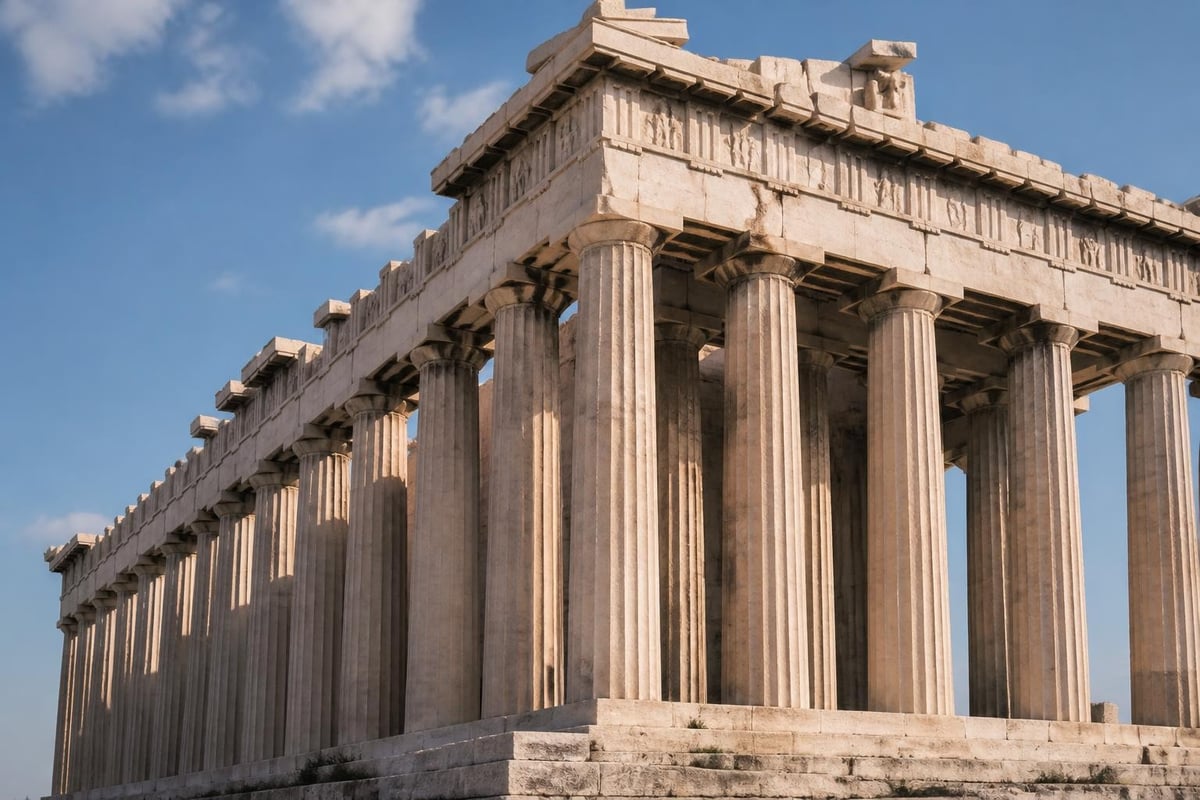
| Parthenon | 447-432 BCE | Temple to Athena Parthenos | Optical refinements, Doric columns |
| Propylaea | 437-432 BCE | Monumental gateway | Mixed Doric and Ionic elements |
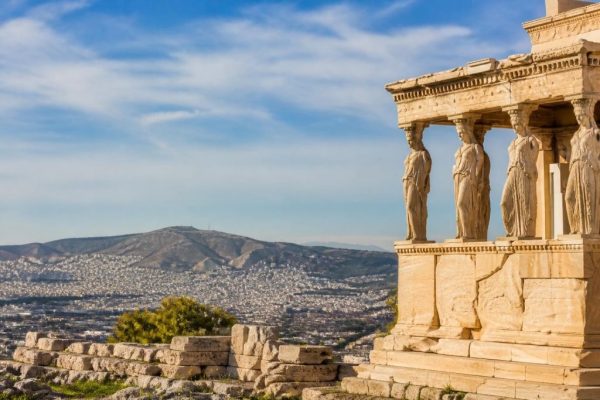
| Erechtheion | 421-406 BCE | Temple to Athena and Poseidon | Caryatid porch |
| Temple of Athena Nike | 427-424 BCE | Victory monument | Ionic frieze depicting battles |
The Parthenon's architectural sophistication extends beyond its size. Every column tilts slightly inward, horizontal lines curve subtly upward, and corner columns are thicker than others. These refinements counteract optical illusions that would make straight lines appear to sag and create the impression of perfect proportion.
Recent research published in Antiquity reveals new details about the original polychromy of Parthenon sculptures. Far from the white marble we see today, these monuments blazed with vivid blues, reds, and golds. Understanding this original appearance fundamentally changes how we interpret ancient Greek aesthetics.
Planning Your Acropolis Tour
Timing dramatically impacts your experience. Summer brings intense heat, crowds exceeding 15,000 daily visitors, and limited shade across the exposed marble surfaces. Strategic planning addresses these challenges.
Best Times to Visit
Seasonal Considerations:
- April to June: Moderate temperatures (18-25°C), spring blooms, manageable crowds
- September to October: Similar weather, fewer school groups, golden afternoon light
- November to March: Smallest crowds, occasional rain, shorter daylight hours
- July to August: Peak season, temperatures above 35°C, arrive before 8:00 AM
Daily Timing:
- First entry (8:00 AM): Coolest temperatures, best photography light, minimal crowds
- Late afternoon (after 3:00 PM): Softer light, thinner crowds, sunset views over Athens
- Midday (11:00 AM to 2:00 PM): Maximum heat and congestion, avoid if possible
The official Acropolis Museum offers climate-controlled relief and houses original sculptures removed from the monuments for preservation. Planning your acropolis tour to include both the outdoor archaeological site and the museum creates a complete narrative.
Ticketing and Access Options
Standard admission covers the Acropolis plus six additional archaeological sites (Ancient Agora, Roman Agora, Hadrian's Library, Kerameikos, Olympieion, and Aristotle's Lyceum) valid for five consecutive days. The multi-site ticket provides exceptional value for history enthusiasts.
Ticket Categories and Pricing (2026):
| Ticket Type | Price (EUR) | Validity | Best For |
|---|---|---|---|
| Single site | €20 | One day | Time-limited visitors |
| Multi-site combo | €30 | Five days | Comprehensive exploration |
| Reduced rate | €10 | One day | Students, seniors (EU) |
| Free entry | €0 | Specific days | EU citizens under 25, certain dates |
Free admission days include March 6, April 18, May 18, last weekend of September, October 28, and every first Sunday from November through March. These dates attract substantial crowds despite the cost savings.
Reaching the site proves straightforward using Athens public transport. The OASA metro system connects directly to Acropolis station (red line) and Thissio station (green line), both within 10 minutes walking distance. This accessibility makes independent acropolis tour planning feasible for most travelers.
What Professional Guides Reveal
Experienced guides transform scattered ruins into coherent stories. Much like professional tour guides in Stockholm who illuminate local history through insider perspectives, Acropolis specialists decode architectural details and historical contexts invisible to casual observers.
Hidden Details Worth Noting
The Erechtheion's north porch marks where Poseidon struck his trident during his contest with Athena for patronage of the city. Look carefully at the ceiling, and you'll see the hole supposedly left by his trident still visible in the marble.
The Caryatids supporting the southern porch are replicas. Five originals reside in the Acropolis Museum, while the sixth remains in the British Museum, at the center of ongoing repatriation discussions. Each maiden's drapery falls differently, demonstrating the sculptors' mastery of representing fabric in stone.
Lesser-Known Acropolis Features:
- Beulé Gate foundations incorporate blocks from the nearby monument of Nikias
- Southwest slope theater of Dionysus hosted original performances of works by Aeschylus, Sophocles, and Euripides
- Ancient water cisterns beneath the plateau stored rainfall for sanctuary rituals
- Boundary markers (horoi) still visible around the base define the sacred precinct
- Modern excavation trenches reveal continuous habitation layers from Mycenaean to Ottoman periods
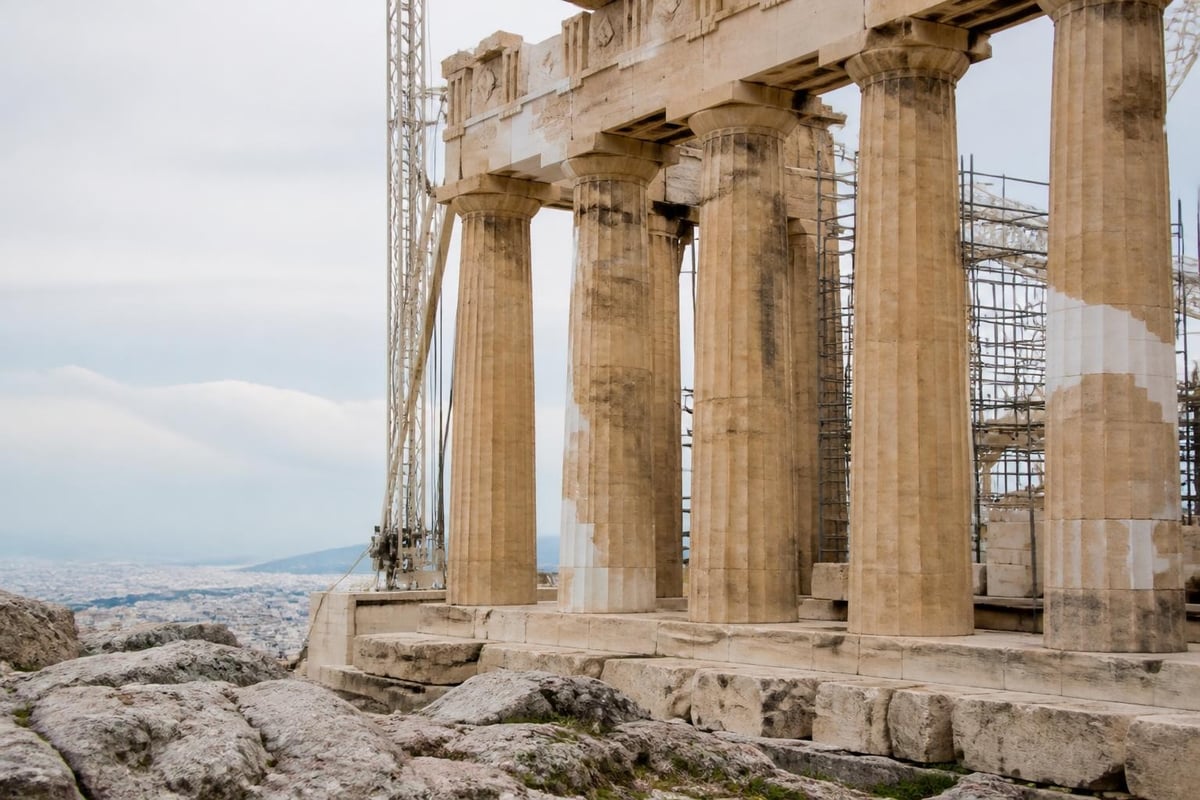
Conservation efforts continue year-round. The Acropolis Restoration Service details current structural interventions, including titanium reinforcement of the Parthenon's architrave and laser cleaning of marble surfaces. These technical projects preserve the monuments while raising philosophical questions about authenticity and reconstruction.
Maximizing Your Visit Experience
An effective acropolis tour balances systematic coverage with spontaneous discovery. Fixed itineraries miss unexpected details, while aimless wandering overlooks essential context.
Recommended Route Through the Site
Enter through the Propylaea and immediately turn right toward the Temple of Athena Nike before crowds gather. This small temple offers close viewing of its Ionic frieze depicting Persian War victories.
- Temple of Athena Nike (10 minutes): Examine the relief sculptures, note the seamless parapet joints
- Propylaea central passage (15 minutes): Look for ancient graffiti, study the coffered ceiling remains
- Parthenon circuit (30 minutes): Walk completely around, observe metope variations, identify optical refinements
- Erechtheion (20 minutes): Study the Caryatids, find Poseidon's trident mark, examine Ionic capitals
- Northern viewpoint (10 minutes): Panoramic vista over Ancient Agora, Plaka, and modern Athens
- Southeastern terraces (15 minutes): Theater of Dionysus overlook, sanctuary of Asklepios identification
Allow minimum 90 minutes for thorough exploration without guides. Tailored tours that adapt to group interests typically allocate 2.5 to 3 hours, permitting deeper discussion of specific architectural or historical elements.
Essential Practical Tips
Physical preparation prevents common discomfort. The marble surfaces become slippery when wet and scorching in summer heat. Rubber-soled shoes with good traction prove essential, not optional.
What to Bring:
- Minimum one liter of water per person (no fountains on site)
- Wide-brimmed hat and sunscreen (SPF 50+)
- Comfortable walking shoes with grip
- Shoulder cover for women (required for adjacent churches)
- Portable phone charger for photos and digital guides
What to Avoid:
- Large backpacks (security checkpoint delays)
- Wheeled luggage (prohibited, no storage available)
- Drones (strictly forbidden, enforced with fines)
- Touching marble surfaces (oils damage stone)
- Climbing on structures (damages monuments, risks arrest)
Photography regulations permit personal cameras but prohibit commercial shoots without permits, tripods, and flash photography that might disturb other visitors or damage light-sensitive surfaces.
Combining Museum and Monument Visits
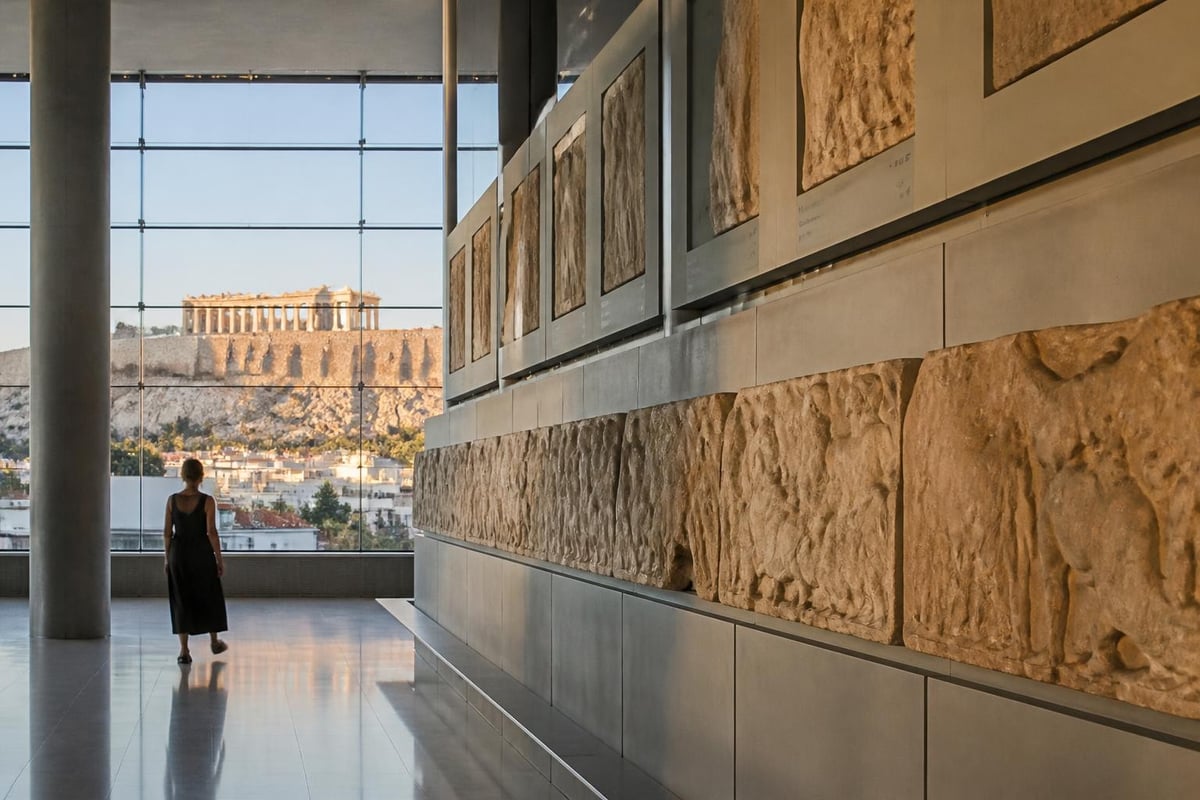
The Acropolis Museum visitor guide maps the connection between museum exhibits and original monument locations. This purpose-built facility, opened in 2009, displays over 4,000 objects found on the Acropolis rock across three levels that mirror the site's topography.
Strategic Museum Integration
Visit the museum first to understand context before seeing the monuments, or visit afterward to examine details impossible to view on weathered originals. Both approaches offer advantages depending on your learning style.
The third-floor Parthenon Gallery recreates the temple's exact dimensions and orientation. Standing here while viewing the frieze at eye level, as ancient Athenians would have seen it from scaffolding during festivals, provides perspective impossible to gain from the fragmented ruins.
Museum Highlights Directly Connected to Your Acropolis Tour:
- Archaic Gallery: Kore and kouros statues from pre-Persian sanctuary, showing evolution toward Classical naturalism
- Caryatid display: Five original maidens with detailed examination of carving techniques
- Parthenon frieze: 160-meter continuous narrative of Panathenaic procession
- Pediment sculptures: Original Parthenon figures showing birth of Athena and contest between Athena and Poseidon
Climate control, proper lighting, and protected display let you examine surface details weathering has erased from outdoor monuments. Paint traces, tool marks, and inscription details become visible under museum conditions.
Tourism Impact and Sustainable Visiting
Mass tourism strains the Acropolis despite conservation investment. The World Heritage Watch monitoring report documents pressures from over-visitation, including marble erosion from foot traffic, microclimate changes from body heat, and infrastructure stress.
Responsible Tour Practices
Visitor caps implemented in 2023 limit daily entries to 20,000 people during peak season, distributed through timed tickets. This system reduces crowding but requires advance booking during summer months.
Small group tours minimize environmental impact compared to large bus tours. Similar to how small group tour companies create intimate experiences with reduced ecological footprints, acropolis tour operators increasingly offer limited-size bookings that permit deeper engagement while protecting monument integrity.
Sustainable Visiting Choices:
- Book timed-entry tickets reducing peak-hour congestion
- Use public transport rather than tour buses
- Support local guides from Athens communities
- Avoid single-use plastics (bring reusable water bottles)
- Respect barrier systems protecting fragile areas
- Choose off-season travel when feasible
Digital documentation using photogrammetry and 3D scanning creates detailed virtual records that support both conservation and remote access. These technologies enable virtual acropolis tour experiences for those unable to travel while providing conservators with precise measurements for restoration decisions.
Special Interest Tour Angles
Beyond general historical overview, specialized acropolis tour approaches illuminate specific aspects of the site's complexity. Architecture enthusiasts focus on construction techniques and optical refinements. Art historians examine sculptural programs and iconography. Philosophy students explore connections to Socratic Athens and democratic ideals.
Thematic Exploration Options
Architectural Innovation: Examine how Ictinus and Callicrates achieved visual perfection through mathematical precision, studying specific column measurements, entasis calculations, and curvature compensations that create the illusion of straight lines.
Sculptural Narrative: Decode the Parthenon's comprehensive iconographic program across metopes (mythological battles), frieze (Panathenaic procession), and pediments (divine narratives), understanding how these elements communicated Athenian ideology.
Democratic Context: Connect the building program to Periclean Athens, exploring how monument construction employed thousands of citizens, affirmed democratic values, and projected power during the Delian League period.
Religious Practice: Reconstruct ancient ritual activities including the Panathenaic festival procession, animal sacrifices at altars, and votive offerings deposited across the sanctuary, understanding the Acropolis as living religious center rather than museum.
These specialized angles work particularly well for repeat visitors seeking depth beyond initial overview tours. Just as cultural tours in other cities layer multiple perspectives on familiar sites, thematic acropolis tour approaches reveal overlooked dimensions of well-known monuments.
Practical Logistics and Common Questions
First-time visitors frequently encounter unexpected challenges that simple advance knowledge prevents. Understanding entrance locations, facility availability, and timing constraints eliminates frustration.
Access and Facilities
Two main entrances serve the site: the western Propylaea entrance (primary access from Dionysiou Areopagitou Street) and the southeastern entrance near the Theater of Dionysus. Most visitors use the western entrance, but the southeastern route offers shorter lines during peak periods.
On-Site Amenities:
| Facility | Availability | Location | Notes |
|---|---|---|---|
| Restrooms | Limited | Base of hill only | None on summit plateau |
| Water fountains | None | Must bring bottles | Nearest sources at base |
| Shade structures | Minimal | Few trees on plateau | Bring hat/umbrella |
| Seating | Limited | Scattered benches | Marble blocks not for sitting |
| First aid | Available | Ticket office area | Medical emergencies only |
Wheelchair access exists via elevator from the southwestern approach, though certain areas remain inaccessible due to ancient pathways and uneven surfaces. The museum offers complete wheelchair accessibility with elevators, ramps, and adapted restrooms.
Average visit duration ranges from 90 minutes for overview tours to four hours for comprehensive exploration including museums. Combining acropolis tour experiences with surrounding archaeological sites in Plaka creates full-day itineraries for dedicated history enthusiasts.
Photography and Documentation
Natural light dramatically affects photography results. Morning sun illuminates the eastern facades of the Parthenon and Erechtheion, while afternoon light favors western views and creates dramatic shadows across columns.
Optimal Photography Times:
- Sunrise (6:00-7:30 AM): Golden light, empty terraces, soft shadows
- Late afternoon (4:30-6:00 PM): Warm tones, angular shadows, Athens panorama
- Overcast days: Even lighting eliminates harsh contrasts, reveals marble detail
- Blue hour (post-sunset): Illuminated monuments against twilight sky
Smartphone cameras capture adequate documentation, but DSLR or mirrorless cameras with wide-angle lenses (16-35mm) better frame the monuments' scale. Polarizing filters reduce marble glare and deepen blue skies.
Video recording receives the same permissions as photography. Live streaming and commercial content creation require advance permits from the Hellenic Ministry of Culture, typically granted for documentary or educational purposes.
Beyond the Standard Route
Adjacent areas surrounding the Acropolis offer extensions that enrich the core acropolis tour experience. The Ancient Agora spreads northwest below the Acropolis, containing the remarkably preserved Temple of Hephaestus and the reconstructed Stoa of Attalos housing the Agora Museum.
Surrounding Archaeological Sites
Hadrian's Arch and the Olympieion (Temple of Olympian Zeus) stand southeast of the Acropolis, representing Roman-era additions to Athens' monumental landscape. The massive Corinthian columns of the Olympieion, requiring seven centuries to complete, dwarf even the Parthenon's proportions.
Extended Archaeological Circuit:
- Pnyx Hill: Original assembly site of Athenian democracy, speaker's platform still visible
- Areopagus: Mars Hill, traditional meeting place of aristocratic council
- Filopappou Hill: Monument viewpoint offering unobstructed Acropolis photography
- Philopappos Monument: Roman memorial providing historical context for later periods
- Kerameikos Cemetery: Ancient burial ground with sculpted grave markers
These extensions transform a single-site visit into comprehensive exploration of ancient Athens' civic, religious, and social landscape. Walking routes connect the sites through the pedestrianized Dionysiou Areopagitou Street, creating a traffic-free archaeological promenade.
Much like Stockholm walking tours that weave together multiple sites into coherent narratives, extended Athens itineraries reveal connections between monuments that isolated visits miss. The Panathenaic Way ceremonial route, for instance, connected the Kerameikos and Agora to the Acropolis Propylaea, unifying the city's sacred geography.
Contemporary Visitor Experience
Modern infrastructure attempts to balance access with preservation. Recent improvements include reinforced pathways that protect ancient surfaces from foot traffic, interpretive panels with QR codes linking to detailed content, and improved drainage systems preventing water damage to foundations.
Digital Enhancement Options
Audio guides available in 12 languages provide monument-specific commentary synchronized to your location. Official apps overlay ancient reconstructions on modern ruins through augmented reality, showing how polychromy, roofs, and sculptures originally appeared.
Virtual reality experiences offered by the Acropolis Museum transport visitors to 5th century BCE Athens, recreating the Panathenaic festival procession and temple interiors now lost. These digital tools complement rather than replace physical acropolis tour experiences, offering perspectives impossible through direct observation alone.
Digital Resources for Enhanced Understanding:
- Official Acropolis Museum app (iOS/Android): AR reconstructions, audio guides
- Google Arts & Culture Acropolis collection: Gigapixel imagery, 3D models
- Athens City Museum virtual tour: Historical context and city evolution
- UNESCO World Heritage site database: Conservation reports and educational materials
Technology enables virtual previews before visits and detailed review afterward, extending the learning window beyond your physical time on site. Many visitors find preliminary research through digital resources makes their actual acropolis tour more meaningful by providing framework for on-site observations.
An acropolis tour represents far more than checking a landmark off your travel list. It offers direct connection to foundational moments in Western civilization, opportunities to understand how ancient societies expressed their highest values through architecture, and reminders that preservation requires constant care and thoughtful visiting. Whether you're drawn to Athens specifically or exploring how cultural tours transform sightseeing into genuine understanding, professional guidance makes the difference between seeing ruins and comprehending their significance. When you're ready to experience personalized exploration with expert insights, Adding:tours brings that same commitment to tailored, intimate group experiences in Stockholm, where native English-speaking guides reveal the stories that transform any destination into memorable discovery.