
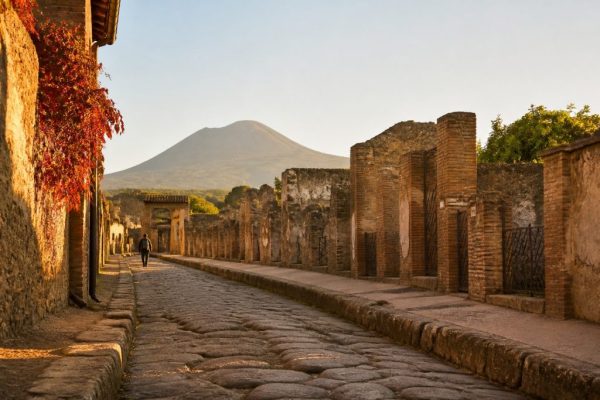
Pompeii and Vesuvius Tour: What to Know Before You Go
A Pompeii and Vesuvius tour combines two sites in one day: a walk through the preserved Roman city, then a drive and short hike to the crater of the volcano that buried it in AD 79. Most visitors book a guided combination from Naples or Sorrento, which covers transport, timed entry and the climb, and takes roughly eight to ten hours in total.
This article explains how the day works, what the tickets and rules require in 2026, and how to decide between a group excursion and a private guide. It also covers practical points such as footwear, bag size and the best order for the two stops.
What a Pompeii and Vesuvius Tour Includes
A standard combination tour includes round-trip transport, a guided visit of the excavated city, and a bus ride up Vesuvius followed by a walk to the crater rim. Some packages add entrance tickets and audio guides, while others require you to buy admission separately.
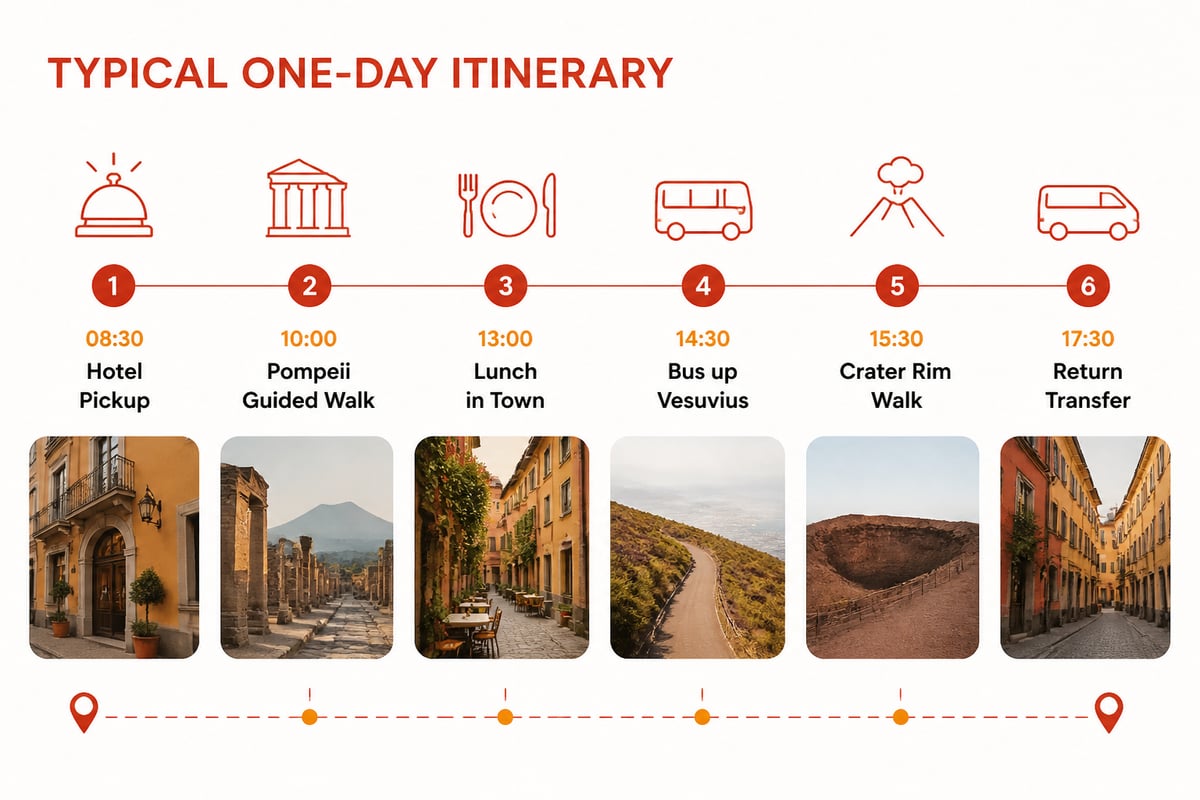
The typical day runs in this order:
- Morning pickup in Naples, Sorrento or Salerno.
- Transfer to the Pompeii entrance and a guided walk of about two hours.
- Lunch break, often in the modern town beside the site.
- Drive up the slopes of Vesuvius to the parking area near 1,000 meters.
- A walk of roughly 20 to 30 minutes uphill to the crater viewpoint.
- Return transfer in the late afternoon.
Check what is bundled before you pay. Entry to the volcano is a separate charge from the ancient city, and a cheap-looking package may leave one or both tickets for you to purchase on the day.
Pompeii Tickets, Entry Windows and Rules in 2026
Pompeii limits admission per day, according to the Pompeii Sites visitor regulations, with entry split into two time windows. In winter the windows run from 9:00 a.m. to 1:00 p.m. and from 1:01 p.m. to 3:30 p.m., and the second window closes at 5:30 p.m. in summer.
Since January 12, 2026, admission to the ancient city alone costs €20. The ticket is valid for one entry and does not allow you to leave and come back in, so plan your lunch and restroom stops accordingly.
Tickets are also personal. Visitors must show a ticket bearing the holder's name, the date and the time slot, and tickets cannot be transferred to another person. If you book through a tour operator, confirm that names are entered correctly at the time of purchase, as corrections at the gate are not guaranteed.
Pompeii has several entrances, and the site's own page on how to visit the excavations describes them. Your guide will usually pick the entrance closest to the coach drop-off, but knowing the options helps if you arrive independently and the queue at one gate is long.
Vesuvius: The Climb, the Crater and the Weather
The Vesuvius climb is short but steep. From the parking area, a gravel path climbs to the crater rim, and most visitors cover it in about 20 to 30 minutes with a few pauses.
Conditions at the top differ from the coast. It is often noticeably cooler and windier than Naples, and the path is loose volcanic gravel with little shade. Visitors with limited stamina can still manage the walk at a slow pace, but it is not suitable for anyone with a heart or respiratory condition that makes an uphill climb difficult.
What to wear and carry:
- Closed shoes with grip. Sandals and smooth soles slip on the cinders.
- A light layer. A windbreaker is useful even in summer.
- Water. There is little available on the path.
- Sun protection. A hat and sunscreen matter more than most visitors expect on an exposed slope.
Visibility varies. On cloudy days the crater and the bay below can disappear into mist, so check the forecast the evening before and ask your operator about rescheduling policies. Cancellation terms differ between tours, and some allow free changes if the volcano is closed for weather or safety reasons.
Which Site Should Come First?
Most tours visit Pompeii first and Vesuvius second, because the city is easier to enjoy before the heat of the afternoon and the climb works as a clear finish to the day. This order also fits the entry windows, since a morning slot lets you finish the excavations before the heat builds.
Reversing the order can make sense in two cases. If the forecast shows clouds clearing by midday, an afternoon Vesuvius visit may give better views. If you are traveling in July or August, a very early volcano climb avoids the worst heat, though it requires a pickup before 8:00 a.m.
If you want to understand the geology before you see the damage, a Vesuvius-first schedule gives useful context. You can look down on the plain where Pompeii stood and then read the streets with a clearer sense of scale.
Group Excursion or Private Guide?
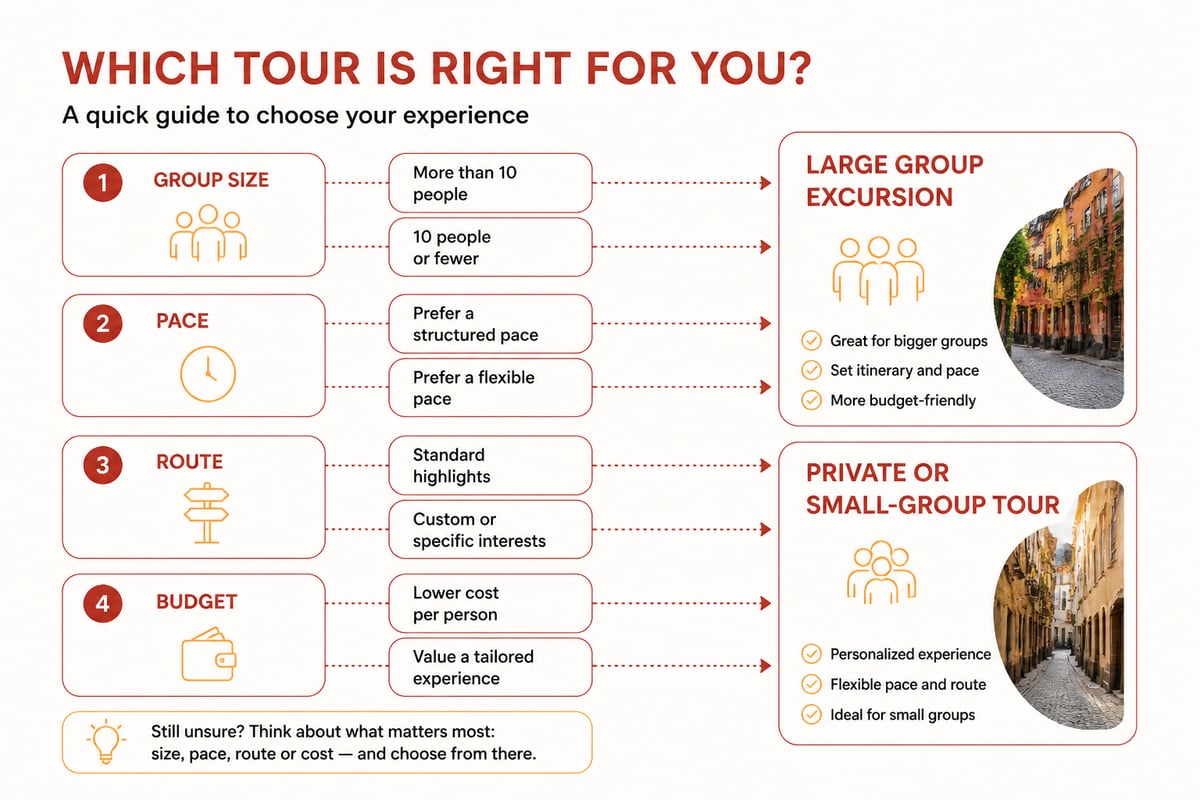
A group excursion is cheaper and simpler to book, while a private guide lets you set the pace, skip what does not interest you and ask unlimited questions. The right choice depends on your group size, your interests and how much of the day you want fixed in advance.
| Factor | Large group tour | Private or small-group guide |
|---|---|---|
| Group size | Often 20 to 50 guests | Usually a handful of people |
| Pace | Set by the schedule | Adjusted to your group |
| Route in Pompeii | Standard highlights | Tailored to your interests |
| Flexibility | Fixed pickup and return | Often adjustable |
| Cost per person | Lower | Higher |
For families, couples and friends traveling together, a small group usually removes the friction of a crowded walk, where the guide's voice is hard to hear and the group stalls at every doorway. For companies planning a team outing, a private format makes it easier to manage timing and keep everyone together.
How to Get to Pompeii and Vesuvius
Public transport reaches both sites, but the volcano is harder to reach without a booked transfer. The Circumvesuviana train from Naples or Sorrento stops at Pompei Scavi-Villa dei Misteri, a few minutes' walk from the Porta Marina entrances. Vesuvius has no direct train line to the crater, so independent visitors typically combine a train to Ercolano with a shuttle or taxi up the mountain.
Guided tours remove this complication. A single vehicle takes you from your hotel to both sites, which saves time and avoids the risk of missing a connection between a timed ticket and a delayed train. This is especially useful if you are traveling with a group, since coordinating several people across train platforms and shuttle queues is more difficult than it looks on a map.
What to Bring and What to Leave Behind
Pompeii enforces a strict bag rule: bags, backpacks, luggage and cases above the size limit are not permitted inside the excavations, according to the Pompeii Sites visitor services page. Large bags must be left at the cloakroom, which adds time at the start and end of your visit.
A sensible packing list for the day:
- A small daypack within the size limit.
- A refillable water bottle.
- A printed or downloaded copy of your named ticket.
- A light jacket for Vesuvius.
- Comfortable shoes you have already worn in.
- A portable charger, since photos and navigation drain a battery quickly.
Shade is limited among the ruins, so a hat helps. The paving stones are uneven and worn, which makes proper footwear more important than any other single item.
Making the Most of Pompeii With a Guide
A guide turns a field of ruins into a readable city. Without context, many houses look alike; with a guide, you can identify a bakery by its millstones, a tavern by its counter and a wealthy home by its mosaics and frescoes.
The site is large and cannot be covered in one visit. A good guide selects a route that fits your time, typically combining the forum, a bathhouse, a main street with ruts worn by carts, and one or two preserved houses. If your time is short, ask for the Villa dei Misteri or the Lupanare to be included or skipped according to your interest.
For comparison, visitors planning similar guided archaeological days elsewhere often follow the same logic. Travelers who have booked locally led tours to Machu Picchu in Peru will recognize the pattern: timed entry, a defined route and a local guide who supplies the history that the stones alone do not.
Seasonal Timing and Crowd Management
Spring and autumn offer the best balance of temperature and crowds. April, May, late September and October bring mild weather, clearer light for photographs and fewer visitors than the peak summer months.
Summer is hot, with little shade in Pompeii and a cooler but exposed climb on Vesuvius. If you travel in July or August, choose the earliest entry window and carry more water than you think you need. Winter is quiet and often rainy, but the shorter opening hours of the second entry window mean a late start can cut your time significantly.
Weekends and public holidays attract Italian visitors as well as international ones, so a midweek date is generally calmer. Cruise ship days around Naples can also lengthen queues at the gate, which is another reason to book a timed ticket in advance.
Is a Pompeii and Vesuvius Tour Worth It?
For most first-time visitors, a Pompeii and Vesuvius tour is worth the cost because it handles tickets, transfers and timing in one booking, and the guide supplies context you would otherwise have to research in advance. The two sites also complement each other: one shows the human scale of the disaster, the other shows its cause.
It may not suit every traveler. If you prefer to explore at your own speed and are comfortable with trains, you can visit Pompeii independently for the €20 entry fee and add Vesuvius on a separate day. If you are short on time or traveling with a group, the bundled format is usually the more efficient option.
Related guided experiences are also available for those who enjoy history-led days in other cities. Adding:tours runs Pompeii tours alongside its other guided programs, and its approach of small groups, native English-speaking guides and tours tailored to your group's interests reflects what many visitors want from a day at a large archaeological site. Browse the wider range of guided sightseeing tours to compare formats, or read the Adding:tours blog for more planning advice.
Practical Checklist Before You Go
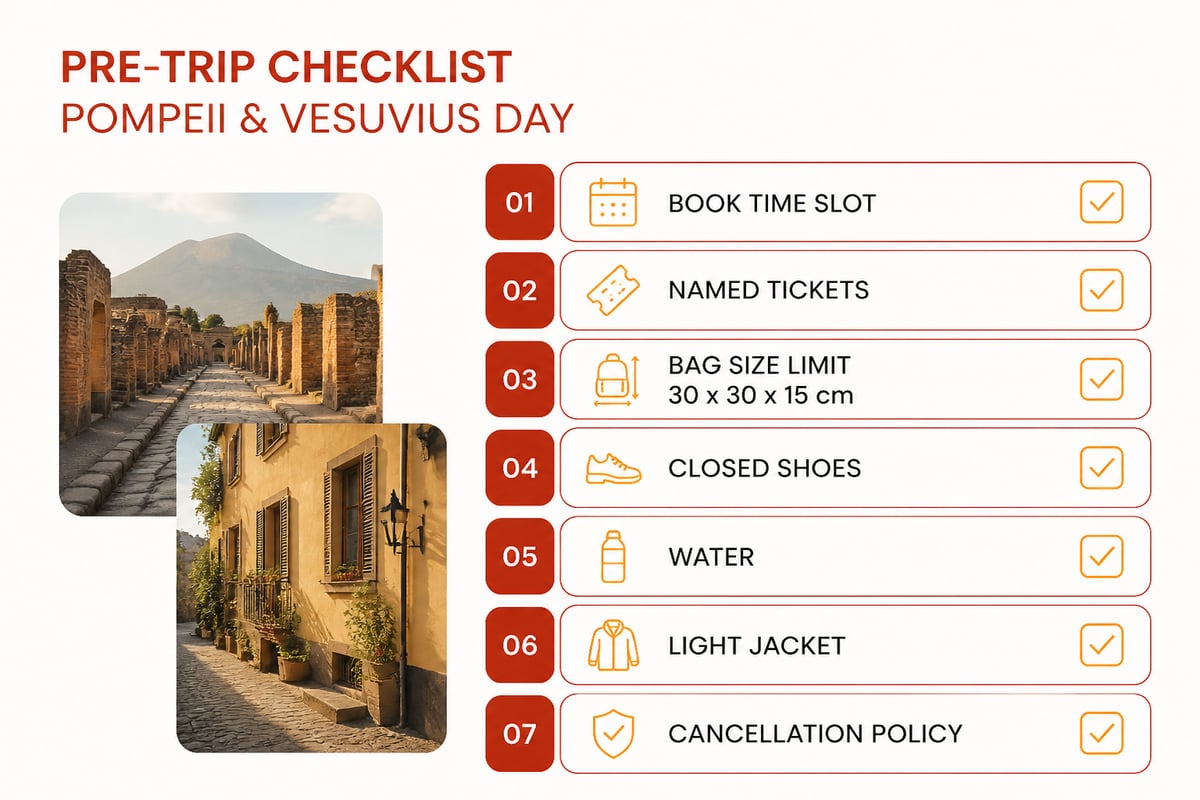
A short checklist reduces the chance of a problem at the gate.
- Book the time slot early. Pompeii caps daily admission, and the first entry window fills first.
- Confirm names on tickets. They are personal and cannot be transferred.
- Check what the tour includes. Volcano entry, audio guides and lunch vary between packages.
- Review the cancellation policy. Weather can close the Vesuvius path.
- Pack within the bag limit. Keep your daypack under 30 × 30 × 15 cm.
- Wear broken-in closed shoes. Both sites involve uneven ground.
- Carry water and sun protection. Shade is scarce at both locations.
Before you pay for anything, write down the exact names, dates and entry window for each traveler so every ticket matches. If you are planning a guided day in Stockholm with the same attention to timing and group size, Adding:tours offers private and small-group walks led by native English-speaking guides, and you can book a tour to start from your hotel lobby in the city centre.
{“@context”:”https://schema.org”,”@type”:”Article”,”headline”:”Pompeii and Vesuvius Tour: What to Know Before You Go”,”description”:”Plan a Pompeii and Vesuvius tour with confidence: tickets, timing, what to wear, how to combine both sites in one day, and when a guide is worth it.”,”image”:[“https://xqvnmkjynbkcujcrtubi.supabase.co/storage/v1/object/public/article-images/1f3ffed6-d7b2-45b1-a339-09a9087f8969/featured-1794056537033.jpg”],”datePublished”:”2026-11-08T13:01:02.466Z”,”dateModified”:”2026-11-14T13:25:49.531Z”,”author”:{“@type”:”Organization”,”name”:”Adding:tours”,”url”:”https://addingtours.se/”},”publisher”:{“@type”:”Organization”,”name”:”Adding:tours”,”url”:”https://addingtours.se/”},”mainEntityOfPage”:{“@type”:”WebPage”,”@id”:”https://addingtours.se/pompeii-and-vesuvius-tour/”}}