Safari Tour Guide: Skills & Best Practices for 2026
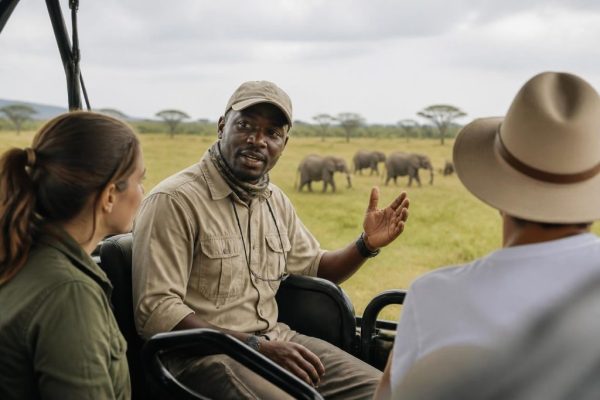
The role of a safari tour guide extends far beyond pointing out animals in the wild. These specialized professionals serve as educators, conservationists, safety managers, and cultural ambassadors, shaping how visitors understand and interact with natural ecosystems. In 2026, the expectations for a safari tour guide have evolved to encompass sustainability practices, scientific accuracy, and a commitment to protecting the environments they showcase. Whether leading vehicle-based game drives across African savannas or facilitating walking safaris through protected reserves, today's guides must balance guest experience with conservation imperatives while maintaining the highest standards of professionalism and safety.
Professional Qualifications and Certification Standards
Becoming a certified safari tour guide requires rigorous training and adherence to industry-recognized standards. The Field Guides Association of Southern Africa (FGASA) sets comprehensive certification requirements that have become the benchmark for professional wildlife guides across multiple countries. These qualifications ensure guides possess the necessary knowledge of ecology, animal behavior, safety protocols, and interpretation skills.
The certification pathway typically includes three primary levels. The Trails Guide qualification focuses on walking safaris and requires extensive knowledge of flora, fauna, tracking, and emergency procedures in remote settings. The Field Guide certification covers vehicle-based guiding and demands proficiency in species identification, ecosystem dynamics, and guest management. Advanced certifications require demonstrated expertise, continued professional development, and adherence to strict ethical guidelines.
Core Competencies Every Safari Tour Guide Must Master
A competent safari tour guide develops expertise across multiple domains that directly impact guest safety and experience quality:
- Wildlife identification and behavior interpretation across mammals, birds, reptiles, and invertebrates
- Ecological literacy including food webs, habitat requirements, and seasonal patterns
- Navigation and spatial awareness in remote areas without marked trails
- Risk assessment and emergency response for medical situations and wildlife encounters
- Cultural sensitivity and interpretation of indigenous knowledge and local communities
- Communication skills adapted to diverse international audiences and age groups
The professional standards maintained by FGASA emphasize ongoing education, with guides required to renew certifications periodically and demonstrate continued competence through assessments and peer review.
Safety Management and Wilderness First Aid
Safety protocols form the foundation of responsible safari guiding. A safari tour guide must anticipate and mitigate risks while maintaining the spontaneity that makes wildlife encounters memorable. This balance requires constant situational awareness, clear communication with guests about behavioral expectations, and contingency planning for multiple scenarios.
Medical preparedness represents a critical competency. Remote locations demand that guides function as first responders until professional medical assistance arrives. The Wilderness & Remote First Aid certification provides specialized training for managing injuries and illnesses when evacuation may take hours or days. This training covers prolonged patient care, improvised equipment use, and decision-making protocols specific to wilderness contexts.
| Safety Domain | Key Responsibilities | Tools & Protocols |
|---|---|---|
| Wildlife Encounters | Distance management, behavior prediction, emergency drills | Minimum approach distances, retreat procedures, communication signals |
| Medical Emergencies | First aid, patient stabilization, evacuation coordination | Wilderness first aid kit, satellite communication, evacuation plans |
| Environmental Hazards | Weather monitoring, terrain assessment, exposure prevention | Weather forecasting tools, route planning, protective equipment |
| Vehicle Operations | Mechanical reliability, defensive driving, passenger safety | Pre-trip inspections, speed limits, seatbelt enforcement |
The integration of these safety systems allows a safari tour guide to create controlled environments where guests can observe wildlife behavior without compromising their wellbeing or disturbing natural processes.
Ethical Guidelines and Conservation Responsibilities
Modern safari guiding operates within a framework of conservation ethics that prioritizes ecosystem health over visitor convenience. The IUCN Code of Conduct and Professional Ethics establishes principles that guide professional behavior, emphasizing minimal impact on wildlife, respect for local communities, and accurate representation of conservation challenges.
Wildlife Interaction Standards
A responsible safari tour guide adheres to strict non-invasive viewing practices. The GSTC Industry Criteria for Tour Operators outlines specific requirements for wildlife interactions, including maintaining appropriate distances, limiting viewing duration, and avoiding behaviors that alter animal activity patterns. These standards protect both animal welfare and the authenticity of guest experiences.
Key ethical commitments include:
- Never manipulating animal behavior through baiting, calling, or harassment for photographic opportunities
- Respecting breeding and denning sites by maintaining buffer zones during sensitive periods
- Limiting vehicle numbers at sightings to prevent overcrowding and stress
- Sharing sightings responsibly through controlled communication that prevents site saturation
- Educating guests about the rationale behind viewing restrictions and conservation context
These practices align with the broader movement toward nature-positive travel championed by industry leaders, recognizing that tourism must contribute to biodiversity conservation rather than merely minimizing harm.
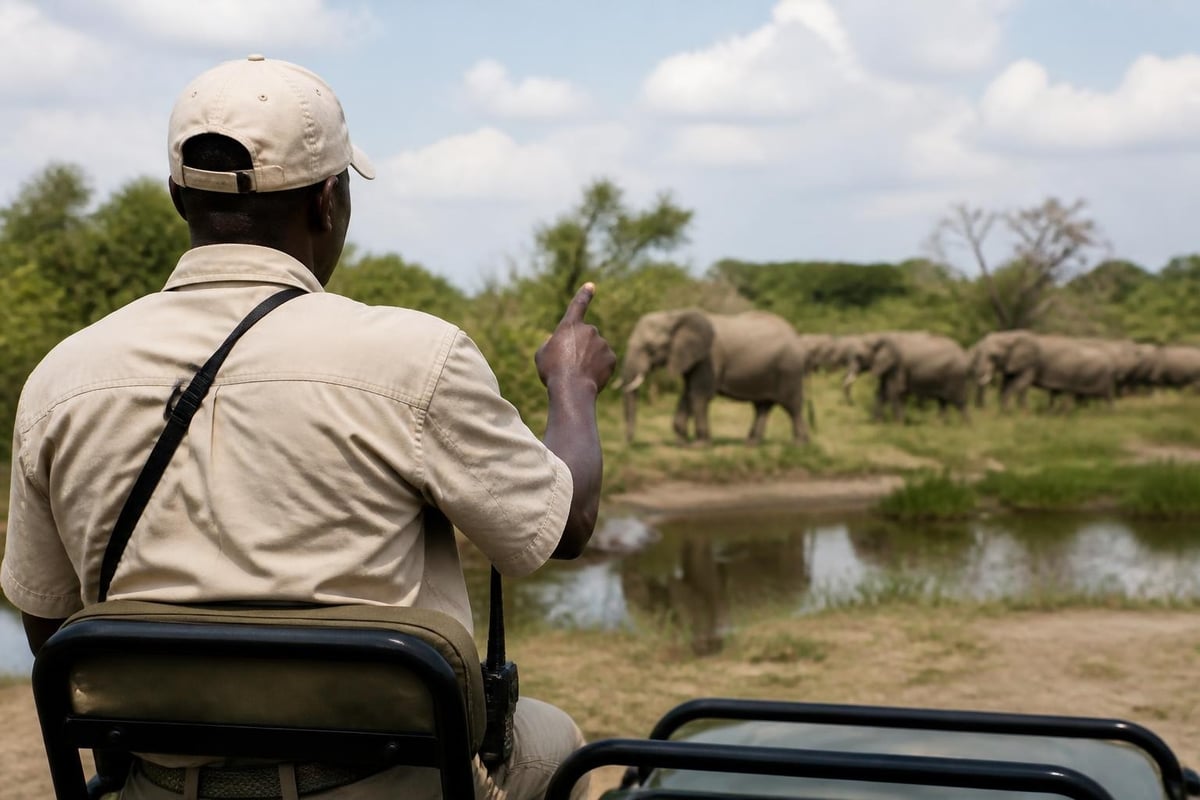
Interpretation Skills and Educational Impact
The interpretive abilities of a safari tour guide transform observations into learning experiences. Effective interpretation connects wildlife sightings to broader ecological concepts, conservation challenges, and the interconnectedness of natural systems. This educational dimension distinguishes exceptional guides from those who merely locate animals.
Interpretation techniques include:
- Storytelling frameworks that create narrative arcs around animal behavior and evolutionary adaptations
- Questioning strategies that encourage guests to observe details and form hypotheses
- Analogies and comparisons that make complex ecological relationships accessible
- Multi-sensory engagement incorporating sounds, scents, and textures beyond visual observations
- Thematic connections linking individual sightings to conservation status, ecological roles, and human impacts
A skilled safari tour guide adjusts interpretation depth based on guest interest and knowledge levels. Families with young children receive age-appropriate engagement, while photography enthusiasts might appreciate detailed discussions of light conditions and animal behavior predictability. This customization mirrors the tailored tour experiences that distinguish personalized guiding from standardized group offerings.
Cultural Competence and Community Engagement
Safari tourism occurs within landscapes that are home to indigenous communities and local populations whose knowledge and stewardship have shaped these ecosystems for generations. A culturally competent safari tour guide acknowledges these relationships, incorporates local perspectives, and ensures tourism benefits extend to resident communities.
This responsibility includes accurate representation of cultural histories, seeking permission before entering culturally significant sites, and creating economic opportunities through partnerships with local guides and service providers. The most respected guides facilitate genuine cultural exchanges rather than performative interactions designed solely for tourist consumption.
Building Cross-Cultural Communication Skills
Working with international guests requires sensitivity to different communication styles, varying levels of environmental knowledge, and diverse expectations about wildlife experiences. A safari tour guide develops skills in:
- Active listening to understand guest interests and concerns before launching into prepared narratives
- Clear explanatory frameworks that avoid jargon while maintaining scientific accuracy
- Cultural humility acknowledging the limits of one's own perspective and valuing guest observations
- Conflict resolution when guest expectations clash with conservation protocols or safety requirements
These competencies parallel the skills required for professional tour guides in urban settings, where managing diverse groups and adapting to individual needs determines success.
Specialized Knowledge Areas
Beyond general wildlife expertise, many safari tour guides develop specializations that enhance their value and create niche market opportunities. These focus areas allow guides to differentiate themselves and attract guests seeking specific experiences.
| Specialization | Knowledge Requirements | Target Audiences |
|---|---|---|
| Ornithology | Bird identification, migration patterns, vocalizations, nesting behavior | Birding enthusiasts, photography groups |
| Tracking & Signs | Spoor identification, aging tracks, predicting animal movements | Experienced safari-goers, conservation students |
| Nocturnal Wildlife | Night-adapted species, spotlight techniques, owl and nightjar calls | Adventure travelers, wildlife photographers |
| Botanical Expertise | Plant identification, medicinal uses, ecosystem engineering species | Ecotourism groups, educational expeditions |
| Conservation Science | Research methodologies, population monitoring, habitat restoration | Academic groups, conservation volunteers |
Developing these specializations requires ongoing study, mentorship from subject experts, and field practice. Many guides pursue additional certifications or academic credentials in ecology, botany, or wildlife management to deepen their expertise.
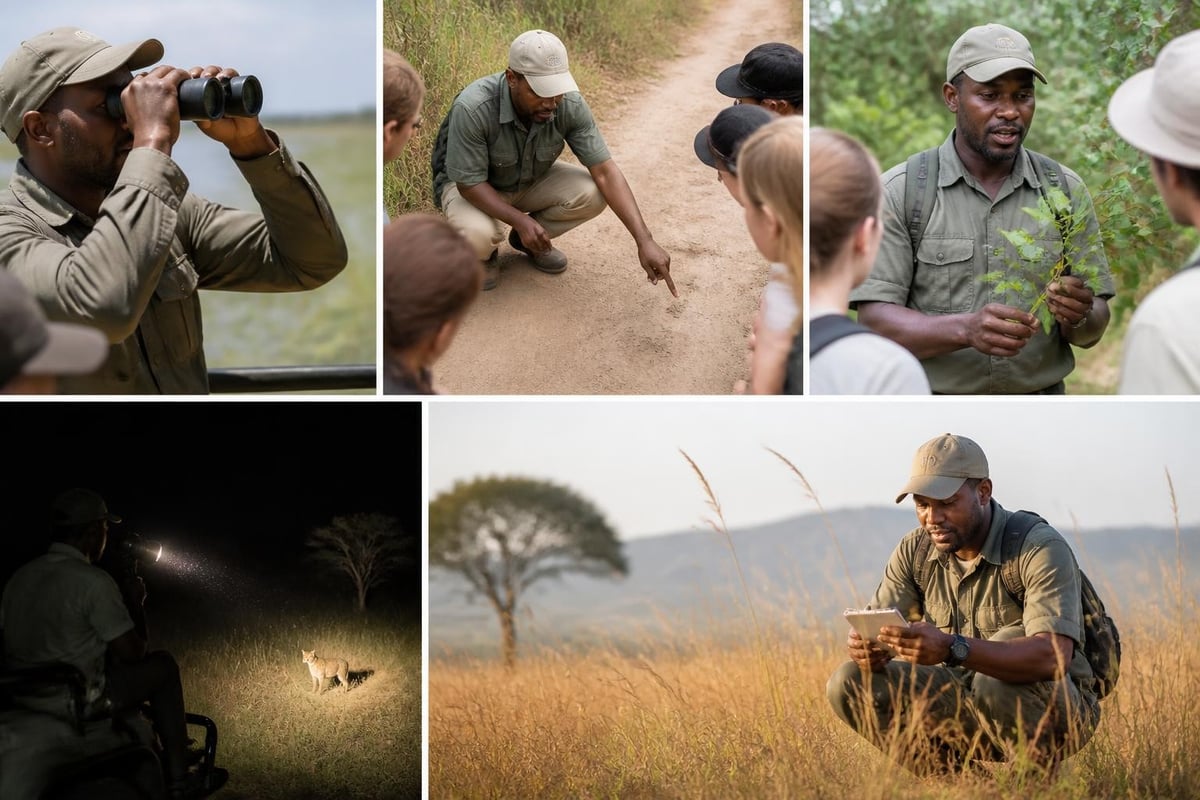
Technology Integration in Modern Guiding
The contemporary safari tour guide leverages technology to enhance safety, improve educational content, and streamline operational logistics. Digital tools have transformed aspects of the profession while maintaining the fundamental focus on unmediated nature experiences.
Field identification apps provide instant access to species information, range maps, and behavioral notes that supplement guide knowledge. These tools prove particularly valuable for less common species or when guests ask detailed questions beyond a guide's immediate expertise. However, the most effective guides use technology as a supplement rather than a replacement for field skills and observational abilities.
Communication devices including satellite phones and GPS trackers ensure guides maintain contact with base operations, can summon emergency assistance, and navigate safely in unfamiliar terrain. Real-time wildlife movement data from research collars increasingly informs route planning, though ethical guides balance this information access with the uncertainty that makes genuine wildlife encounters meaningful.
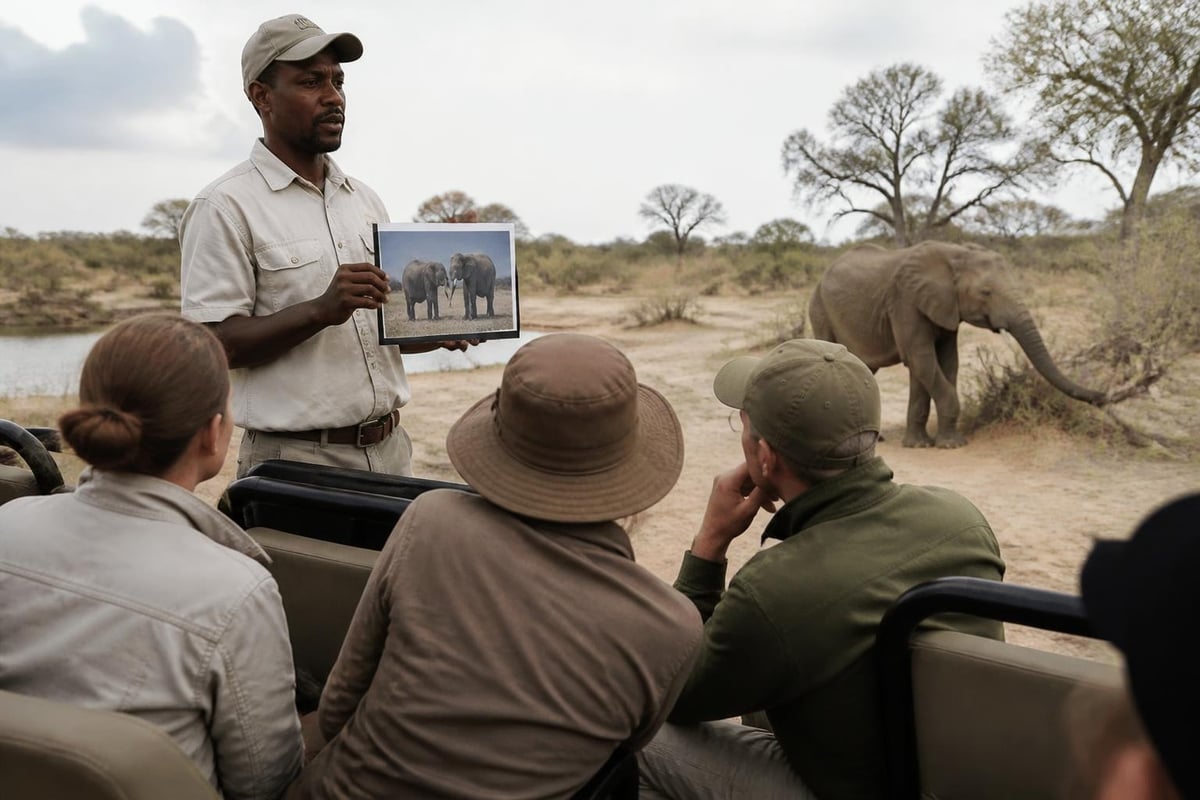
Educational technology such as tablets loaded with reference images, videos of behaviors guests might not witness, and interactive ecological models enriches interpretation during travel time between sightings. Some operations provide guests with field guide apps or digital journals that extend the learning experience beyond the tour duration.
Business and Marketing Considerations
Professional safari tour guides increasingly function as independent operators or small business owners rather than employees of large lodges. This entrepreneurial dimension requires skills beyond wildlife expertise, including marketing, client relationship management, financial planning, and brand development.
Successful guides cultivate reputations through:
- Consistent excellence that generates word-of-mouth referrals and repeat bookings
- Social media presence showcasing wildlife encounters, conservation insights, and guest testimonials
- Professional networking with accommodation providers, booking agents, and conservation organizations
- Specialized offerings that attract specific market segments willing to pay premium rates
- Sustainability credentials that appeal to environmentally conscious travelers
The principles that drive success in safari guiding translate across tour categories. Just as Stockholm walking tours depend on guide expertise, storytelling ability, and guest service excellence, safari operations succeed when guides combine technical knowledge with hospitality skills and business acumen.
Seasonal Variation and Career Sustainability
A safari tour guide faces significant seasonality in most destinations, with peak tourist periods concentrated around optimal wildlife viewing conditions. The dry season typically offers superior game viewing as animals concentrate around water sources and vegetation thins, increasing visibility. However, this seasonality creates income variability and work-life balance challenges.
Career sustainability strategies include:
- Diversifying income sources through training delivery, conservation project work, or guiding in multiple destinations
- Building financial reserves during peak seasons to sustain living expenses during low periods
- Developing off-season specializations such as photographic safaris, educational programs, or research assistance
- Pursuing professional development during quiet periods through additional certifications and skill-building
- Creating digital content that generates passive income and maintains audience engagement year-round
The physical demands of safari guiding, including long days in variable weather, irregular meal schedules, and potential for dangerous wildlife encounters, also affect career longevity. Successful guides develop self-care routines, maintain fitness, and transition toward mentoring or training roles as they age.
Guest Management and Group Dynamics
Managing group dynamics represents one of the most nuanced aspects of a safari tour guide's role. Unlike small group tours in controlled urban environments, safari groups spend extended periods together in remote settings where personality conflicts, varying fitness levels, and different priorities can create friction.
Effective guest management techniques include:
- Pre-trip communication establishing expectations, fitness requirements, and behavioral guidelines
- Daily briefings outlining the day's plan, expected conditions, and flexibility for spontaneous opportunities
- Inclusive decision-making that balances individual preferences with group needs
- Conflict mediation addressing tensions before they escalate and affect group cohesion
- Celebrating successes creating shared experiences that build camaraderie and positive memories
The ability to read group energy, identify emerging issues, and adjust pacing or activities accordingly separates exceptional guides from merely competent ones. This emotional intelligence complements technical wildlife knowledge and safety management skills.
Continuing Education and Professional Development
The knowledge base required for safari guiding continuously expands as scientific understanding of ecosystems evolves, conservation challenges shift, and guest expectations change. Committed professionals pursue ongoing education through formal courses, peer learning, independent study, and field experience.
Professional development pathways include attending conferences focused on conservation and ecotourism, participating in species-specific workshops, joining guided nature walks led by specialists, and engaging with current research literature. Many guides maintain relationships with researchers working in their regions, gaining early insights into population trends, behavioral discoveries, and conservation concerns.
Peer learning networks provide forums for guides to share observations, discuss interpretation techniques, and problem-solve operational challenges. These communities foster professional standards and create accountability mechanisms beyond formal certification requirements. The collaborative culture mirrors how guided vacation professionals across specialties share best practices and support industry-wide quality improvements.
Physical and Mental Resilience Requirements
The profession demands significant physical and mental resilience. A safari tour guide may work twelve-hour days for weeks consecutively during peak season, maintain alertness for safety threats despite fatigue, and manage guest needs while processing personal stress or challenging conditions.
Physical preparation includes cardiovascular fitness for walking safaris, core strength for vehicle stability on rough terrain, and heat acclimation for tropical destinations. Mental resilience develops through experience managing unpredictable situations, processing close wildlife encounters, and maintaining professionalism when exhausted or frustrated.
Stress management strategies successful guides employ include:
- Maintaining regular sleep schedules whenever possible despite irregular work hours
- Creating boundaries between guest service time and personal recovery periods
- Developing support networks with fellow guides who understand profession-specific challenges
- Engaging in physical activity or hobbies unrelated to work during time off
- Practicing mindfulness or meditation to process intense experiences and maintain perspective
The combination of physical demands and emotional labor contributes to burnout if guides do not prioritize self-care alongside guest satisfaction and wildlife protection.
The expertise required of a safari tour guide encompasses technical knowledge, ethical commitment, safety management, and interpersonal skills that create transformative wildlife experiences while protecting the ecosystems that make them possible. These principles of personalized service, deep expertise, and authentic connection extend across all forms of guided tourism. Whether you're seeking Stockholm city tours led by knowledgeable locals or intimate explorations of historic neighborhoods, the same dedication to excellence defines memorable experiences. Adding:tours brings this commitment to every private tour, tailoring each journey to your group's interests and ensuring your time in Stockholm reflects the same attention to detail and insider perspective that characterizes the finest guiding worldwide.