
Small Group Adventure Travel: How to Pick the Right Tour
Small group adventure travel means exploring a destination in a party of roughly 6 to 16 people with an expert guide, so you get active, hands-on experiences without the crowds and rigid schedules of a coach tour. The right choice comes down to five things: group size, pace and difficulty, guide quality, what the price includes, and how well the itinerary matches your interests.
The format has moved from niche to mainstream. A 2025 Adventure Travel Trade Association report describes customized and small-group itineraries, often led by experts or built around interests such as gastronomy or nature photography, as a notable trend. This guide shows you how to compare tours, spot the details that matter, and match a trip to the people you are traveling with.
What Counts as Small Group Adventure Travel?
A small group tour is a guided trip with a capped number of travelers, usually between 6 and 16, where the itinerary includes active or immersive elements such as walking, hiking, cycling, wildlife viewing or local food experiences. The cap is what separates it from a large coach tour, which can carry 40 or more people.
"Adventure" does not have to mean extreme sports. For many travelers it means walking through places that vehicles cannot reach, hearing stories from a local, and moving at a human pace. A guided walk through medieval alleys qualifies as much as a multi-day trek.
Most operators sort their trips by activity level. Common labels include:
- Easy: Short walks on flat ground, plenty of breaks, suitable for most fitness levels
- Moderate: Several hours on foot per day, some hills or stairs
- Challenging: Long days, uneven terrain, higher altitude or multi-day treks
Always check how an operator defines these labels, because one company's "moderate" is another's "easy."
Why a Small Group Beats a Large Tour
A small group gives you more access, more flexibility and more time with your guide. Those three advantages explain why travelers who try the format tend to keep choosing it.
Access. Narrow streets, small museums, family-run restaurants and trailheads cannot absorb 40 visitors at once. A group of 10 can slip into places that larger parties are turned away from.
Flexibility. A guide with 10 people can adjust the route when someone spots something interesting, when weather changes, or when the group wants a longer lunch. A 45-person coach runs on a fixed clock.
Connection. You can ask questions, hear the answers, and get to know both the guide and the other travelers. Many people say the people they meet are the best part of a trip.
Safety is a practical benefit too. The National Park Service recommends that hikers keep a group together and place the slowest hiker near the front, something a small group with an attentive guide can do naturally. A smaller party is also easier to account for at every stop.
How to Compare Small Group Adventure Travel Options
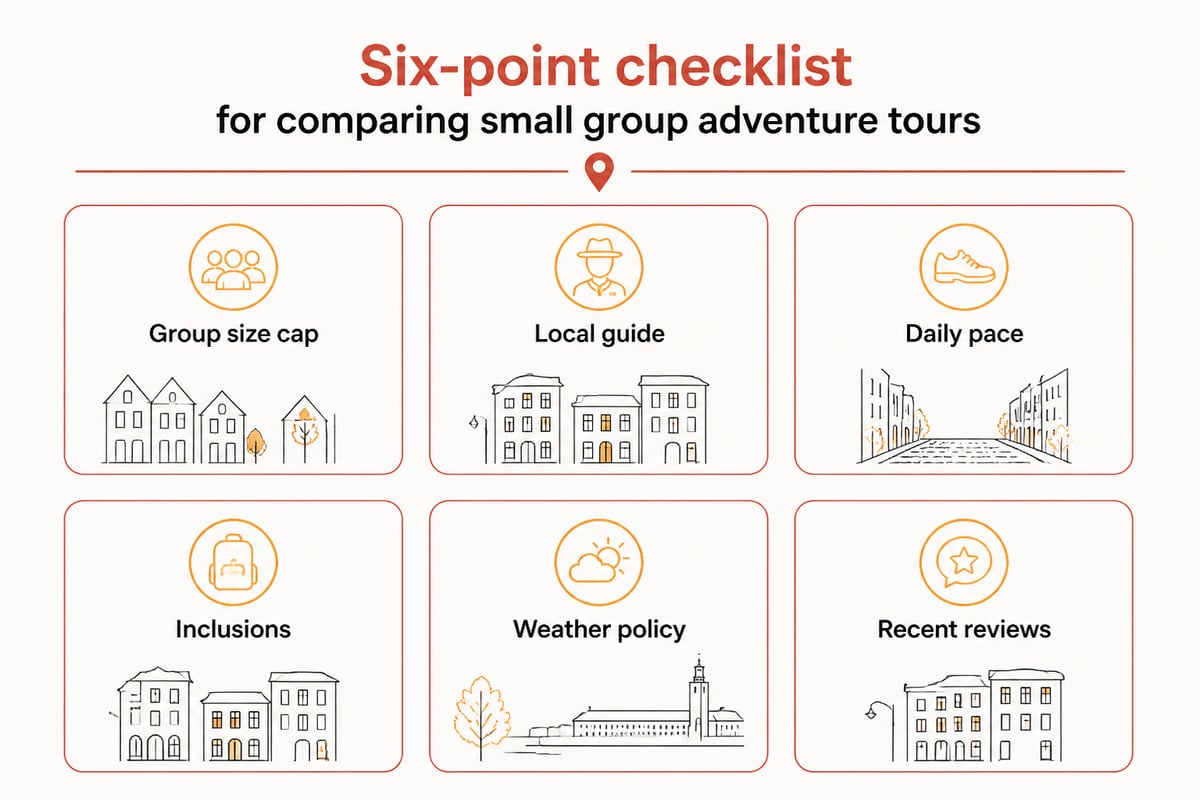
To compare tours fairly, line each one up against the same set of criteria rather than relying on photos and slogans. The table below gives a simple framework you can copy into your own notes.
| Criterion | What to ask | Good sign |
|---|---|---|
| Group size cap | Is the maximum fixed, or an average? | A firm cap stated in writing |
| Guide | Is the guide local, and how are they trained? | Native or long-resident guide with local knowledge |
| Pace | How many hours on foot, and how many stops? | Honest daily breakdown |
| Inclusions | Are meals, tickets and transport covered? | Clear list of what is and is not included |
| Weather policy | Does the tour run in rain or cold? | Stated policy, not a vague promise |
| Reviews | Are reviews recent and detailed? | Consistent feedback across platforms |
Pay particular attention to the difference between a maximum and an average group size. An operator advertising an "average of 12" may still send you out with 20 people on a busy day. A hard cap is the more reliable promise.
Match the Pace and Difficulty to Your Group
The best tour is one that every person in your party can finish comfortably, so honest assessment of fitness and stamina matters more than ambition. The National Park Service recommends choosing a trail that everyone in the group can complete safely, and the same principle applies to any guided walk or trek.
Ask these questions before you book:
- How many kilometers will we cover, and over how many hours?
- Is the route mostly flat, or are there steep sections and stairs?
- How often does the group stop to rest, eat or take photos?
- What happens if someone needs to slow down or sit out part of the day?
If your party includes a mix of fitness levels, choose the tour pitched at the slowest member rather than the fastest. A walk that feels too easy for one person is a minor disappointment. A walk that is too hard for another can end the day early for everyone.
Be realistic about weather and footwear as well. A tour that runs in all conditions is a benefit only if you arrive dressed for them.
Guides Make or Break the Experience
A knowledgeable local guide turns a route into a story, which is why guide quality should weigh as heavily as the itinerary itself. Look for guides who live in the destination, speak your language fluently, and can explain not just what you are seeing but why it matters.
Reviews are the best evidence. Read recent comments on independent platforms and look for specifics: names of guides, stories they told, how they handled a delay or a change of plan. Generic praise such as "great tour" tells you little. Detailed praise tells you the guide made an impression.
Operators that let you adapt the experience to your interests are worth noting. Tailored, expert-led itineraries are a notable trend in the 2025 Adventure Travel Trade Association report, which reflects what many travelers now want: local insight over a checklist of landmarks.
Choosing a Tour in a City Like Stockholm
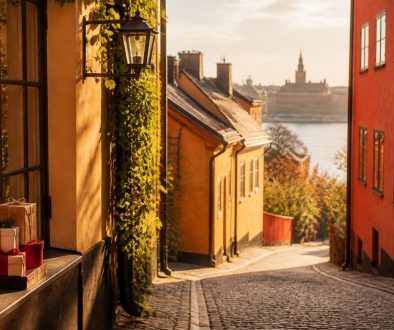
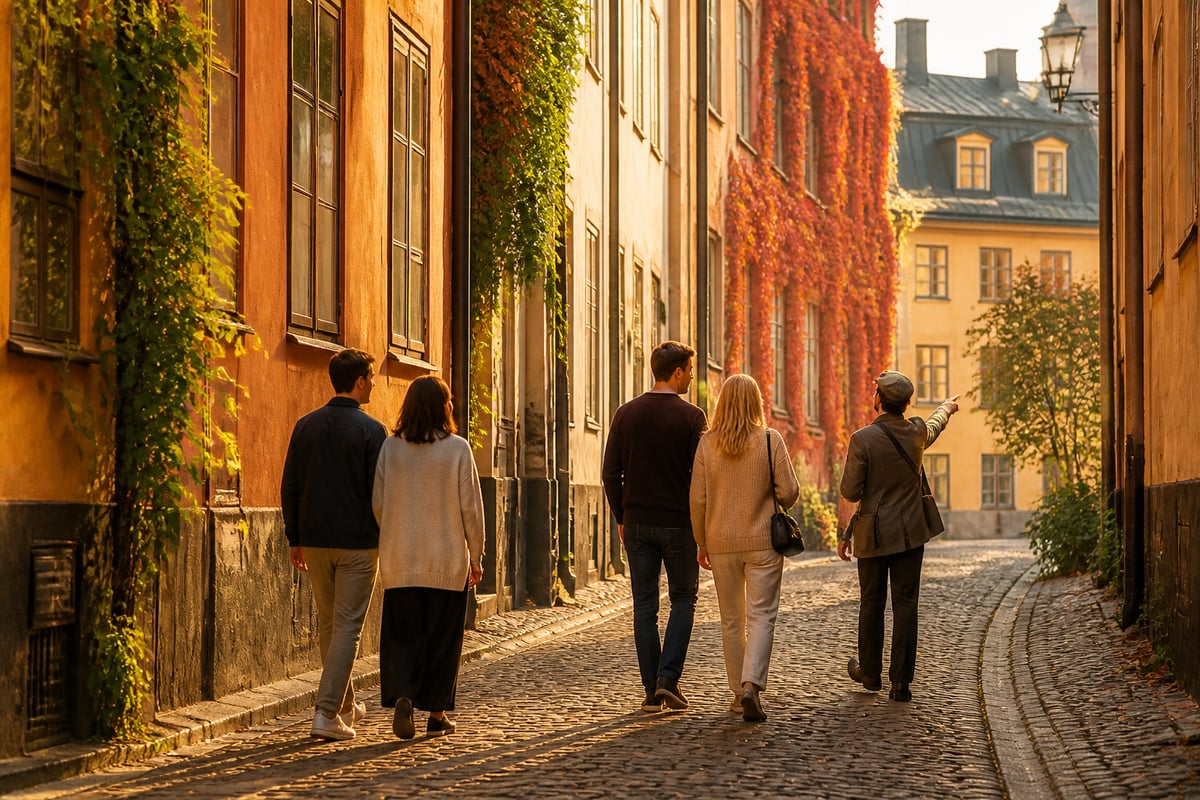
For city breaks, small group adventure travel usually means a guided walk rather than a trek, and the same selection rules apply. Stockholm suits the format well because its Old Town is a tangle of narrow lanes, courtyards and staircases where a small party moves easily and a large one cannot.
A good Stockholm walking tour should cover a mix of the famous and the hidden. Think of the Royal Palace and its changing of the guard, the medieval alleys of Gamla Stan, and the stories behind them. The Classic Stockholm Small Group Walking Tour from Adding:tours is a three-hour walk through the city's iconic sights and hidden gems, limited to 10 guests and led by a native English-speaking guide.
Beyond the classics, themed routes let you build a day around a personal interest:
- Literary routes: Follow locations from Stieg Larsson's The Girl with the Dragon Tattoo
- Music routes: An ABBA-themed outing that includes a trip to Viggsö and a meal
- Private routes: A tour tailored to your own group, starting from your hotel lobby in the city centre
If you are weighing a private outing against joining a shared one, browse small group tours to see how formats differ, and read the local travel guide overview to understand what a resident guide adds.
Understand Group Limits and Why They Exist
Group caps are not just marketing; in many places they are rules designed to protect trails, wildlife and other visitors. Knowing the limits helps you judge whether an operator is working within them.
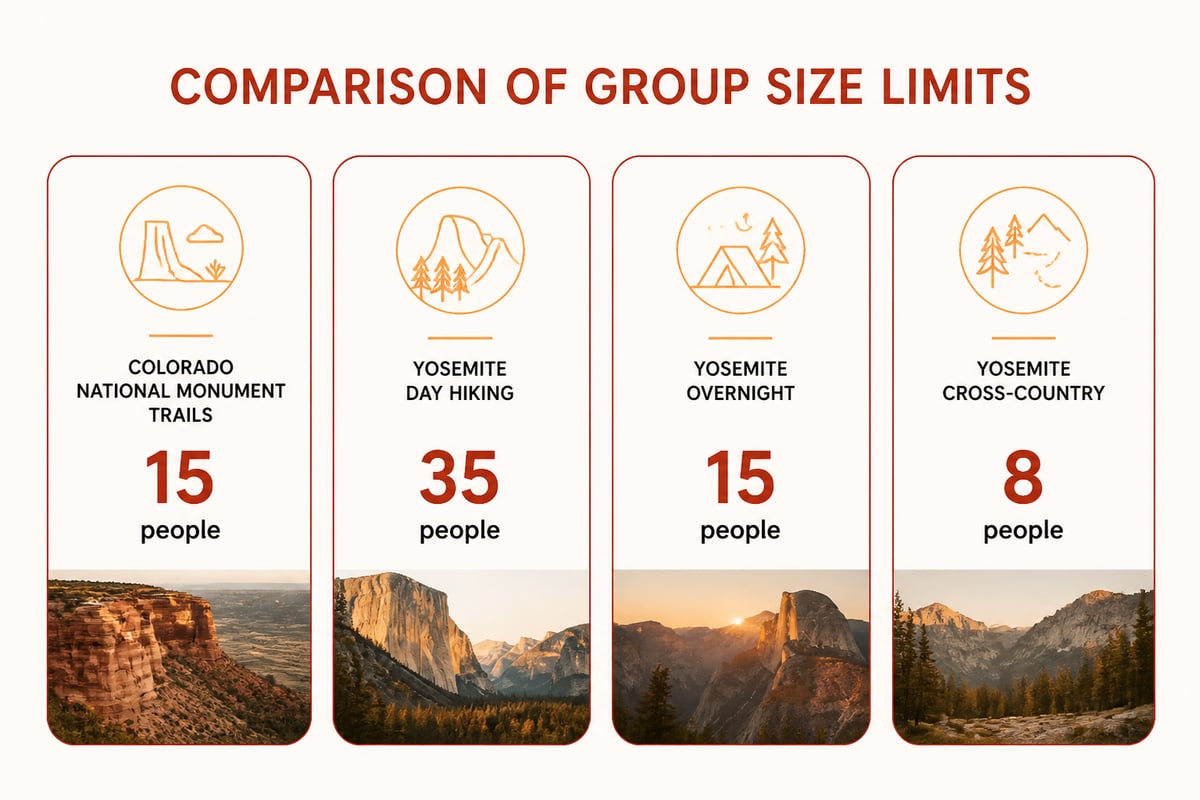
Some examples from U.S. public lands show how widely they vary:
- Colorado National Monument limits hiking groups on trails to 15 people, including guides and chaperones, and groups of 16 or more need a permit
- Yosemite sets wilderness limits of 35 for day hiking, 15 for overnight trips and 8 for cross-country travel
These caps exist because large parties erode trails, disturb wildlife and crowd the experience for everyone. An operator that already keeps its groups small rarely runs into trouble with permits, which is one more reason a firm cap is a sign of a well-run tour.
Group size also affects safety in wild country. Yellowstone data show that most people injured by bears since 1970 were hiking alone or with one partner, while only a small share were in groups of three or more. The National Park Service also offers guidance on hiking in bear country, including traveling in groups and making noise. A guided party brings both numbers and experience.
Check What the Price Actually Covers
The headline price tells you little until you know what sits inside it. Two tours that look similar on paper can differ by hundreds of dollars once meals, entry tickets, transport and gratuities are added or removed.
Before you book, confirm the following in writing:
- Entry fees to museums, palaces and attractions
- Meals and drinks, and whether dietary needs can be met
- Transport between stops, and from your hotel if relevant
- Equipment, such as trekking poles or rain gear
- Cancellation and rescheduling terms
For specific pricing, availability and booking conditions, go to the operator's own tour pages or contact page rather than relying on third-party summaries. Policies change, and the operator's current page is the only reliable source.
If you are exploring options beyond a single city, resources like Adorable Travel and Tours, which runs wildlife and river experiences in Zambia, show how varied the adventure category can be, from city lanes to safari camps.
Think About Who You Are Traveling With
The best tour depends as much on your companions as on the destination. Couples, families with older children, and friends traveling together each want slightly different things from a day out.
Couples often value quiet moments, good stories and a route with a view. Families need a pace that holds attention without exhausting anyone, so shorter stops and varied scenery matter. Friends tend to enjoy themed routes, such as a literary or music-focused walk, because it gives the day a shared talking point.
A private or tailored tour suits parties who want control over the pace and topics. A shared tour suits those who enjoy meeting other travelers. Either way, tell the operator about your group's interests in advance. A guide who knows you love architecture, or crime fiction, or pop music, can shape the day around it.
Small gifts can round out a trip too. If you are traveling to celebrate something, a thoughtful keepsake from a shop like Dossify can mark the occasion.
Red Flags to Watch For
A few warning signs show up repeatedly in poorly run tours, and spotting them early saves disappointment.
- Vague group sizes. Phrases like "intimate group" with no number attached
- No named guide or guide profile. You should know who is leading you
- Reviews that are old, repetitive or all from one platform
- Unclear weather or cancellation policy
- Itineraries packed with stops but no time at any of them
Trust your instincts about communication too. An operator that answers questions promptly and specifically before you book is likely to behave the same way once you arrive. For a wider view of how companies compare, the best small group tour companies overview is a useful starting point.
Questions to Ask Before You Book
Use this short list as a final check before committing:
- What is the maximum group size, and is it guaranteed?
- Who is the guide, and where are they from?
- How many hours and kilometers will we walk?
- What is and is not included in the price?
- What happens in bad weather?
- Can the tour be tailored to our interests?
If an operator answers all six clearly, you are probably dealing with a business that has thought carefully about the experience. If the answers are vague, keep looking.
Your next step is to write down your group's pace, interests and must-see places, then compare two or three tours against the checklist above. If you are visiting Stockholm and want a guided walk through local eyes, the Classic Stockholm Small Group Walking Tour offers a three-hour route limited to 10 guests with a native English-speaking guide, and tailored private options start from your hotel lobby. Book your tour today with Adding:tours and let a local show you the city at a pace that suits your group.
{“@context”:”https://schema.org”,”@type”:”Article”,”headline”:”Small Group Adventure Travel: How to Pick the Right Tour”,”description”:”Learn how to choose small group adventure travel that fits your pace, interests and budget, with a checklist for comparing group size, guides and itinerary.”,”image”:[“https://xqvnmkjynbkcujcrtubi.supabase.co/storage/v1/object/public/article-images/c80c61be-4771-4959-b298-f0c967c7cb76/featured-1794229354699.jpg”],”datePublished”:”2026-10-29T16:55:40.947Z”,”dateModified”:”2026-11-10T13:00:53.460Z”,”author”:{“@type”:”Organization”,”name”:”Adding:tours”,”url”:”https://addingtours.se/”},”publisher”:{“@type”:”Organization”,”name”:”Adding:tours”,”url”:”https://addingtours.se/”},”mainEntityOfPage”:{“@type”:”WebPage”,”@id”:”https://addingtours.se/small-group-adventure-travel”}}