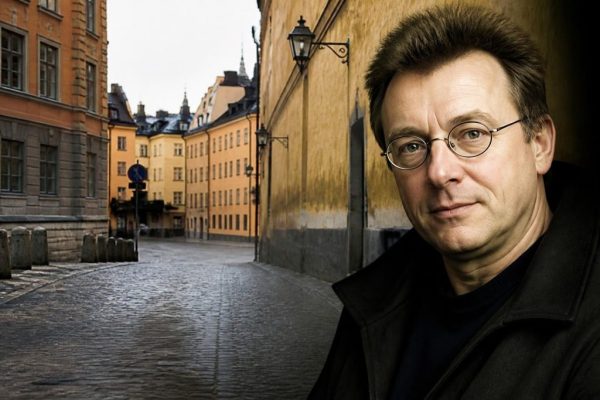
Author Stieg Larsson: Stockholm’s Literary Legend
The cobblestone streets of Stockholm's Södermalm district hold a dual identity today. They are both ancient pathways through one of Europe's most beautiful capitals and the atmospheric backdrop for one of the most successful crime fiction series ever written. Author Stieg Larsson transformed these streets into the hunting grounds for his unforgettable protagonist, Lisbeth Salander, creating a literary phenomenon that would posthumously make him one of the world's best-selling authors. His Millennium trilogy has sold more than 100 million copies worldwide, spawned multiple film adaptations, and fundamentally changed how readers view Stockholm. Yet Larsson himself never witnessed this success, having died suddenly in 2004 before the first book was published.
The Journalist Behind the Fiction
Author Stieg Larsson spent most of his professional life not crafting novels but investigating the darkest corners of Swedish society. Born Karl Stig-Erland Larsson in 1954 in Skelleftehamn, northern Sweden, he developed an early passion for social justice that would define both his journalism and his fiction. After working as a graphic designer and journalist, Larsson co-founded Expo, a Swedish anti-fascist magazine dedicated to investigating and exposing right-wing extremism and hate groups.
The Guardian’s comprehensive feature on Larsson’s activism reveals the extent of his commitment to combating extremism. For more than two decades, author Stieg Larsson documented neo-Nazi organizations, received death threats, and lived under constant security concerns. This dangerous work directly influenced the themes of corruption, violence against women, and institutional failure that permeate the Millennium trilogy.
From Expo to Fiction Writing
The transition from journalism to fiction writing occurred during Larsson's evenings and weekends. While maintaining his full-time position at Expo, he began crafting the three novels that would comprise the Millennium series. His journalistic training is evident throughout the books:
- Meticulous research into financial crimes, hacking, and investigative techniques
- Realistic portrayal of Swedish institutions and their shortcomings
- Documentary-style detail that grounds the thriller elements in believable contexts
- Political awareness woven seamlessly into the narrative structure
Author Stieg Larsson completed all three manuscripts before submitting them to publishers, treating the trilogy as a comprehensive whole rather than testing the market with a single book. This decision proved fortuitous, as it ensured the complete story would reach readers despite his untimely death.

The Millennium Trilogy Phenomenon
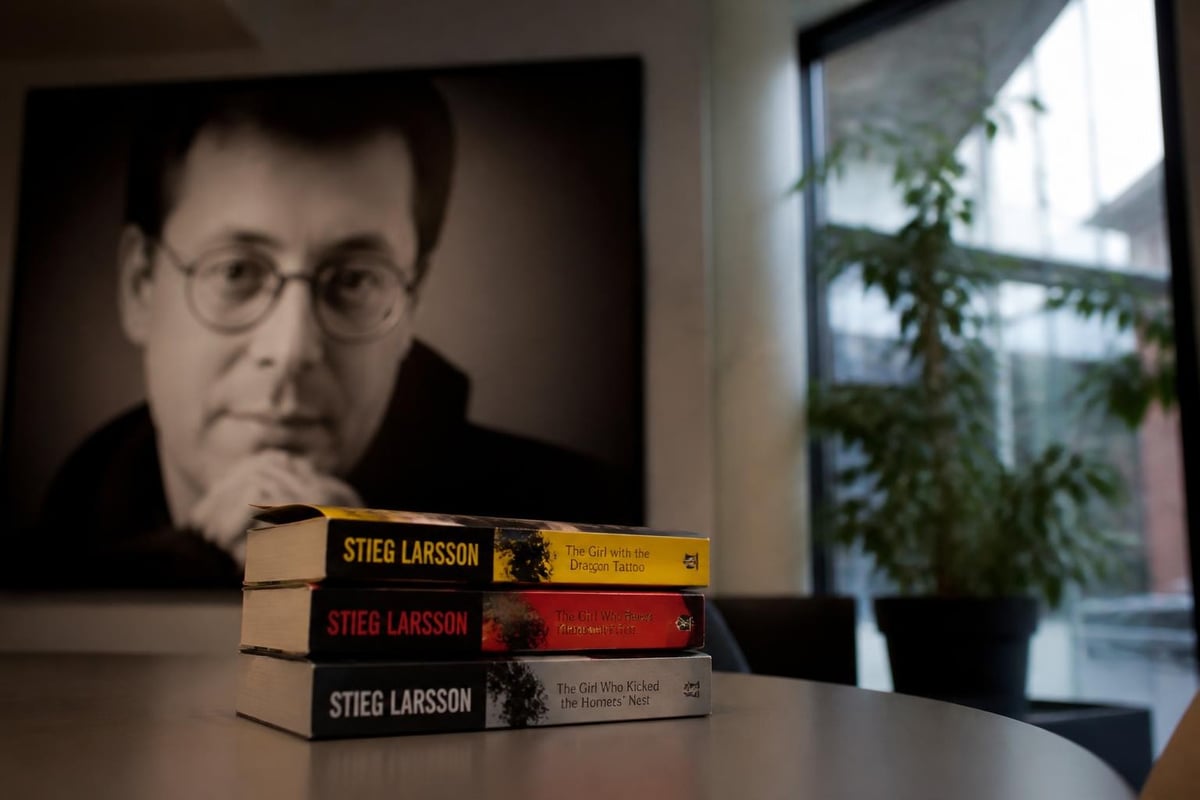
The three novels that make up author Stieg Larsson's legacy are "The Girl with the Dragon Tattoo" (Män som hatar kvinnor, literally "Men Who Hate Women"), "The Girl Who Played with Fire," and "The Girl Who Kicked the Hornet's Nest." Published posthumously between 2005 and 2007 in Sweden, they quickly became international bestsellers, translated into more than 50 languages.
Characters That Transcend Genre
Lisbeth Salander, the tattooed hacker with a photographic memory and a traumatic past, became a cultural icon. Unlike traditional female characters in crime fiction, Salander refuses victimhood, instead weaponizing her skills against those who abuse power. Journalist Mikael Blomkvist serves as her occasional partner, representing the investigative ideal that author Stieg Larsson himself embodied.
The partnership between these two characters drives the trilogy's exploration of Swedish society. According to biographical sources, Larsson crafted Salander as a response to the violence against women he had witnessed and documented throughout his journalistic career. The Swedish title of the first book, "Men Who Hate Women," makes this feminist critique explicit.
| Novel Title (English) | Swedish Title | Publication Year | Central Theme |
|---|---|---|---|
| The Girl with the Dragon Tattoo | Män som hatar kvinnor | 2005 | Violence against women, family secrets |
| The Girl Who Played with Fire | Flickan som lekte med elden | 2006 | Sex trafficking, corruption |
| The Girl Who Kicked the Hornet's Nest | Luftslottet som sprängdes | 2007 | Government conspiracy, justice |
Stockholm as a Character
Author Stieg Larsson's intimate knowledge of Stockholm transforms the city from mere setting into an active participant in his narratives. The trilogy maps a literary geography across the Swedish capital, from the offices of Millennium magazine in Södermalm to the apartments, cafés, and corporate headquarters where the stories unfold.
Visitors to Stockholm today can walk the same streets Salander traversed, drink coffee in the same cafés Blomkvist frequented, and explore the neighborhoods where the fictional crimes occurred. This tangible connection between fiction and reality has created a unique form of literary tourism. Professional guided tours now trace these locations, offering visitors the opportunity to experience Stockholm through the lens of Larsson's storytelling.
The Södermalm Connection
Södermalm, Stockholm's southern island district, features prominently throughout the trilogy. Author Stieg Larsson himself lived and worked in this bohemian neighborhood, and his personal familiarity infuses the descriptions with authentic detail. The narrow streets, vintage buildings, and mix of working-class history with contemporary gentrification provide the perfect backdrop for his tales of corruption and redemption.
- Bellmansgatan, where Blomkvist's apartment is located
- Millenniums fictional offices on Götgatan
- Various cafés and restaurants mentioned by name
- The labyrinthine streets that facilitate Salander's surveillance activities
Those interested in exploring these literary landmarks can join specialized Stockholm city tours that highlight both the real history and fictional narratives that define the Swedish capital.

Critical Reception and Academic Analysis
The massive commercial success of author Stieg Larsson's work sparked serious academic interest in the trilogy's literary merit, cultural impact, and translation challenges. Scholars have examined everything from feminist perspectives to the computational analysis of how the novels changed in translation.
A computational study published in PMLA explores how the English translations subtly shifted the novels' tone and focus. The research reveals that translator choices significantly impacted how English-language readers experienced the work compared to Swedish audiences. This scholarship highlights an important aspect of international bestsellers: they exist in multiple versions, each shaped by translation decisions.
Genre-Defying Elements
Author Stieg Larsson deliberately blurred boundaries between literary fiction and crime thriller. Academic analysis from Cambridge University Press examines how the trilogy depicts violations and crimes in ways that challenge genre conventions. Rather than simply solving mysteries, the novels interrogate institutional failures that enable violence.
The trilogy's feminist themes have generated particularly rich scholarly discussion. Research examines how author Stieg Larsson used crime fiction to critique patriarchal systems and violence against women. The character of Lisbeth Salander represents a radical departure from traditional victim narratives, instead embodying resistance and retribution.
Film Adaptations and Cultural Impact
The Millennium trilogy has been adapted multiple times for both film and television, each interpretation bringing new audiences to author Stieg Larsson's work. The Swedish film trilogy, released between 2009 and 2010, featured Noomi Rapace as Lisbeth Salander in what many consider the definitive portrayal.
The Swedish Film Institute documented how these adaptations became Sweden's most internationally successful films, introducing global audiences to Swedish cinema. Rapace's intense, nuanced performance earned international acclaim and launched her Hollywood career. The films stayed remarkably faithful to the source material while condensing the complex narratives for the screen.
International Remakes
In 2011, American director David Fincher released "The Girl with the Dragon Tattoo," starring Rooney Mara as Salander and Daniel Craig as Blomkvist. This big-budget Hollywood adaptation reached audiences unfamiliar with the Swedish versions, though it covered only the first novel. The film's commercial success demonstrated author Stieg Larsson's cross-cultural appeal, even as some critics argued it smoothed over the specifically Swedish critique embedded in the original.
More recently, "The Girl in the Spider's Web" (2018) attempted to continue the franchise with a new author, David Lagercrantz, writing continuation novels. These efforts highlight both the commercial value of Larsson's creation and the challenges of extending a deceased author's work.
The Estate Controversy and Foundation
Author Stieg Larsson died suddenly of a heart attack on November 9, 2004, at age 50, just after delivering the manuscripts for his trilogy to his publisher. Because he had never married his longtime partner Eva Gabrielsson and left no will, Swedish inheritance law awarded his estate to his father and brother. This created a painful dispute that continues to generate attention.
Svenska Dagbladet’s retrospective coverage details the complex legal and emotional dimensions of this situation. Gabrielsson, who lived with Larsson for 32 years and allegedly contributed to aspects of the novels, received nothing. She has written her own book about their relationship and her belief that she possesses material for a fourth Millennium novel.
Preserving the Legacy
Despite these disputes, the Stieg Larsson Foundation was established to manage the author's legacy and support causes he valued, including freedom of speech, anti-racism work, and violence prevention. The foundation ensures that author Stieg Larsson's commitment to social justice extends beyond his literary works.
The estate has authorized continuation novels by other writers, a decision that has divided fans. Some appreciate the opportunity for new Millennium adventures, while others feel it dilutes Larsson's original vision. This tension reflects broader questions about authorship, intellectual property, and posthumous publication.
Literary Tourism and Stockholm
Author Stieg Larsson's impact on Stockholm tourism cannot be overstated. The trilogy transformed the city into a must-visit destination for crime fiction fans worldwide. Visitors arrive with mental maps drawn from the novels, eager to walk the streets where fictional events unfolded and to understand the real Stockholm that inspired Larsson's work.
Walking in Larsson's Footsteps
Specialized literary tours offer immersive experiences that blend fact and fiction. These excursions typically include:
- Södermalm neighborhood exploration, highlighting key trilogy locations
- Discussion of Larsson's journalism and how it influenced his fiction
- Swedish crime fiction context, explaining the Nordic noir tradition
- Historical Stockholm background that contextualizes the modern city
- Photo opportunities at significant locations from the books
For visitors interested in combining literary history with broader Stockholm exploration, guided sightseeing options provide comprehensive introductions to the city. English walking tours make these experiences accessible to international visitors eager to understand both the historical and contemporary dimensions of the Swedish capital.
The literary tourism phenomenon extends beyond author Stieg Larsson to encompass Sweden's rich crime fiction tradition, often called Nordic noir. However, Larsson's work remains the primary draw, combining compelling stories with accessible locations that visitors can easily explore.
The Nordic Noir Tradition
While author Stieg Larsson achieved unprecedented international success, he built upon a strong Swedish crime fiction tradition. Writers like Maj Sjöwall and Per Wahlöö pioneered socially conscious police procedurals in the 1960s and 1970s, establishing themes that Larsson would later amplify. Their Martin Beck series critiqued Swedish society during its welfare state transformation, mixing criminal investigation with social commentary.
Henning Mankell's Kurt Wallander novels, beginning in the 1990s, further developed this tradition of using crime fiction to examine contemporary social issues. Author Stieg Larsson acknowledged these influences while bringing his unique perspective as an investigative journalist focused on extremism and violence.
What Makes Nordic Noir Distinctive
Several characteristics define the Nordic noir genre that author Stieg Larsson exemplified:
| Element | Description | Larsson's Approach |
|---|---|---|
| Social criticism | Fiction as vehicle for examining societal problems | Institutional corruption, violence against women |
| Flawed protagonists | Complex characters with personal struggles | Blomkvist's professional ethics vs. personal life |
| Atmospheric settings | Cold, dark environments reflecting moral ambiguity | Stockholm winters, isolated locations |
| Political awareness | Engagement with contemporary issues | Right-wing extremism, immigration, inequality |
The international success of author Stieg Larsson's work helped establish Nordic noir as a globally recognized genre, inspiring countless translations, adaptations, and imitations. Swedish crime fiction became a cultural export, with Stockholm itself becoming a character that readers worldwide wanted to encounter.
Themes That Resonate Globally
Despite their specifically Swedish settings and concerns, author Stieg Larsson's novels address universal themes that explain their worldwide appeal. The trilogy's exploration of power, corruption, violence, and resistance resonates across cultures, even as specific details reflect Swedish institutions and history.
Violence Against Women
The Swedish title of the first novel, "Män som hatar kvinnor" (Men Who Hate Women), makes explicit what the English title obscures. Author Stieg Larsson centered his trilogy on systematic violence against women, from domestic abuse to sex trafficking to institutional failures that enable predators. Lisbeth Salander embodies resistance to this violence, refusing the victim role and instead becoming an avenging angel.
This feminist critique drew from Larsson's journalistic documentation of abuse and his recognition of how power structures protect perpetrators. The trilogy doesn't simply include violence against women as plot elements but analyzes the cultural and institutional frameworks that permit such violence to continue.
Institutional Corruption
From corporate malfeasance to government cover-ups, author Stieg Larsson's work exposes how institutions betray public trust. Millennium magazine, where Blomkvist works, represents independent journalism's role in holding power accountable. Yet even well-intentioned institutions prove fallible, highlighting the need for individual ethical commitment beyond organizational structures.
These themes gained renewed relevance in the #MeToo era, as readers recognized the prophetic quality of author Stieg Larsson's critique. His novels, written in the early 2000s, anticipated conversations about institutional protection of abusers that would dominate public discourse a decade later.
Exploring Stockholm Today
Visitors to Stockholm in 2026 can experience the city through multiple lenses: as a historical capital with medieval roots, as a modern Scandinavian design hub, and as the setting for author Stieg Larsson's literary phenomenon. Stockholm tours offer opportunities to explore all these dimensions, creating rich, layered experiences of the Swedish capital.
The Old Town walking tours provide essential historical context, exploring Gamla Stan's medieval streets and helping visitors understand Stockholm's development over centuries. This historical foundation enriches appreciation for author Stieg Larsson's contemporary narratives, which deliberately contrast old and new Stockholm.
For those specifically interested in literary locations, specialized experiences trace the footsteps of Millennium's characters while explaining the real social issues that author Stieg Larsson documented. These tours often include discussions of Swedish journalism, the Expo magazine's work, and how Larsson's activism informed his fiction.
Beyond the Trilogy
While author Stieg Larsson's work draws many visitors, Stockholm offers much more to discover. The combination of historical architecture, innovative contemporary culture, and stunning natural settings creates endless exploration opportunities. Small group experiences allow visitors to customize their Stockholm adventures, whether focusing on literary history, architectural heritage, or contemporary culture.
Tailored tours ensure that every visitor can pursue their specific interests, creating personalized experiences that go beyond standard sightseeing. This approach mirrors how author Stieg Larsson himself encouraged readers to look beneath surfaces, questioning official narratives and discovering hidden stories.
Author Stieg Larsson's enduring legacy demonstrates how powerful storytelling can transform not just literature but entire cities and tourism industries. His Millennium trilogy continues to draw readers and visitors to Stockholm, eager to experience the streets where Lisbeth Salander fought for justice and Mikael Blomkvist pursued truth. Whether you're a devoted fan of the novels or simply curious about Stockholm's literary heritage, Adding:tours offers personalized experiences that bring these stories to life while revealing the real Stockholm beyond the fiction, with native English-speaking guides who share insider perspectives on the city's most compelling locations and narratives.