City Walks Stockholm: Expert Guide to Exploring Sweden
Stockholm rewards those who explore on foot. The Swedish capital spreads across fourteen islands, where medieval alleyways meet waterfront promenades and royal palaces neighbor vibrant neighborhoods. City walks Stockholm style combine historical depth with contemporary Scandinavian culture, offering visitors an intimate perspective that buses and trains simply cannot provide. Whether you're navigating the cobblestone streets of Gamla Stan or following literary trails through Södermalm, walking remains the most authentic way to discover what makes this city extraordinary.
Planning Your Stockholm Walking Experience
The foundation of successful city walks Stockholm adventures starts with understanding the city's unique geography and seasonal considerations. Stockholm's island layout means water appears around nearly every corner, creating natural boundaries that help orient pedestrians while offering stunning visual breaks throughout any route.
Seasonal Timing and Weather Considerations
Stockholm's climate dramatically shapes the walking experience throughout the year. Summer months from June through August provide extended daylight hours, with the sun setting as late as 10 PM, allowing explorers to maximize their time on foot. Winter walks offer their own magic, though temperatures typically hover between minus 3°C and plus 2°C from December through February.
Optimal walking conditions by season:
- Spring (April-May): Mild temperatures, blooming parks, fewer tourists
- Summer (June-August): Long daylight, outdoor cafes, peak tourist season
- Autumn (September-October): Colorful foliage, comfortable temperatures, cultural events
- Winter (November-March): Festive lighting, crisp air, potential snow coverage
The city's commitment to walkability extends beyond fair weather. Stockholm maintains excellent infrastructure year-round, with heated sidewalks in central areas and dedicated winter maintenance ensuring safe passage even during snowfall.
Essential Routes for First-Time Visitors
Newcomers to city walks Stockholm should prioritize routes that showcase the capital's diverse character. The historic walking paths through Old Town offer concentrated medieval architecture within a compact area, making them perfect for those with limited time.
The Djurgården island circuit presents another excellent introduction, combining green spaces with cultural institutions. This route encompasses approximately five kilometers of relatively flat terrain, accessible to most fitness levels while delivering substantial historical and cultural content.
Gamla Stan: The Medieval Heart
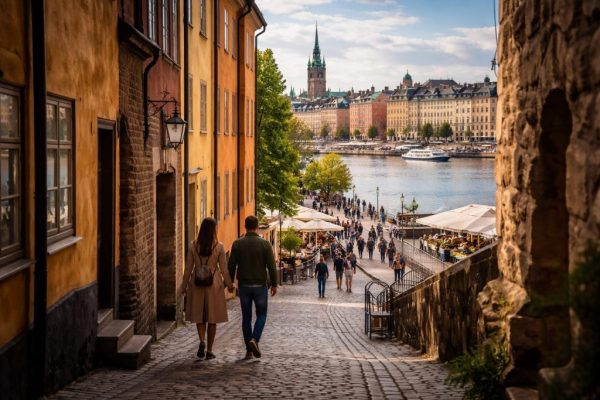
No discussion of city walks Stockholm completes without thorough exploration of Gamla Stan, the remarkably preserved medieval center. This district occupies Stadsholmen island, where Stockholm's story began in 1252. The area's irregular street pattern reflects organic medieval growth rather than planned development, creating the labyrinthine charm that captivates modern visitors.
Navigating the Old Town's Narrow Alleys
Gamla Stan's narrowest alley, Mårten Trotzigs Gränd, measures just ninety centimeters at its tightest point. These compressed passages weren't designed for aesthetic appeal but rather practical medieval considerations including defense, property maximization, and protection from harsh weather. Walking these routes today provides tangible connection to centuries of Stockholm residents who navigated the same stones.
The main square, Stortorget, serves as the natural hub for Old Town walking tours. This cobblestoned plaza witnessed both celebration and tragedy, including the 1520 Stockholm Bloodbath. The surrounding buildings display the distinctive ochre, rust, and golden facades that define Stockholm's architectural palette.
| Gamla Stan Highlight | Historical Period | Walking Time from Stortorget |
|---|---|---|
| Royal Palace | 18th Century | 5 minutes |
| German Church | 17th Century | 3 minutes |
| Nobel Museum | Contemporary | 1 minute |
| Riddarholmen Church | 13th Century | 8 minutes |
Royal Palace and Guard Ceremony
The Royal Palace anchors the eastern edge of Gamla Stan, representing one of Europe's largest royal residences still in official use. City walks Stockholm frequently time their routes to coincide with the changing of the guard ceremony, which occurs daily at 12:15 PM during summer months and Wednesday, Saturday, and Sunday during winter.
Observing this tradition adds ceremonial weight to any walking tour. The precision and pageantry reflect Sweden's constitutional monarchy, where historical tradition coexists with modern democratic governance. The ceremony typically lasts forty minutes, providing excellent photographic opportunities and cultural immersion.
Waterfront Promenades and Island Connections
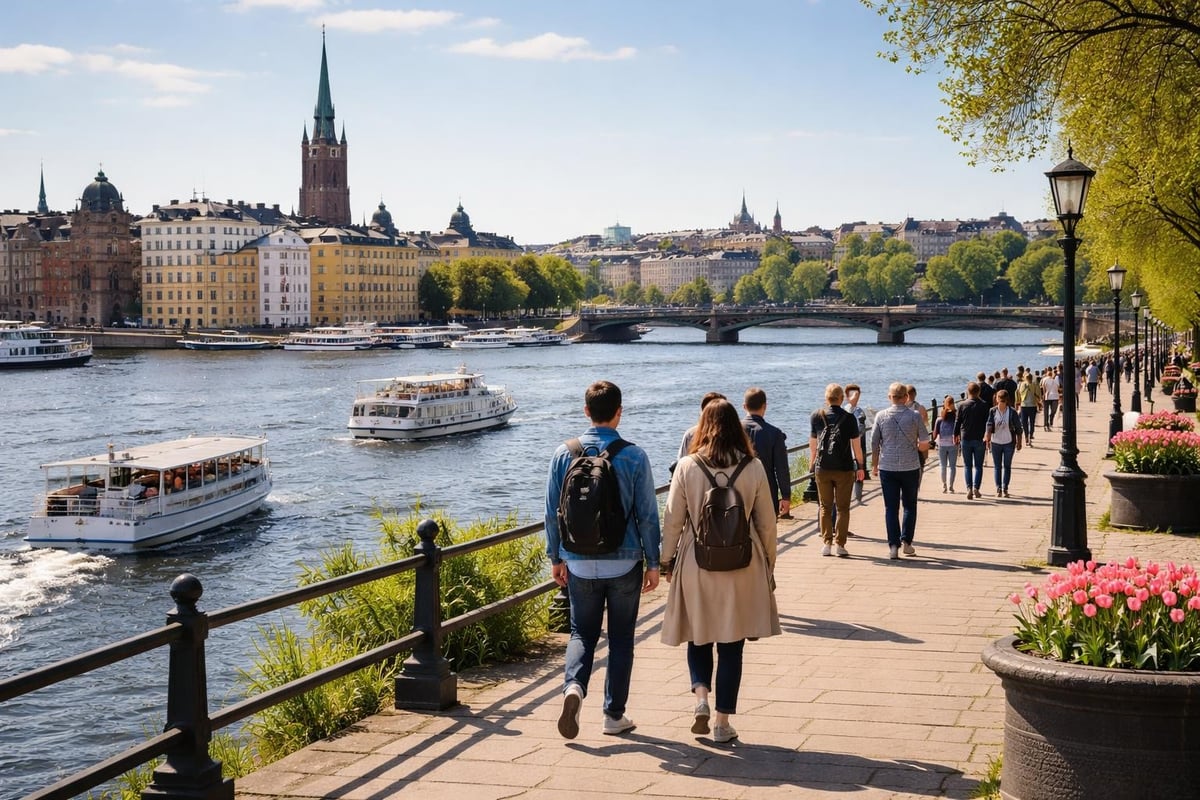
Stockholm's designation as "Beauty on Water" stems from the seamless integration of urban development with natural waterways. City walks Stockholm along waterfront routes showcase this relationship, offering perspectives impossible to achieve from inland paths.
Strandvägen Boulevard Experience
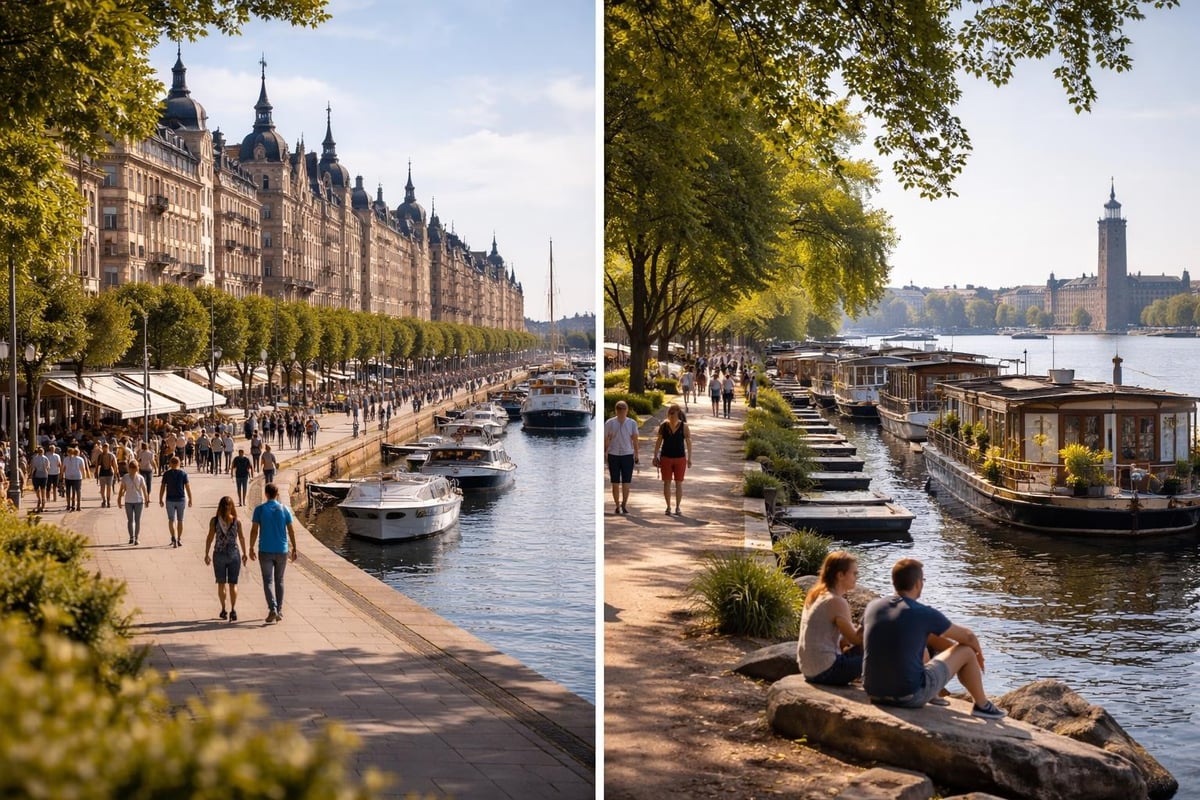
Strandvägen represents Stockholm's most prestigious address, stretching along Östermalm's waterfront. This boulevard emerged during the late nineteenth century as part of Stockholm's transformation into a modern European capital. The ornate residential buildings facing the water exemplify the National Romantic style that dominated Swedish architecture during this period.
Walking Strandvägen's length covers approximately one kilometer, with numerous opportunities to observe boat traffic, admire architecture, and access connecting routes into Djurgården via bridges. The tree-lined promenade becomes particularly spectacular during autumn when linden trees display golden foliage against the water's reflection.
Strandvägen walking highlights:
- Diplomatic Quarter mansions
- Berzelii Park entrance
- Djurgårdsbron bridge views
- Historic boat moorings
- Museum access points
Norr Mälarstrand and Kungsholmen
Western Stockholm offers contrasting waterfront experiences along Norr Mälarstrand, where Lake Mälaren meets the city. This route provides local neighborhood atmosphere rather than tourist-focused development, showcasing residential Stockholm at its most authentic.
The path extends for several kilometers, connecting Fridhemsplan to Västerbron bridge. Unlike Strandvägen's grand architecture, Norr Mälarstrand features a more relaxed character with houseboats, recreational facilities, and casual dining establishments. Summer evenings transform this promenade into a social hub where locals gather for sunset views and waterside relaxation.
Södermalm: Literary and Alternative Stockholm
Södermalm island represents Stockholm's bohemian quarter, where creative industries, vintage shops, and alternative culture flourish. City walks Stockholm through this district reveal layers of working-class history, contemporary creativity, and literary significance that distinguish it from the more polished central areas.
Following the Millennium Trail
Stieg Larsson's Millennium trilogy transformed Södermalm into a pilgrimage site for literary enthusiasts worldwide. The fictional Lisbeth Salander's apartment, Mikael Blomkvist's neighborhood, and numerous plot locations exist as real Stockholm addresses. Walking these routes combines detective work with urban exploration, as participants match fictional descriptions with actual streets.
The trail typically begins near Bellmansgatan, winds through the Mosebacke area, and includes stops at cafes mentioned in the novels. Professional tour guides enhance this experience by providing context about both the fiction and the real neighborhoods that inspired Larsson's Stockholm noir atmosphere.
Monteliusvägen Cliff Walk
One of Stockholm's most photographed viewpoints, Monteliusvägen offers elevated perspectives across Riddarfjärden bay toward Gamla Stan and City Hall. This five-hundred-meter path hugs the southern cliff edge of Södermalm, providing constantly changing vistas as walkers progress along its length.
The route remains accessible year-round, though ice can create challenges during winter months. Benches positioned at strategic intervals invite contemplation, making this an ideal location for appreciating Stockholm's architectural skyline against natural water features. Sunset walks during summer months showcase the golden hour light that photographers prize.
Extended Walking Adventures Beyond Central Stockholm
While central districts offer concentrated historical and cultural content, city walks Stockholm extend far beyond the inner islands for those seeking longer adventures or specialized interests.
Stockholm Archipelago Trail Connection
The Stockholm Archipelago Trail represents Sweden's most extensive island-hopping hiking network, spanning approximately two hundred seventy kilometers across twenty islands. While the full trail requires multiple days and boat connections, several sections begin within walking distance of central Stockholm.
Fjäderholmarna, the closest archipelago island, sits just twenty-five minutes by boat from Nybroplan. Once arrived, visitors can explore walking paths that demonstrate the transition from urban Stockholm to the wild beauty of the outer archipelago. This combination of city walks Stockholm with island exploration creates diverse day-trip possibilities.
| Trail Section | Distance | Difficulty | Highlights |
|---|---|---|---|
| Fjäderholmarna Circuit | 2 km | Easy | Artisan workshops, restaurants |
| Vaxholm Town | 3 km | Easy | Fortress, maritime history |
| Grinda Island | 5 km | Moderate | Forest paths, swimming coves |
| Möja Island | 8 km | Moderate | Traditional villages, farmland |
Royal Djurgården Comprehensive Circuit
Djurgården island deserves extended exploration beyond brief museum visits. A comprehensive circuit covering the island's perimeter stretches approximately eight kilometers, encompassing diverse landscapes from formal gardens to wild forest sections.
This route passes major institutions including the Vasa Museum, ABBA Museum, and Skansen open-air museum while also revealing quieter areas where locals jog, cycle, and walk dogs. The southern shore provides particularly peaceful walking with fewer tourists and excellent bird-watching opportunities along reed-lined waterways.
Practical Considerations for Stockholm Pedestrians
Successfully executing city walks Stockholm requires attention to practical details that enhance comfort and safety while maximizing the experience.
Navigation and Wayfinding
Stockholm's logical street layout and excellent signage make independent navigation relatively straightforward. However, the multi-island geography occasionally confuses first-time visitors, particularly when determining bridge connections between districts. Digital mapping applications function reliably throughout the city, though carrying a physical map provides useful backup and broader geographic perspective.
Street names often indicate historical function or geography. "Gatan" (street), "Vägen" (road), "Gränd" (alley), and "Torg" (square) appear as suffixes, helping pedestrians understand the scale and character of routes before committing to them.
Essential navigation tools:
- Official Stockholm city maps (available at tourist information)
- SL Journey Planner app (includes walking routes)
- Google Maps offline Stockholm download
- Compass application for bridge orientation
- Neighborhood boundary awareness
Footwear and Physical Preparation
Stockholm's varied terrain demands appropriate footwear selection. Gamla Stan's cobblestones challenge high heels and thin-soled shoes, while waterfront promenades accommodate nearly any walking shoe. Those planning comprehensive city walks Stockholm covering multiple districts should prioritize comfort and support over fashion.
Winter conditions elevate footwear importance significantly. Ice cleats or shoes with aggressive tread patterns prevent slips on Stockholm's occasionally icy sidewalks. Local shops sell inexpensive ice grips that attach to existing shoes, providing security without requiring specialized winter boots.
Cultural Etiquette and Local Walking Customs
Understanding Stockholm pedestrian culture enhances the walking experience while demonstrating respect for local norms. Swedes maintain reputation for orderliness that extends to walking behavior, creating generally pleasant conditions for visitors.
Pedestrian Right-of-Way and Crossings
Swedish law grants pedestrians significant right-of-way at marked crossings, with vehicles required to stop for anyone approaching. However, this legal framework shouldn't encourage careless crossing. Stockholm pedestrians typically wait for proper signals even when traffic appears absent, reflecting broader cultural emphasis on rule-following and communal consideration.
Bicycle lanes, marked in red or with distinct paving, require particular attention. Cyclists in Stockholm travel quickly and expect pedestrians to respect lane boundaries. Walking in bicycle lanes creates dangerous situations and generates local frustration. The city’s approach to walkability emphasizes separated infrastructure that works only when each user group respects designated spaces.
Photography and Private Space
Stockholm's beauty invites constant photography during city walks Stockholm, which generally meets no objection when focused on architecture, landscapes, and public spaces. However, photographing individuals without permission or focusing cameras into private residences violates Swedish privacy norms and may generate confrontation.
The allemansrätten (right of public access) that governs Swedish outdoor recreation doesn't extend to urban private property. While walking past and observing beautiful buildings remains acceptable, entering private courtyards or gardens without invitation crosses boundaries. Many historic buildings feature accessible courtyards clearly marked as public or private at entrances.
Specialized Thematic Walking Routes
Beyond general sightseeing, city walks Stockholm can follow specific themes that deepen engagement with particular aspects of the city's character and history.
Architecture Through the Centuries
Stockholm's architectural evolution spans from thirteenth-century medieval structures through contemporary Scandinavian design. Thematic walks focusing on architectural progression provide education in building styles, urban planning philosophy, and how Stockholm balanced preservation with modernization.
The transition from Gamla Stan's medieval character through Norrmalm's 1960s modernism to contemporary sustainable design in developing districts like Hagastaden illustrates changing priorities across centuries. Guided sightseeing tours often emphasize these transitions, helping visitors understand not just what they see but why Stockholm looks as it does.
Music and Cultural Heritage Paths
Music lovers find specialized city walks Stockholm following ABBA's journey from obscurity to international superstardom particularly engaging. The ABBA journey route includes recording studio locations, performance venues, and sites significant to band members' personal histories. This themed approach transforms generic sightseeing into narrative-driven exploration.
Classical music enthusiasts can similarly trace Stockholm's concert hall district, opera house, and venues where Swedish composers including Wilhelm Stenhammar and Hugo Alfvén premiered works. These specialized routes require more research but deliver rewarding depth for passionate visitors.
Group Dynamics and Social Walking Experiences
The social dimension of city walks Stockholm varies dramatically based on group composition and tour structure. Private group experiences offer different benefits compared to joining larger public walks or exploring independently.
Private Group Advantages
Private walking tours accommodate specific interests, physical capabilities, and pacing preferences impossible in larger group settings. Families with children adjust routes based on attention spans and energy levels. Corporate groups focus on business history and contemporary economic development. Friend groups emphasize photography stops and dining recommendations.
Customized tour experiences allow groups to request specific neighborhoods, themes, or timing that standard tours cannot accommodate. A private guide responds to questions immediately, adjusts route based on revealed interests, and provides recommendations extending beyond the planned walking route.
Private group benefits:
- Flexible pacing and break scheduling
- Customized content emphasis
- Photography accommodation
- Direct question access
- Route modification capability
- Dietary preference coordination
Making Connections Through Shared Experiences
Group walking tours with other visitors create opportunities for international connection and shared discovery. The communal aspect of experiencing Stockholm's beauty alongside fellow travelers generates conversations, perspective exchanges, and sometimes lasting friendships. Many participants on Stockholm walking tours report that interactions with other group members enhanced their overall visit.
This social dimension particularly benefits solo travelers who might otherwise experience Stockholm in relative isolation. Walking tours provide structured opportunities for interaction while maintaining independence, offering ideal balance for those traveling alone but seeking occasional companionship.
Accessibility and Inclusive Walking Options
Stockholm maintains strong commitment to accessibility, though the historic character of certain districts presents inherent challenges. Understanding which city walks Stockholm accommodate various mobility levels helps ensure positive experiences for all visitors.
Mobility-Friendly Routes
Modern waterfront promenades including Strandvägen and sections of Norr Mälarstrand feature smooth, level surfaces suitable for wheelchairs, walkers, and those with limited mobility. These routes provide excellent Stockholm experiences without requiring stair navigation or cobblestone management.
Djurgården's main paths similarly accommodate mobility devices, though some museum approaches involve inclines. The island's relatively flat terrain and well-maintained surfaces make it among Stockholm's most accessible districts for extended walking.
Conversely, Gamla Stan's medieval character creates significant accessibility challenges. Cobblestones, narrow alleys, and frequent stairs limit wheelchair access to certain routes only. However, portions of the Old Town including Västerlånggatan (the main shopping street) remain relatively accessible with careful route planning.
Rest Points and Facilities
Successful city walks Stockholm incorporate regular rest opportunities and facility access. Stockholm provides public restrooms at major squares, museums, and department stores, though availability varies by season and location. Cafes welcome visitors for restroom use with purchase, following typical European conventions.
Benches appear throughout Stockholm's public spaces, with particularly good coverage in parks and along waterfront routes. Winter walking requires more frequent warm-up breaks, which Stockholm accommodates through numerous cafes, museums, and public buildings offering free entry to ground-floor areas.
Food and Refreshment Integration
City walks Stockholm naturally incorporate culinary experiences, whether planned meal stops or spontaneous cafe breaks. Understanding local food culture and timing considerations enhances both walking and dining satisfaction.
Fika Culture and Walking Breaks
The Swedish tradition of fika (coffee break) provides perfect rhythm for extended walking tours. This cultural institution involves more than mere coffee consumption, representing a valued pause for social connection and mental reset. Most Stockholmers take fika at least once daily, creating numerous cafe options throughout the city.
Traditional fika includes coffee and something sweet, typically a cinnamon bun (kanelbulle) or cardamom bun. These breaks naturally divide longer city walks Stockholm into manageable segments, preventing fatigue while immersing visitors in authentic Swedish daily life. Many cafes provide outdoor seating during warmer months, allowing rest without sacrificing views or atmosphere.
Meal Planning Around Walking Routes
Full-day walking adventures require meal planning that balances hunger satisfaction with continued energy for afternoon exploration. Stockholm's lunch culture typically occurs between 11:30 AM and 1:30 PM, when restaurants offer "dagens rätt" (daily special) at reduced prices compared to evening menus.
Strategic meal timing can enhance rather than interrupt walking flow. Planning lunch in Gamla Stan allows afternoon exploration of Södermalm after digestion. Alternatively, reversing this sequence provides morning energy for Old Town's demanding cobblestones before relaxing over waterfront lunch along Norr Mälarstrand.
City walks Stockholm reveal layers of history, culture, and contemporary life that no other exploration method can match, transforming the Swedish capital from tourist destination into personally understood place. Whether following medieval alleyways through Gamla Stan, tracing literary footsteps through Södermalm, or discovering waterfront promenades connecting the city's fourteen islands, walking creates intimate connection with Stockholm's unique character. Adding:tours specializes in creating personalized walking experiences for private groups and small gatherings, with native English-speaking guides who share insider perspectives and tailor each route to your specific interests, ensuring your time exploring Stockholm on foot becomes truly memorable.