
Guides and Tours: Crafting Unforgettable Experiences
Exploring a new destination becomes infinitely richer when experienced through the eyes of someone who knows its secrets. Professional guides and tours transform casual sightseeing into immersive journeys that reveal layers of history, culture, and local life that independent travelers often miss. Whether wandering through medieval alleyways, retracing the steps of literary characters, or discovering hidden cultural gems, the right guided experience creates connections that last far beyond the visit itself.
The Value Proposition of Professional Guides and Tours
The guided tour industry has evolved significantly, moving away from generic group experiences toward personalized, meaningful encounters. Statistics reveal that travelers increasingly seek authentic connections with destinations, making the role of knowledgeable guides more critical than ever.
Modern travelers prioritize:
- Authentic local perspectives over surface-level attractions
- Flexible itineraries tailored to specific interests
- Small group sizes or private experiences
- Expert storytelling that brings history and culture alive
- Insider access to locations and experiences
Research from WorldMetrics shows that consumer behavior in the tours and activities sector has shifted dramatically, with visitors willing to invest more in quality experiences that deliver genuine value. This trend particularly benefits specialized offerings like Stockholm old town walking tours that combine historical depth with intimate group settings.
Creating Memorable Guest Experiences
The distinction between ordinary and extraordinary guides and tours lies in meticulous attention to detail. Every element contributes to the overall experience, from pre-tour communication to the final farewell.
Professional tour operators understand that guests remember how they felt during an experience. A guide who notices when someone needs a rest, adjusts the pace for varying mobility levels, or spontaneously shares a relevant personal story creates moments that resonate emotionally.
| Experience Element | Standard Approach | Elevated Approach |
|---|---|---|
| Tour Introduction | Basic itinerary overview | Engaging story that builds anticipation |
| Information Delivery | Facts and dates | Narratives connecting past to present |
| Group Management | Rigid schedule adherence | Flexible pacing based on engagement |
| Local Insights | Popular attractions only | Hidden gems and insider perspectives |
Essential Qualities of Exceptional Tour Guides
The foundation of successful guides and tours rests entirely on guide quality. While knowledge matters, the most effective guides blend expertise with interpersonal skills that create genuine connections.
Communication and Storytelling Mastery
Outstanding tour guides possess what Peek Pro identifies as essential skills: clear communication, active listening, and the ability to read their audience. These professionals adapt their delivery style based on group dynamics, ensuring everyone feels included and engaged.
Key communication capabilities include:
- Projecting voice clearly in various environments
- Adjusting technical language for different knowledge levels
- Using descriptive language that paints vivid mental pictures
- Incorporating questions to encourage participation
- Managing group discussions without losing focus
Native English-speaking guides bring particular advantages for international visitors, eliminating language barriers and enabling nuanced conversations about complex topics. When exploring Stockholm's literary heritage or cultural landmarks, clear communication becomes essential for conveying the deeper significance behind what visitors see.
Deep Knowledge and Continuous Learning
Expertise distinguishes professional guides from casual presenters. The best practitioners constantly expand their knowledge, staying current with historical research, archaeological discoveries, and cultural developments.
Professional tour guides invest significant time in research beyond basic facts. They understand context, can answer unexpected questions, and connect seemingly disparate information into coherent narratives. This depth allows them to customize information delivery based on group interests, whether focusing on architectural details, political history, or cultural traditions.
Designing Effective Tour Experiences
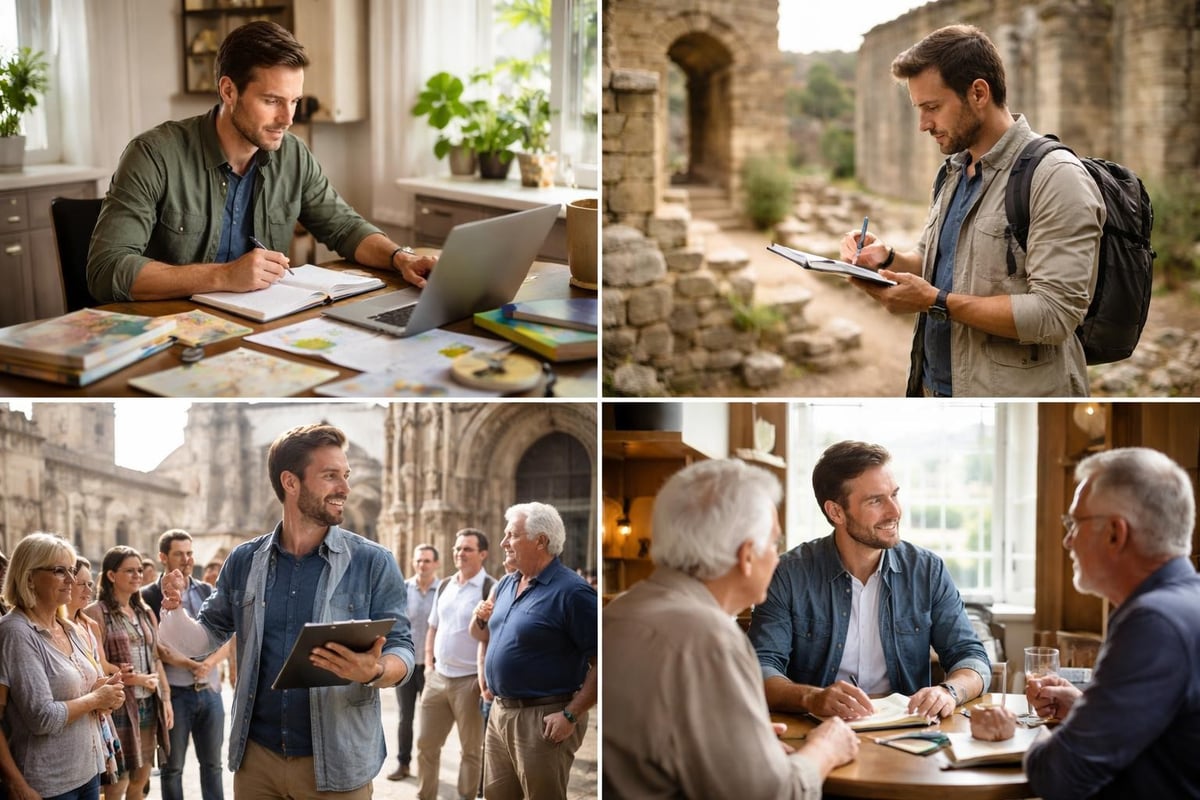
Creating compelling guides and tours requires thoughtful planning that balances structure with flexibility. The most successful experiences follow proven frameworks while remaining adaptable to real-time circumstances.
Route Planning and Timing Considerations
Strategic route design maximizes engagement while managing practical constraints. Developing effective guided tours requires understanding visitor capacity, physical demands, and logical flow between locations.
Experienced operators like those offering English walking tours recognize that pacing determines success. Too rushed, and guests feel overwhelmed; too slow, and attention wanes. The ideal rhythm alternates between movement and stationary interpretation, allowing time for photography, questions, and personal reflection.
Optimal tour pacing includes:
- Opening with an engaging hook at the first location
- Building momentum through varied presentation techniques
- Incorporating strategic breaks at natural intervals
- Allowing spontaneous moments without derailing the schedule
- Ending with a memorable conclusion that reinforces key themes
Incorporating Inclusive Best Practices
Modern guides and tours must serve diverse audiences with varying needs and abilities. Inclusive tour design considers physical accessibility, sensory engagement, and cultural sensitivity from the initial planning stages.
Accessibility extends beyond wheelchair ramps. It encompasses clear communication for hearing-impaired guests, descriptive language for those with visual limitations, and cognitive accessibility through well-structured narratives. Tours designed with universal principles benefit all participants, creating richer experiences regardless of individual capabilities.
| Inclusive Element | Implementation Strategy | Benefit |
|---|---|---|
| Route Selection | Identify accessible paths and alternative routes | Accommodates mobility variations |
| Communication | Speak clearly, face audience, provide written materials | Supports diverse learning styles |
| Multisensory Content | Incorporate sounds, textures, tastes, and visuals | Engages multiple perception channels |
| Rest Opportunities | Plan strategic stops with seating options | Prevents fatigue, maintains engagement |
Specialized Tour Themes and Niches
The evolution of guides and tours has led to increasingly specialized offerings that cater to specific interests. Themed experiences attract passionate audiences seeking depth over breadth.
Literary and Cultural Tours
Literature-themed tours exemplify how specialized guides and tours create unique value. Following fictional characters through real locations blends imagination with geography, transforming readers into active participants within beloved stories.
Stockholm's connection to Stieg Larsson's Millennium series attracts dedicated fans worldwide. These cultural tours visit filming locations, character haunts, and neighborhoods central to the narrative, while expert guides provide context about Swedish society, Nordic noir traditions, and the city's creative scene.
Music-focused experiences similarly transform passive appreciation into active exploration. ABBA enthusiasts discover how Stockholm shaped the legendary group's sound and success, visiting creative landmarks while learning about Sweden's rich musical heritage.
Small Group and Private Experiences
The shift toward intimate guides and tours reflects travelers' desire for meaningful interactions. Small groups enable deeper conversations, personalized attention, and flexibility impossible in large tour settings.
Private experiences offer ultimate customization. Tailored tours adapt completely to group interests, whether emphasizing architectural details, culinary traditions, political history, or contemporary culture. This personalization creates memorable experiences that address specific curiosities and learning objectives.
Operational Excellence in Tour Management
Behind every seamless guided experience lies systematic planning and professional execution. Successful guides and tours depend on operational frameworks that anticipate challenges and ensure consistency.
Guide Selection and Training
Hiring qualified tour guides requires evaluating both technical knowledge and interpersonal capabilities. The interview process should assess communication skills, cultural awareness, problem-solving abilities, and genuine passion for sharing knowledge.
Ongoing training maintains quality standards and keeps guides current. Regular workshops covering new historical findings, customer service techniques, emergency protocols, and inclusive practices ensure continuous improvement.
Comprehensive guide development includes:
- Intensive orientation covering company standards and values
- Shadowing experienced guides before leading independently
- Regular feedback sessions reviewing performance metrics
- Professional development opportunities for specialization
- Cross-training in multiple tour themes and routes
Creating Engaging Tour Scripts
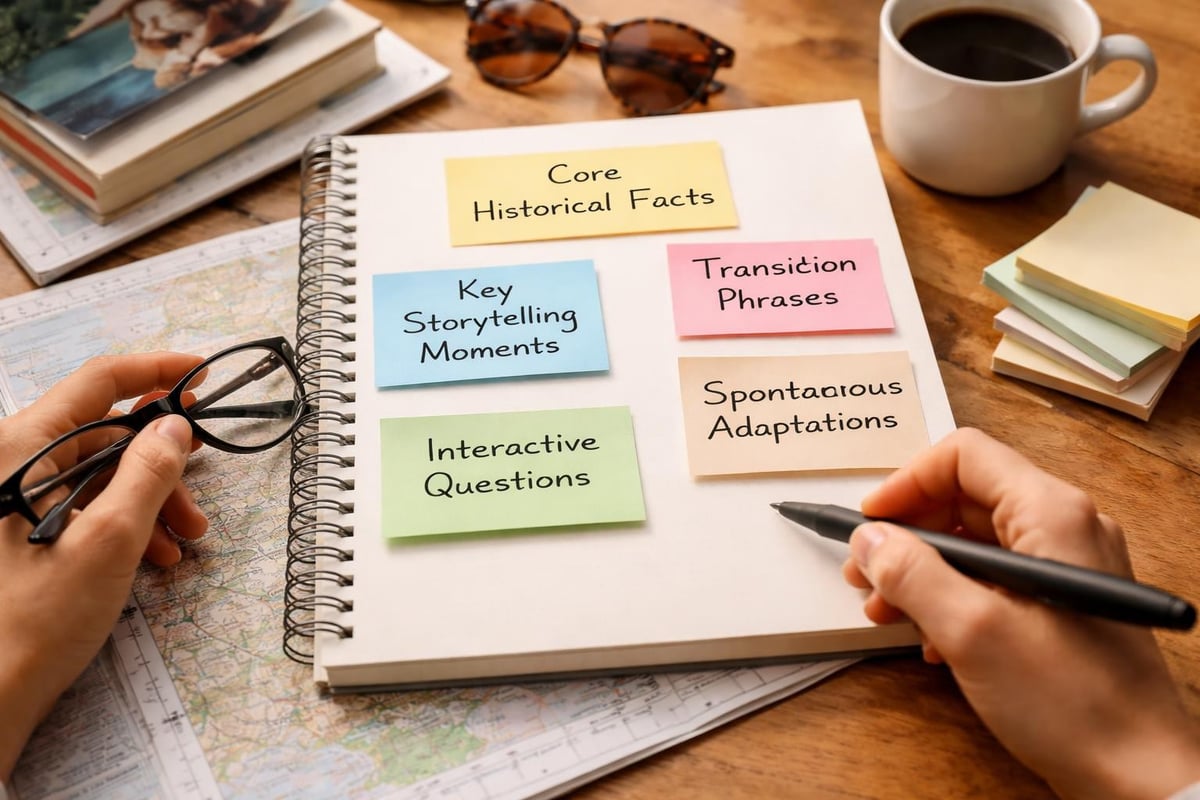
While spontaneity matters, effective guides and tours rely on well-crafted foundational scripts. These frameworks ensure consistent information delivery while allowing personality and adaptation.
Planning guided tours involves scripting key talking points, transitions between locations, and essential facts while leaving room for improvisation. The best scripts read naturally rather than formally, incorporating conversational language and opportunities for guest interaction.
Enhancing Guest Engagement Throughout Tours
Maintaining attention and creating memorable moments separates exceptional guides and tours from forgettable ones. Strategic engagement techniques keep participants actively involved rather than passively observing.
Storytelling Techniques That Resonate
Effective guides understand that people remember stories far better than isolated facts. Narrative techniques transform historical information into compelling human dramas that create emotional connections.
Powerful storytelling methods include:
- Opening with intriguing questions that build curiosity
- Using vivid sensory details that help guests visualize historical scenes
- Incorporating local legends and personal anecdotes
- Creating suspense through strategic information pacing
- Connecting past events to contemporary relevance
When sharing Stockholm's history, skilled guides don't simply recite dates and names. They describe the sounds of medieval marketplaces, the political intrigue within royal courts, and the daily lives of ordinary citizens whose descendants still inhabit the same neighborhoods.
Interactive Elements and Participation
The most engaging guides and tours invite participation rather than lecture passively. Questions, discussions, and hands-on elements transform observers into active learners.
Guides might ask guests to imagine historical scenarios, identify architectural features, or share their own experiences related to tour themes. These interactions create investment in the experience and help information retention long after the tour concludes.
Tips for running smooth tours emphasize knowing when to pause for photos, allowing time for questions, and reading group energy to adjust pacing accordingly. The most skilled guides make these adjustments seamlessly, maintaining flow while responding to participant needs.
Business Strategies for Tour Operators
Operating successful guides and tours requires balancing guest experience with sustainable business practices. Strategic planning ensures long-term viability while maintaining quality standards.
Pricing and Value Communication
Establishing appropriate pricing reflects the true value delivered through professional guides and tours. Underpricing devalues expertise and creates unsustainable business models, while overpricing alienates potential guests.
Transparent value communication helps prospective guests understand what differentiates premium experiences from budget alternatives. Small group sizes, expert guides, exclusive access, and personalized attention justify higher price points when clearly articulated.
| Pricing Factor | Consideration | Impact on Value |
|---|---|---|
| Group Size | Smaller groups enable personalization | Justifies premium pricing |
| Guide Expertise | Specialized knowledge and language skills | Increases perceived value |
| Tour Duration | Comprehensive coverage vs. highlights only | Affects price expectations |
| Inclusions | Meals, transportation, entrance fees | Simplifies comparison shopping |
Marketing Specialized Experiences
Promoting guides and tours effectively requires reaching audiences genuinely interested in specific themes. Stockholm city tours attract general audiences, while specialized offerings like literary or music-themed experiences appeal to narrower but more passionate demographics.
Digital marketing enables precise targeting based on interests, previous travel behavior, and engagement patterns. Content marketing through blogs, videos, and social media establishes expertise and builds trust before visitors even arrive.
Guest testimonials and reviews provide social proof that influences booking decisions. Encouraging satisfied participants to share experiences amplifies reach while demonstrating the transformative impact of quality guides and tours.
Technology Integration in Modern Tours
While human connection remains central to guides and tours, technology enhances rather than replaces the guided experience. Strategic tool integration improves logistics, communication, and content delivery.
Digital Enhancement Tools
Modern guides leverage smartphones, tablets, and portable speakers to supplement storytelling. Historical photographs displayed at relevant locations help guests visualize past scenes, while audio enhancements ensure everyone hears clearly in busy environments.
Booking platforms streamline reservations, payment processing, and guest communication. Automated confirmations, reminder messages, and post-tour follow-ups maintain professionalism while reducing administrative burden.
Useful technology applications include:
- GPS-enabled route tracking and timing optimization
- Digital resources for answering unexpected questions
- Translation apps for multilingual guest communication
- Photography assistance using optimal angles and settings
- Weather monitoring for proactive itinerary adjustments
Balancing Digital and Human Elements
The most effective guides and tours use technology as a tool rather than a crutch. Devices should enhance rather than distract from human interaction and authentic experiences.
Guides who constantly reference phones or tablets create distance rather than connection. Strategic technology use means preparing thoroughly beforehand, then engaging directly with guests during the experience. Digital resources serve as backup rather than primary delivery mechanisms.
Sustainability and Responsible Tourism
Contemporary guides and tours increasingly incorporate sustainability principles and responsible tourism practices. Thoughtful operators recognize their role in protecting destinations for future generations.
Managing Tourism Impact
Popular destinations face challenges from over-tourism, requiring guides to balance guest satisfaction with environmental and cultural preservation. Responsible operators choose routes that distribute visitor traffic, support local businesses, and minimize ecological footprint.
History tours educate guests about preservation efforts, encouraging respectful behavior and cultural sensitivity. Guides model appropriate conduct, demonstrating how to photograph respectfully, minimize noise in residential areas, and support authentic local enterprises.
Sustainable tour practices include:
- Limiting group sizes to reduce congestion and environmental stress
- Partnering with local businesses for meals and services
- Educating guests about cultural norms and respectful behavior
- Using public transportation or walking when feasible
- Supporting conservation efforts through tour proceeds
Cultural Sensitivity and Authenticity
Effective guides and tours present destinations authentically while respecting local communities. This requires acknowledging complex histories, avoiding stereotypes, and representing diverse perspectives.
Stockholm's transformation from medieval settlement to modern capital involves nuanced stories about immigration, social change, and cultural evolution. Skilled guides present this complexity thoughtfully, helping visitors understand contemporary Sweden within its historical context.
Building Long-Term Guest Relationships
The most successful guides and tours create experiences so memorable that guests become advocates, sharing recommendations and returning for additional experiences.
Exceeding Expectations Consistently
Exceptional service begins with clear communication about what guests can expect, then consistently delivering beyond those promises. Small surprises, thoughtful gestures, and genuine care create lasting impressions.
Guides who remember names, notice individual interests, and make personal connections transform transactional tours into meaningful encounters. These relationships often extend beyond the scheduled experience through ongoing communication and recommendations.
Encouraging Referrals and Repeat Visits
Satisfied guests represent the most effective marketing for guides and tours. Creating shareable moments, providing excellent photography opportunities, and making it easy to recommend services all contribute to organic growth.
Follow-up communication thanking participants and inviting feedback maintains relationships while gathering valuable improvement insights. Special offerings for returning guests or referral incentives recognize loyalty while expanding reach.
Exceptional guides and tours combine expert knowledge, engaging storytelling, and genuine care for guest experience into transformative encounters that reveal destinations in profound ways. Whether you're planning a family adventure, corporate gathering, or friends' reunion in Stockholm, Adding:tours creates personalized experiences that showcase the city's rich heritage through the eyes of passionate local experts. Our native English-speaking guides transform ordinary sightseeing into unforgettable journeys, whether you're exploring medieval streets, following literary legends, or discovering musical heritage.