
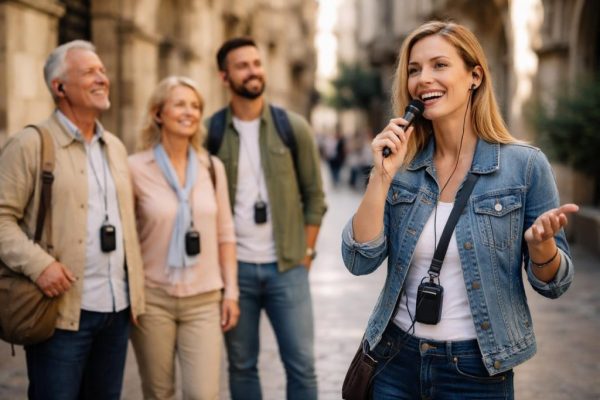
Tour Guide Systems: Elevate Your Group Experience
Modern tour guide systems have revolutionized how guides communicate with their groups, particularly in bustling environments where background noise and distance can compromise the quality of guided experiences. These wireless communication tools ensure that every participant hears every word clearly, transforming ordinary tours into immersive, professional experiences. For tour operators focusing on private groups and small gatherings, investing in the right audio technology can significantly elevate service quality and guest satisfaction.
Understanding Tour Guide Systems Technology
Tour guide systems consist of three essential components: a transmitter worn by the guide, individual receivers for participants, and headphones or earpieces. The guide speaks into a microphone connected to the transmitter, which broadcasts the audio signal wirelessly to all receivers within range.
Modern systems utilize various frequency bands:
- UHF (Ultra High Frequency) systems offering extended range and minimal interference
- FM frequency systems suitable for shorter-range applications
- Digital encrypted transmission for privacy and security
- Infrared systems ideal for indoor museum settings
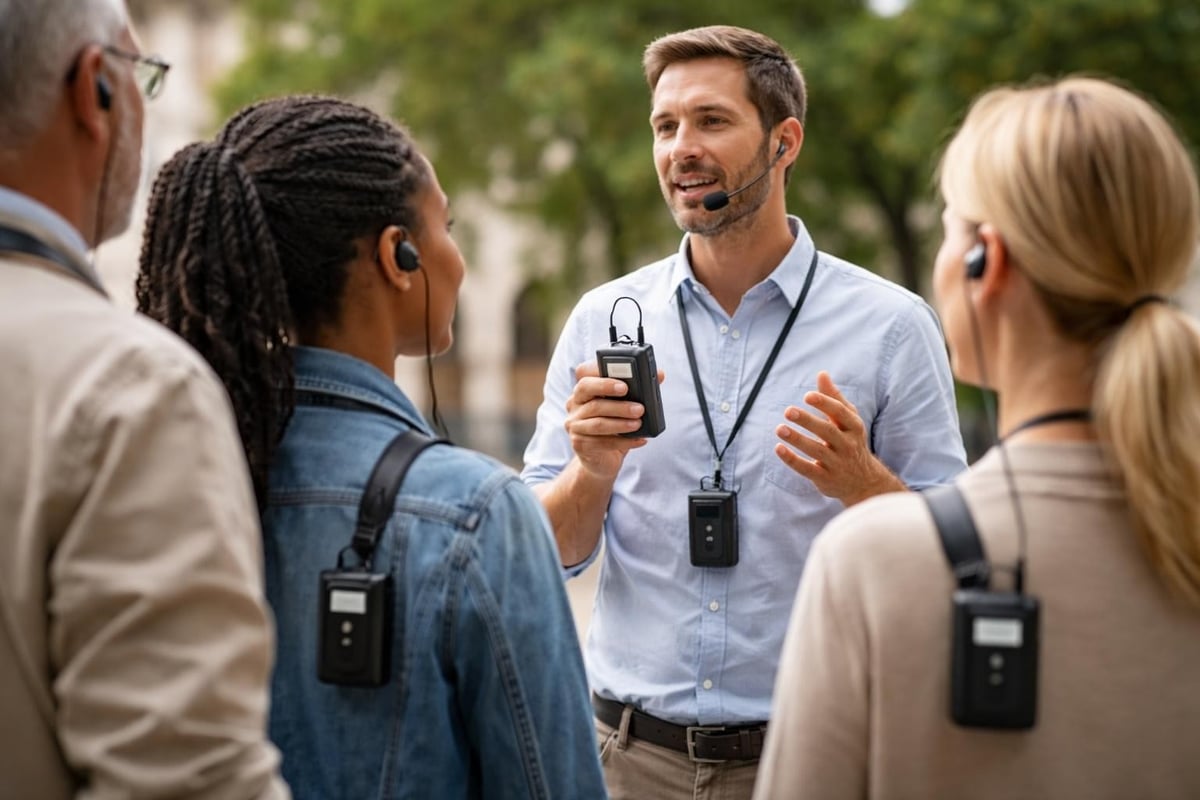
The technology has evolved considerably over the past decade. Research into wireless tour guide systems indicates significant market growth through 2034, driven by enhanced audio quality, longer battery life, and more reliable connectivity. Digital systems now offer crystal-clear sound even in challenging acoustic environments like busy city streets or crowded museums.
Key Technical Specifications
| Feature | Standard Range | Professional Range |
|---|---|---|
| Transmission Distance | 50-100 meters | 150-300 meters |
| Battery Life | 4-6 hours | 8-12 hours |
| Frequency Channels | 10-20 | 50+ |
| Audio Quality | FM quality | Digital HD |
When selecting tour guide systems, consider the typical size of your groups and the environments where you'll operate. For Stockholm walking tours, systems with robust outdoor performance and sufficient range for groups spreading across historical sites prove essential.
Benefits for Private Group Tours
Tour guide systems deliver measurable advantages that directly impact guest satisfaction and operational efficiency. The primary benefit remains consistent, high-quality audio delivery regardless of group size or environmental conditions.
Private groups particularly appreciate the personalized nature of wireless systems. Participants can maintain comfortable distances from the guide while exploring narrow alleys or dispersing to take photographs, yet still hear every word of commentary.
Operational advantages include:
- Reduced vocal strain for guides working multiple tours daily
- Ability to speak at conversational volumes in noise-sensitive locations
- Enhanced professionalism and perceived value
- Improved safety through continuous communication
- Greater flexibility in group positioning
The technology enables guides to share insider knowledge and exclusive stories more effectively. When leading English tours through Stockholm's Old Town, guides can point out architectural details or historical contexts without needing to gather everyone tightly or raise their voices above ambient noise.
Enhancing Cultural and Historical Tours
Cultural tour experiences benefit enormously from clear audio communication. Detailed explanations of historical events, architectural significance, or cultural traditions require participants to hear nuanced information that might otherwise be lost in translation or drowned out by surroundings.
For literary adventures following Stieg Larsson's footsteps or ABBA-themed experiences, tour guide systems allow guides to share detailed backstories, anecdotes, and contextual information that enriches the thematic experience. Participants remain fully immersed in the narrative without repeatedly asking guides to repeat information.
Choosing the Right System for Your Operation
Selecting appropriate tour guide systems requires careful consideration of several factors specific to your operation's needs and characteristics. The market offers numerous options at varying price points and capability levels.
Begin by assessing your typical group sizes. Systems designed for groups of 5-15 people differ significantly from those built for larger gatherings of 30-50 participants. Most private tour guides working with small gatherings find mid-range systems with 10-20 receivers optimal.
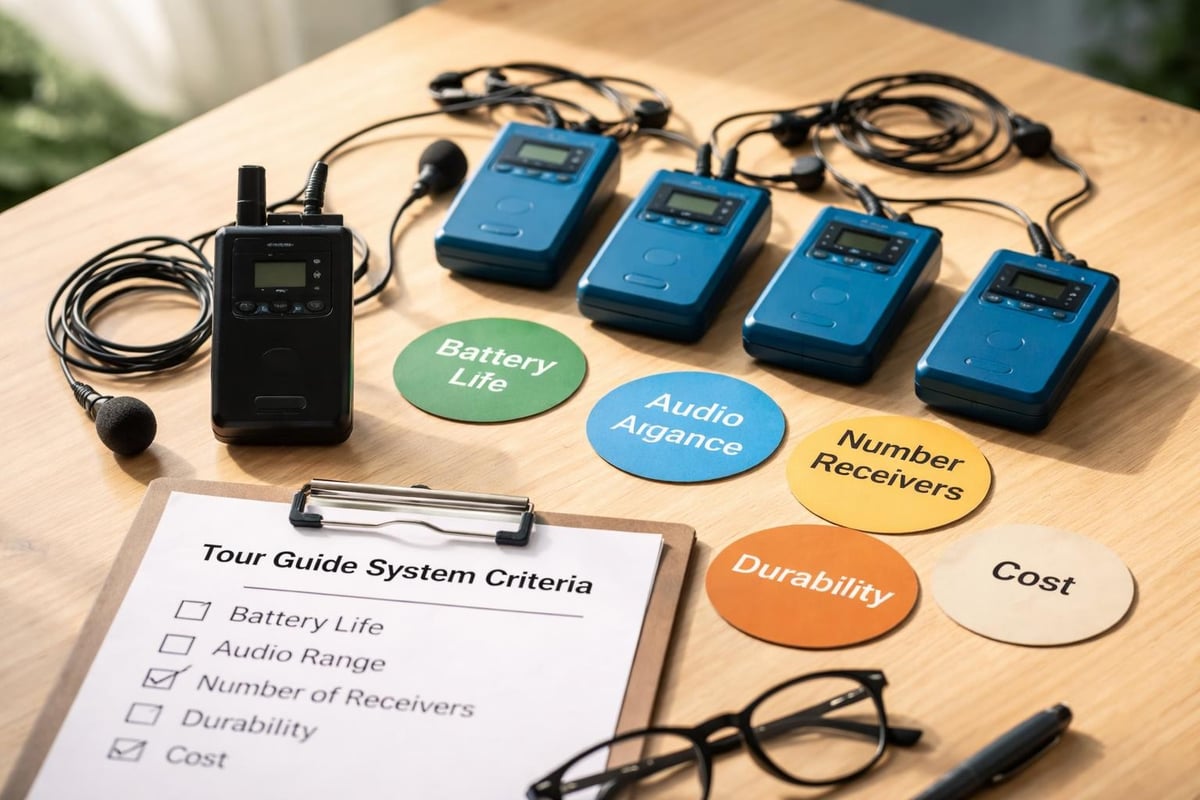
Evaluation criteria should include:
- Audio quality and clarity in typical operating environments
- Battery life sufficient for your longest tours with margin
- Durability and weather resistance for outdoor operations
- Ease of use for both guides and participants
- Charging and storage infrastructure requirements
- Compliance with local frequency regulations
- Budget including initial investment and ongoing maintenance
Professional vs. Consumer-Grade Options
| Aspect | Consumer Grade | Professional Grade |
|---|---|---|
| Initial Cost | $500-$1,500 | $2,000-$5,000+ |
| Receiver Units | 6-10 included | 10-30+ included |
| Warranty | 1 year | 2-3 years |
| Technical Support | Limited | Comprehensive |
| Expandability | Minimal | Highly scalable |
Market research on tour guide systems projects continued growth through 2035, with professional-grade equipment becoming increasingly affordable. Investment in quality systems pays dividends through enhanced guest experiences and reduced replacement costs.
Integration with Sustainable Tourism Practices
Modern tour guide systems align perfectly with sustainable tourism principles by minimizing environmental impact while maximizing educational value. Technological innovations in tour guide systems increasingly focus on energy efficiency and reduced waste.
Contemporary systems feature rechargeable batteries that eliminate disposable battery waste, solar charging options for eco-conscious operations, and durable construction that extends product lifecycles. These features resonate with environmentally aware travelers who appreciate operators making sustainable choices.
Sustainability benefits include:
- Reduced noise pollution in sensitive historical or natural areas
- Elimination of disposable battery waste
- Lower energy consumption through efficient charging systems
- Decreased need for printed materials when audio commentary provides detailed information
- Minimal physical impact on sites by allowing dispersed viewing
When operating Stockholm city tours, guides can maintain appropriate volumes in residential areas and near cultural institutions while ensuring all participants receive complete information. This consideration demonstrates respect for local communities and enhances your operation's reputation.
Operational Best Practices
Implementing tour guide systems successfully requires more than simply purchasing equipment. Establishing clear operational protocols ensures consistent performance and longevity of your investment.
Develop comprehensive pre-tour checklists covering equipment testing, battery verification, and distribution procedures. Assign responsibility for charging, cleaning, and storing equipment after each tour. Regular maintenance schedules prevent unexpected failures during critical moments.
Equipment Management Protocol
-
Pre-Tour Preparation (30 minutes before departure)
- Verify all units fully charged
- Test transmitter and sample receivers
- Confirm correct frequency settings
- Prepare backup units if available
- Brief team members on troubleshooting basics
-
During Tour Operations
- Monitor battery indicators throughout tour
- Keep spare batteries accessible
- Address technical issues promptly
- Collect participant feedback on audio quality
-
Post-Tour Procedures
- Collect and count all units
- Clean earpieces with sanitizing wipes
- Return units to charging station
- Log any malfunctions or damages
- Report replacement needs
Training guides thoroughly on system operation prevents common issues. Many technical problems stem from user error rather than equipment failure. Ensure all professional tour guides understand proper microphone positioning, volume adjustment, and basic troubleshooting.
Advanced Applications and Future Trends
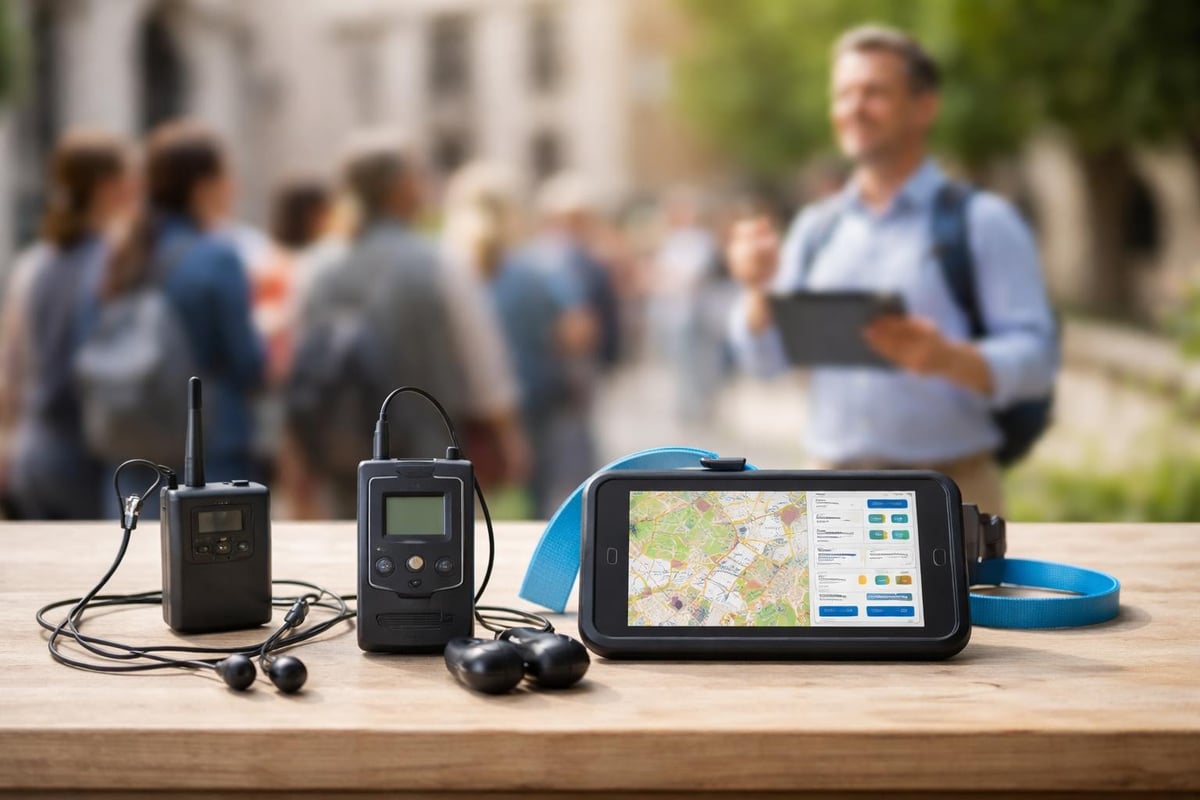
The tour guide systems landscape continues evolving with emerging technologies promising enhanced functionality. Integration with smartphones, GPS tracking, and augmented reality platforms represents the next frontier in guided experiences.
Research on multi-modal interactions in virtual tour guidance demonstrates how large language models can enhance personalized tour experiences. While physical tour guide systems remain essential for in-person tours, hybrid approaches combining traditional audio with digital content delivery platforms offer compelling possibilities.
Emerging trends include:
- Integration with translation apps for multilingual groups
- GPS-triggered audio content at specific locations
- Recording capabilities for post-tour reference
- Smartphone app alternatives to dedicated receivers
- Biometric feedback for engagement measurement
- AI-enhanced commentary adaptation based on participant interest
Innovative tour guide robots incorporating co-speech actions show how technology can enhance visitor engagement. While robotic guides remain specialized applications, the underlying principles of directing attention and enhancing experiences through technological means apply broadly to traditional tour operations.
Adapting to Changing Guest Expectations
Modern travelers expect seamless technology integration throughout their experiences. Tour guide systems represent just one component of comprehensive service delivery. Participants increasingly value experiences that combine human expertise with technological enhancement.
For operators offering tailored tours, tour guide systems enable customization at scale. Guides can adjust commentary depth, pacing, and focus areas while maintaining consistent audio quality for all participants. This flexibility proves particularly valuable when serving diverse private groups with varying interests and knowledge levels.
Investment Return and Value Proposition
Calculating return on investment for tour guide systems extends beyond simple financial metrics. While equipment costs represent significant upfront investment, the value delivered through enhanced guest satisfaction, operational efficiency, and professional reputation justifies the expense.
Quality tour guide systems typically cost between $100-$200 per receiver unit, with transmitters ranging from $300-$800. For a standard private group setup accommodating 15 participants, expect initial investment between $2,000-$4,000 for professional-grade equipment.
Financial considerations:
| Cost Category | Initial Investment | Annual Ongoing |
|---|---|---|
| Equipment Purchase | $2,000-$4,000 | – |
| Replacement Parts | – | $100-$300 |
| Batteries/Charging | Included | $50-$150 |
| Maintenance/Repairs | – | $100-$200 |
| Storage Solutions | $100-$300 | – |
Revenue enhancement comes through premium pricing justification, increased booking conversion rates, and positive reviews highlighting audio quality. Tours equipped with professional tour guide systems can command 10-20% price premiums over comparable experiences lacking this technology.
Guest satisfaction directly correlates with repeat bookings and referrals. Group tours particularly benefit from reliable audio systems, as even one participant struggling to hear diminishes overall group satisfaction. Positive reviews frequently mention audio clarity as a distinguishing factor in five-star ratings.
Regulatory and Practical Considerations
Operating wireless tour guide systems requires awareness of local frequency regulations and licensing requirements. Different countries and regions maintain specific rules governing wireless transmission devices to prevent interference with emergency services and other critical communications.
In Sweden, tour operators must ensure their systems comply with Post- och telestyrelsen (PTS) regulations. Most commercial tour guide systems operate on approved frequency bands requiring no special licensing, but verification remains essential before purchase.
Compliance checklist:
- Verify equipment operates on legally approved frequencies
- Confirm CE marking for European markets
- Understand maximum transmission power limitations
- Maintain equipment documentation for inspections
- Stay informed about regulatory changes
Practical considerations extend to participant comfort and hygiene. Providing disposable or easily sanitized earpiece covers addresses health concerns while maintaining audio quality. Clear instructions on receiver operation prevent user confusion and ensure smooth tour starts.
Weather protection matters for outdoor operations. While most professional systems offer water resistance, extreme conditions may require protective measures. Develop contingency protocols for equipment failure, including backup units or alternative communication methods when leading Stockholm tours regardless of weather conditions.
Tour guide systems represent essential infrastructure for modern tour operations focused on delivering exceptional private group experiences. The combination of clear audio communication, operational flexibility, and professional presentation elevates every aspect of guided tours. Adding:tours leverages professional tour guide systems to ensure every participant in our small private groups hears every insider tip, local story, and historical detail clearly, whether exploring Stockholm's Old Town, following literary trails, or enjoying our ABBA adventure. Experience the difference that crystal-clear communication makes in creating truly special memories with family, friends, or colleagues.