Old Town Stockholm Sweden: A Historic Guide
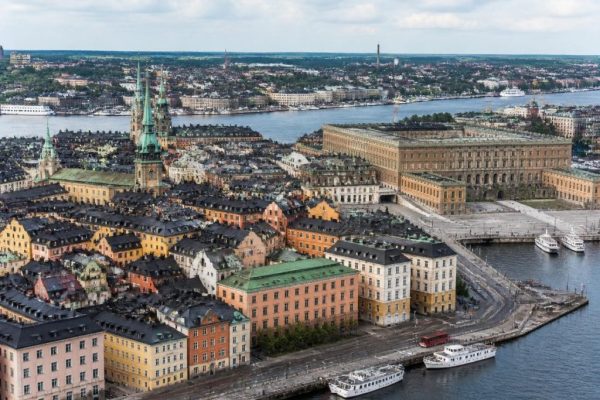
Old town stockholm sweden, known locally as Gamla Stan, stands as one of Europe's best-preserved medieval city centers and serves as the historic heart of the Swedish capital. This enchanting district, established in the 13th century, occupies the island of Stadsholmen and features cobblestone streets, colorful buildings, and landmarks that tell centuries of Swedish history. Whether you're drawn to royal palaces, ancient churches, or the atmospheric narrow alleys that wind through the district, this historic quarter offers visitors an authentic glimpse into Stockholm's past while remaining vibrantly alive in the present.
Understanding Gamla Stan's Historical Significance
The old town stockholm sweden represents more than 700 years of continuous habitation, making it one of Scandinavia's most important historical sites. Founded in 1252, this medieval center grew around the original three-street layout that remains visible today. The district's strategic location between Lake Mälaren and the Baltic Sea made it a crucial trading post during the Hanseatic League era.
The Medieval Street Pattern
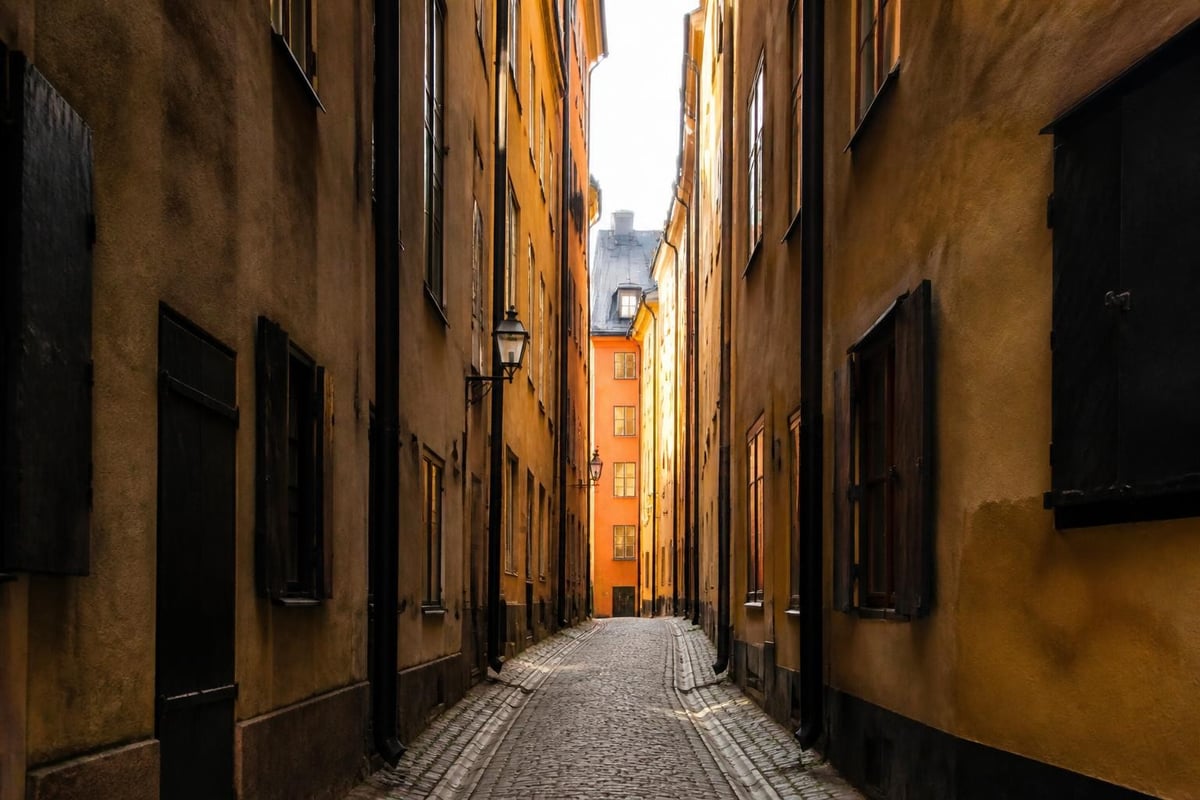
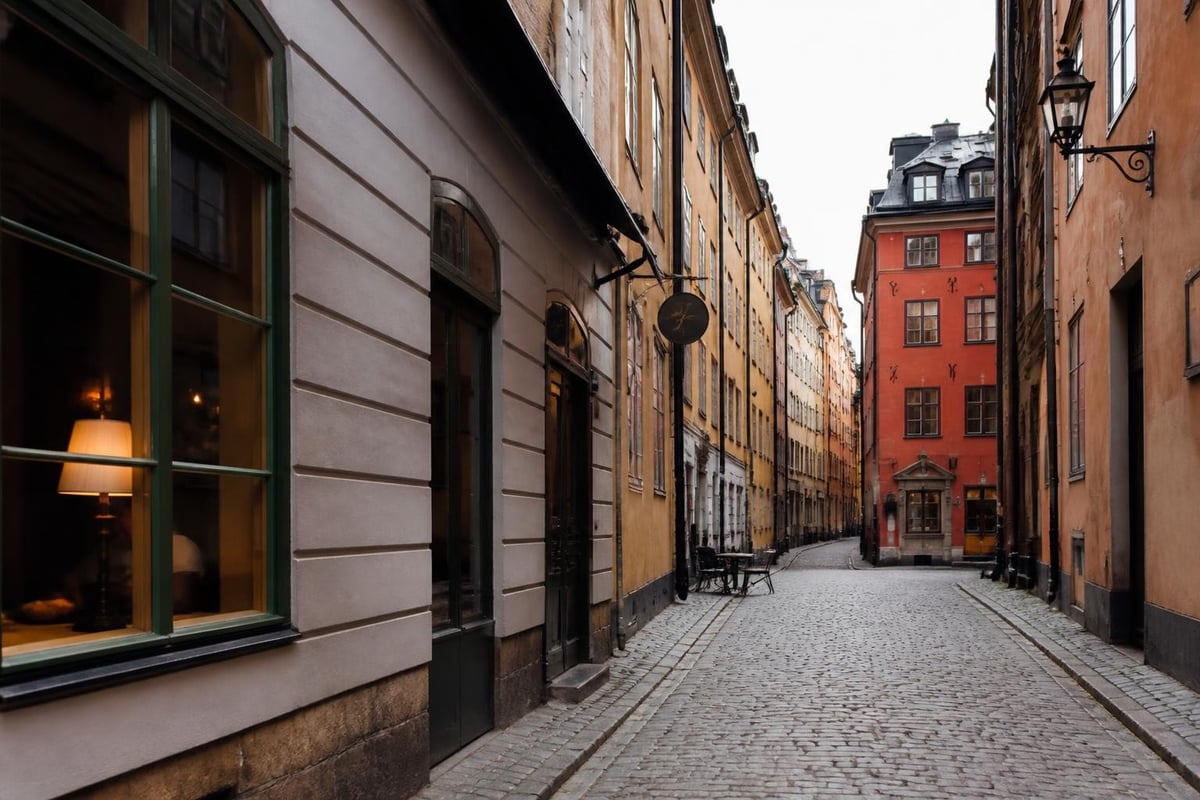
Walking through Gamla Stan reveals the organic growth of a medieval city. Unlike planned modern districts, the old town stockholm sweden developed naturally around commercial needs and defensive requirements. The main streets-Västerlånggatan, Österlånggatan, and Stora Nygatan-run parallel to each other, connected by dozens of narrow alleys called "gränder."
Key characteristics of the street layout include:
- Streets rarely exceed three meters in width in the oldest sections
- Mårten Trotzigs gränd, the narrowest alley, measures just 90 centimeters at its tightest point
- Buildings lean toward each other across streets, creating atmospheric tunnels of architecture
- Many streets follow the exact paths used by medieval merchants and residents
The preservation of this medieval pattern makes old town stockholm sweden exceptional among European capitals. While many cities demolished their historic centers during modernization, Stockholm protected Gamla Stan, creating a living museum where history remains accessible to contemporary visitors.
Royal Palace and Government Buildings
The Royal Palace (Kungliga Slottet) dominates the eastern waterfront of old town stockholm sweden, serving as the official residence of the Swedish monarch. This baroque masterpiece contains over 600 rooms, making it one of the largest functioning palaces in Europe. Built on the site of the medieval Tre Kronor castle that burned in 1697, the current structure took 57 years to complete.
Visitors can explore multiple museums within the palace complex, each revealing different aspects of Swedish royal history. The Treasury displays the crown jewels, regalia, and coronation crowns dating back centuries. The Royal Apartments showcase state rooms where official ceremonies occur, while the Museum of Antiquities houses Gustav III's Mediterranean archaeological collection.
The Changing of the Guard Ceremony
One of the most popular attractions in old town stockholm sweden, the changing of the guard occurs daily in the palace's outer courtyard. This military ceremony combines precision, tradition, and pageantry in a display that has occurred for generations.
| Aspect | Details |
|---|---|
| Frequency | Daily in summer, Wednesday/Saturday/Sunday in winter |
| Duration | Approximately 40 minutes |
| Best viewing | Arrive 20-30 minutes early for optimal position |
| Music | Military band performs during summer ceremonies |
| Route | Guards march through Gamla Stan from Mynttorget |
The ceremony reflects Swedish military tradition while providing visitors insight into the active role the monarchy maintains in Swedish society. Stockholm tours often time their itineraries to include this spectacular display, ensuring visitors experience this quintessential Stockholm tradition.
Stortorget: The Heart of Gamla Stan
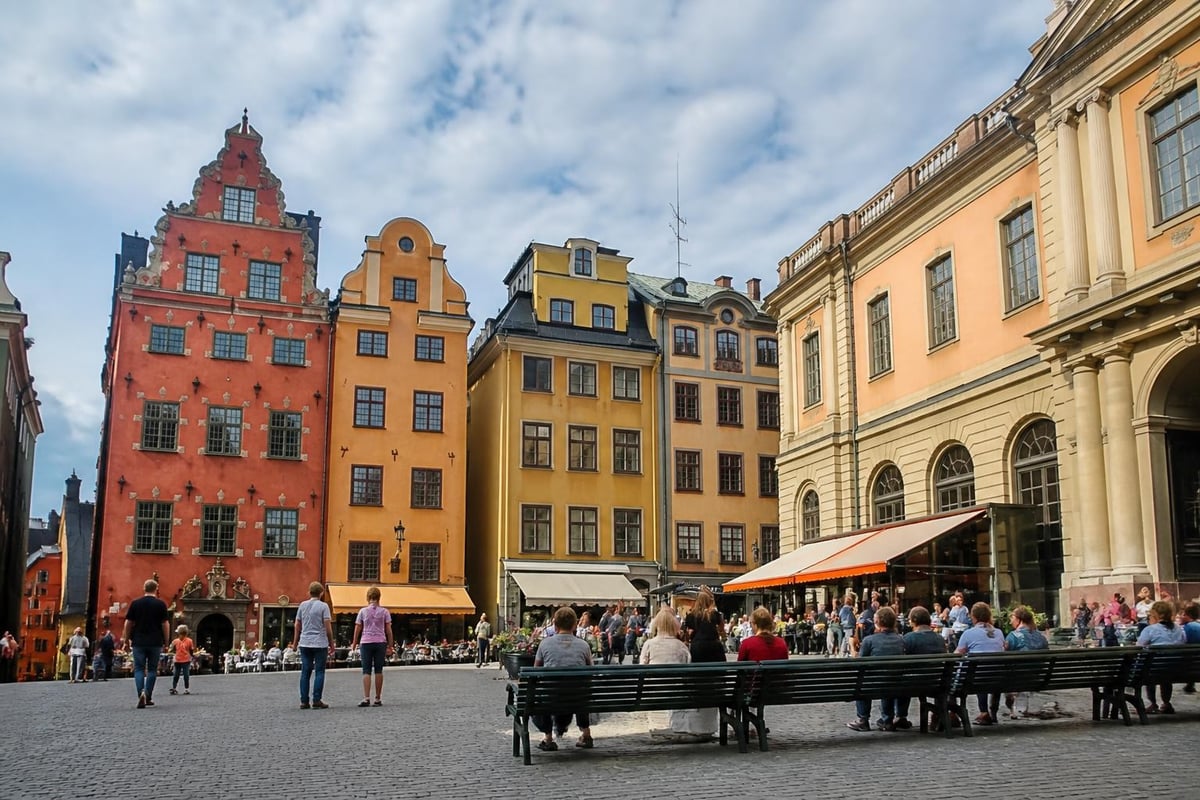
Stortorget, the main square of old town stockholm sweden, serves as the historic and social center of the district. This irregular cobblestone plaza dates to the 13th century and has witnessed pivotal moments in Swedish history. The square's colorful merchant houses, painted in shades of red, yellow, and orange, create one of Stockholm's most photographed scenes.
The most infamous event in Stortorget's history occurred in November 1520, when the Stockholm Bloodbath took place. Danish King Christian II ordered the execution of Swedish nobles and clergy, an act that ultimately led to Sweden's independence under Gustav Vasa. Today, a commemorative well in the square's center recalls this dark chapter.
Notable buildings surrounding Stortorget:
- The Old Stock Exchange (Börshuset), now home to the Nobel Museum
- Schantzska huset, featuring distinctive baroque styling
- Seyfridtzska huset, one of the oldest merchant houses
- Grillska huset, housing traditional Swedish shops and cafés
The Nobel Museum occupies the former stock exchange building and celebrates the achievements of Nobel Prize laureates. Interactive exhibitions explore the work of scientists, writers, and peace advocates who have shaped our world. For visitors interested in Swedish innovation and intellectual achievement, this museum provides essential context.
Religious Architecture and Spiritual Heritage
Old town stockholm sweden contains several significant churches that illuminate Sweden's religious evolution. Storkyrkan (The Great Church), officially Stockholm Cathedral, stands as the oldest church in Gamla Stan, consecrated in 1306. This brick Gothic structure has hosted royal weddings, coronations, and state funerals throughout Swedish history.
Inside Storkyrkan, visitors discover the famous sculpture "Saint George and the Dragon" by Bernt Notke, commissioned in 1489 to commemorate a Swedish military victory. The royal pews, ornate pulpit, and stunning silver altar demonstrate the church's continuing importance in Swedish ceremonial life.
Tyska Kyrkan: The German Church
The German Church (Tyska Kyrkan) reflects the significant influence of German merchants in medieval Stockholm. This baroque church, built between 1638 and 1642, served the German-speaking community that controlled much of Stockholm's commerce during the Hanseatic period.
The church's distinctive copper spire rises above the surrounding buildings, creating a landmark visible throughout old town stockholm sweden. Inside, the alabaster and ebony pulpit ranks among northern Europe's finest examples of baroque church furniture.
The Narrow Alleys and Hidden Courtyards
The true character of old town stockholm sweden emerges in its labyrinthine network of alleys and hidden courtyards. These passages, many unnamed or known only to locals, create an atmospheric maze that rewards exploration. Stockholm old town walking tour experiences guide visitors through these enchanting spaces, revealing stories and details easily missed by independent travelers.
Notable Alleys Worth Exploring
| Alley Name | Significance | Width |
|---|---|---|
| Mårten Trotzigs gränd | Narrowest alley in Stockholm | 90 cm |
| Prästgatan | Best-preserved medieval street | 3-4 meters |
| Brända Tomten | Site of historic fire, now plaza | Small square |
| Kindstugatan | Ancient merchant street | 3 meters |
These passages reveal medieval Stockholm's defensive architecture. Buildings constructed close together made streets difficult for invading forces while providing residents shelter from harsh Baltic weather. Many alleys feature stairs carved directly from bedrock, emphasizing the island's topography beneath the built environment.
The courtyards hidden behind street facades offer peaceful retreats from tourist traffic. Originally serving as workspace for craftsmen and storage for merchants, these spaces now host cafés, galleries, and artisan workshops that maintain Gamla Stan's living community character.
Riddarholmen: The Noble Island Extension
Connected directly to old town stockholm sweden, Riddarholmen (Knights' Island) extends the historic district westward. This smaller island houses some of Stockholm's most important historical buildings, including Riddarholmskyrkan, the burial church of Swedish monarchs.
Riddarholmskyrkan's distinctive cast-iron spire, replacing the original after a lightning strike in 1835, creates a recognizable silhouette on Stockholm's waterfront. Inside rest the remains of Swedish kings and queens dating back to the medieval period, making it Sweden's most significant royal burial site.
Historical palaces on Riddarholmen:
- Wrangel Palace, now serving as the Court of Appeal
- Stenbock Palace, housing government offices
- Bondeska Palace, a private residence preserving baroque architecture
- Hessenstein Palace, demonstrating 17th-century noble living
The waterfront promenade along Riddarholmen provides spectacular views across Riddarfjärden bay toward City Hall and the modern districts beyond. This perspective illustrates Stockholm's successful balance between preservation and development, with old town stockholm sweden remaining protected while the city grew around it.
Literary and Cultural Connections
Old town stockholm sweden has inspired countless writers, artists, and filmmakers. The atmospheric streets appear in Stieg Larsson's Millennium trilogy, where journalist Mikael Blomkvist's apartment supposedly sits in Gamla Stan. Fans of the novels can trace protagonist Lisbeth Salander's movements through the district's cafés and streets.
The district's visual appeal has made it a filming location for numerous productions seeking authentic historical backdrops. The preserved medieval architecture requires minimal modification for period pieces, while the atmospheric lighting through narrow streets creates dramatic cinematographic opportunities.
Museums and Cultural Institutions
Beyond the Nobel Museum and palace museums, old town stockholm sweden houses several specialized collections. The Medieval Museum, though technically beneath Norrbro bridge at Gamla Stan's edge, displays archaeological findings from medieval Stockholm, including original city walls and artifacts from daily life.
The Postal Museum traces Swedish communication history through stamps, postal equipment, and interactive exhibits. This specialized collection appeals particularly to philatelists and those interested in communication technology evolution.
For visitors seeking to understand Swedish cultural heritage more deeply, these institutions provide context for the buildings and streets surrounding them. Cultural tour options can incorporate these venues based on specific interests.
Dining and Shopping in Historic Settings
The commercial life of old town stockholm sweden thrives in buildings that have housed merchants for centuries. Västerlånggatan, once the main shopping street, remains lined with boutiques, galleries, and souvenir shops. While some criticize the area's tourist orientation, careful exploration reveals authentic Swedish crafts, design shops, and traditional businesses.
Traditional Swedish products to discover:
- Hand-painted Dala horses from family-run shops
- Swedish glassware from Småland artisans
- Traditional textiles and wool products
- Sami handicrafts and jewelry
- Vintage Swedish design pieces
Restaurants throughout Gamla Stan range from historic cellars serving traditional Swedish cuisine to contemporary Nordic dining experiences. Den Gyldene Freden, established in 1722, holds the Guinness World Record as one of the oldest continuously operating restaurants. The Swedish Academy owns this establishment and hosts Thursday dinners in its private rooms.
Café Culture in Medieval Settings
Gamla Stan's café culture provides opportunities to rest while absorbing the district's atmosphere. Many cafés occupy medieval cellars with vaulted brick ceilings and intimate seating areas. Swedish fika tradition-the coffee break elevated to cultural institution-finds perfect expression in these historic settings.
Local favorites include traditional pastries like kanelbullar (cinnamon buns), kardemummabullar (cardamom buns), and prinsesstårta (princess cake). Experiencing fika in old town stockholm sweden connects visitors to contemporary Swedish culture while surrounded by centuries of history.
Practical Considerations for Visitors
Navigating old town stockholm sweden requires different expectations than modern urban districts. Cobblestone streets challenge wheeled luggage and mobility devices, though major routes maintain relatively smooth surfaces. The district's compact size-approximately 430 meters north to south and 360 meters east to west-makes walking the only practical transportation method.
Best Times to Visit
Crowd levels fluctuate dramatically throughout the day and season. Summer months and cruise ship days bring peak tourist traffic, particularly between 10 AM and 4 PM. Early mornings and evenings offer more peaceful exploration opportunities when the district's residential character emerges.
| Season | Advantages | Considerations |
|---|---|---|
| Summer | Long daylight, all attractions open | Crowded, higher prices |
| Winter | Atmospheric lighting, fewer crowds | Limited hours, cold weather |
| Spring/Fall | Moderate weather, balanced crowds | Variable conditions |
Winter visits to old town stockholm sweden provide magical experiences when snow covers cobblestones and early darkness enhances historic street lighting. The Christmas market in Stortorget, running from mid-November through December, transforms the square into a traditional Nordic holiday celebration.
Accommodation Within Gamla Stan
Staying within old town stockholm sweden places visitors at the center of Stockholm's historic core. Hotels range from luxury properties in converted palaces to boutique establishments in medieval merchant houses. The authentic experience of sleeping within buildings that have sheltered travelers for centuries appeals to history enthusiasts.
Benefits of staying in Gamla Stan:
- Immediate access to major historic sites
- Atmospheric evening and early morning exploration
- Walking distance to additional Stockholm attractions
- Authentic neighborhood experience beyond daytime tourist traffic
- Proximity to waterfront and public transportation
Most accommodations occupy historic structures adapted for modern comfort. Thick stone walls, irregular floor plans, and compact rooms reflect the buildings' age, though contemporary amenities meet current traveler expectations. Booking well in advance proves essential during peak seasons.
Transportation and Accessibility
Old town stockholm sweden connects to Stockholm's broader transportation network through several access points. Gamla Stan metro station provides direct subway service, while buses stop at Slottsbacken and other peripheral locations. The district's pedestrian-only streets prevent vehicle access to most areas.
Ferry services from Djurgården and other waterfront destinations dock at Gamla Stan's quays, offering scenic arrival options. Water-based transportation provides perspectives on Stockholm's island geography while avoiding street-level congestion.
For visitors with mobility limitations, the district presents challenges. Steep stairs connect different levels, cobblestones create uneven surfaces, and many buildings lack elevator access. Professional tour guide services can customize routes accommodating various mobility needs while ensuring comprehensive historic coverage.
Conservation and Living Heritage
The preservation of old town stockholm sweden represents ongoing commitment rather than completed achievement. Building owners must maintain historic facades according to strict regulations, preserving the district's architectural integrity. Modern building codes balance safety requirements with heritage protection, ensuring structures remain functional while retaining historic character.
Approximately 3,000 residents live within Gamla Stan's boundaries, maintaining the district as a living community rather than an open-air museum. This residential population ensures neighborhood services, community life, and authentic character beyond tourist facilities.
Conservation efforts extend beyond visible architecture. Archaeological investigations occur during any subsurface work, revealing layers of Stockholm's past. Findings contribute to understanding medieval daily life, trade patterns, and urban development, enriching the historical narrative available to visitors.
Balancing Tourism and Community
The tension between tourism and residential life shapes ongoing debates about old town stockholm sweden's future. While tourism provides economic benefits and supports building maintenance, excessive visitor numbers strain infrastructure and diminish livability for residents. City planners continually adjust regulations to maintain this delicate balance.
Recent initiatives encourage visitors to explore beyond primary tourist routes, distributing foot traffic more evenly throughout the district. Tailored tours incorporating less-visited areas help achieve this distribution while providing visitors with more authentic experiences of Gamla Stan's residential character.
Beyond the Tourist Routes
Discovering old town stockholm sweden's lesser-known aspects rewards curious explorers willing to wander without fixed itineraries. Small museums, artisan workshops, and quiet corners reveal themselves to patient visitors. The Coin Cabinet, Sweden's national museum of economy, occupies unassuming premises yet houses fascinating collections tracing monetary history.
Local residents frequent certain cafés and shops that maintain neighborhood character despite surrounding tourist infrastructure. Observing daily life-schoolchildren walking to class, residents shopping for groceries, neighbors conversing in doorways-provides context for understanding Gamla Stan as a living community.
The waterfront areas offer respite from crowded main streets. Walking along the quays reveals Stockholm's maritime heritage and provides views across the water to adjacent islands and districts. These peripheral spaces often escape tourist attention despite offering equally compelling experiences.
Planning Your Visit Strategy
Maximizing your old town stockholm sweden experience requires strategic planning. Starting early allows peaceful exploration before crowds arrive, while ending late captures atmospheric evening lighting. City tour Stockholm options provide structured frameworks ensuring efficient coverage of major sites while expert guides share insider knowledge.
Recommended exploration sequence:
- Begin at Stortorget to orient yourself geographically
- Visit the Royal Palace during morning hours
- Explore narrow alleys and hidden courtyards at midday
- Tour churches and museums during afternoon hours
- Return for evening photography and dinner in historic settings
This approach balances major attractions with atmospheric wandering, combining structured learning with serendipitous discovery. Photography enthusiasts should note that narrow streets create challenging lighting conditions, with morning and late afternoon offering the best natural light.
Weather significantly impacts the Gamla Stan experience. Rain makes cobblestones slippery and forces visitors indoors, while sunny conditions encourage extended outdoor exploration. Checking forecasts and preparing appropriate footwear and clothing ensures comfortable visits regardless of conditions.
Exploring old town stockholm sweden reveals centuries of Swedish history preserved within one of Europe's most enchanting medieval districts, where cobblestone streets, royal palaces, and narrow alleys create unforgettable experiences. Whether you're interested in royal ceremonies, literary connections, or simply absorbing historic atmosphere, Gamla Stan offers discovery at every turn. For those seeking expert guidance through this remarkable district, Adding:tours provides personalized walking experiences with native English-speaking guides who share insider perspectives, ensuring your time in Stockholm's Old Town becomes truly memorable for your private group or small gathering.